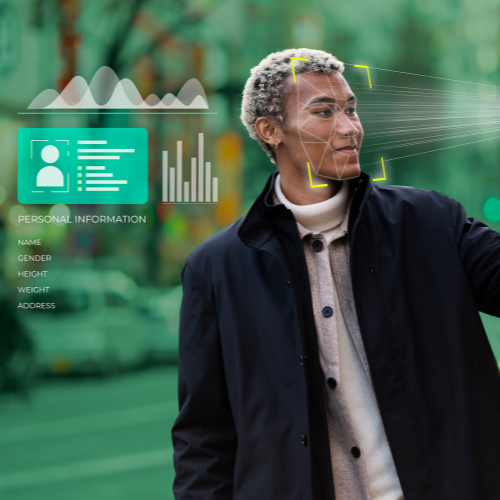
Say Hello to Your New Brand Ambassador: She’s Fake, Flawless, and Hijacking Your Feed
Okay, let’s chop the corporate jargon for a minute. You’ve scrolled by. The improbably chiseled faces and impossibly styled hair, peddling energy drinks and designer handbags from a high-rise apartment in the future. They’re AI influencers. And if your initial thought was, “Wait, she’s not even REAL?!”—you’re with me. It’s a strange sensation, right? As if you’ve entered a sci-fi novel.
My friend at a fashion brand DM’d me last week: “Dude, we just inked a deal with an influencer who isn’t real. My mind is blown.” It’s real. Currently. And it’s making every single marketer ask a hard question: Is this actually a game-changer, or are we all just being tricked by a very pretty, very costly PowerPoint slide?
I’ve gone down the rabbit hole with this one. I’ve reviewed the analytics, I’ve viewed the engagement metrics, and I’ve had late-night arguments over the morality of it all. Here’s my no-BS, from-the-trenches commentary on what it all signifies for your 2024 and beyond marketing strategy.
- So, what in the world is an AI influencer, really? Forget all the technical mumbo-jumbo. Picture this: a group of writers, artists, and coders sit down and literally design a human being from scratch. They don't merely create a face; they construct a soul. They assign them a name, a personality, a rich history ("She's a Tokyo DJ and philosophy major who enjoys retro sci-fi and saved three cats"), and a visual aesthetic you can't look away from.

Then, they use fancy animation software (think next-level video game graphics mixed with movie-grade CGI) to bring this character to life. The result? Someone like Lil Miquela—who has millions of followers, has worn Dior, and even “released” a music single. Or Noonoouri, a tiny, wide-eyed character who champions sustainable fashion and somehow makes it look cool. They post selfies, they “travel,” and they have hot takes on current events. They have friend groups with other AI influencers. They are, for all practical purposes, digital humans existing in our analog world. It’s totally crazy.
Why Marketers Are Secretly Obsessed (And You Would Be, Too)
Let’s be brutally frank for a moment. Dealing with a list of human influencers can be an absolute nightmare. I’ve heard horror stories from brand managers that would curl your hair—last-minute cancellations, diva behavior, and the constant threat of a career-destroying scandal derailing a six-month campaign.
You Might Be Interested In
No Posts Found!
AI influencers, theoretically, eliminate nearly all of that. Which is why the C-suite is so eager.
They Never Have a “Bad Day”: Your million-dollar campaign will never be sidetracked because your influencer wanted to share a provocative political tirade at 3 a.m. There’s no ego, no scandals, and no shocking cancellations. The brand message is always on target. For a risk-averse brand, this is a wish come true.
They work 24/7/365. Think of releasing a new smartphone in London, New York, and Tokyo simultaneously. Your AI superstar can be everywhere, communicating in the local language, without ever having to board a plane or deal with jet lag. The scalability and reliability are crazy. They are the ultimate global citizen.
AI influencers are no longer sci-fi—they’re selling your sneakers and skincare right now. Brands love them because they’re flawless, tireless, scandal-proof, and endlessly customizable. They don’t age, complain, or post political rants.
But perfection comes at a cost. These digital faces raise questions about authenticity, ethics, and the future of creative jobs. Can consumers really trust someone who doesn’t exist?
The truth is, AI influencers aren’t replacing humans—they’re redefining roles. The smartest brands will mix both: human warmth for connection, digital avatars for imagination. The future of influence isn’t fake—it’s augmented.
- The Global Titians
Creativity on Steroids: You’d like your influencer to dance within a nebula to launch your new audio brand? No problem. You’d like them to miniaturize the watch component size to highlight the engineering? Simple. Anything is possible creatively because you’re not constrained by, you know, physics, logistics, or a fear of heights that a model might have. You’re constrained only by the imagination of your creative team.
They’re an Asset to Your Company, Not an Expense: You’re not simply buying a single, one-time post; you’re creating or acquiring a character—a digital asset. You own it once you have it. There are no renegotiations, no management costs, and no auction frenzies. For long-term brand building, the economics can be incredibly attractive.
Yes, but it’s not all good. The Big “Ick” Factor
For all the coolness and control, there are some rather disturbing red flags and ethical issues we can’t simply opt out of. This is where things get murky
The “Fake Friend” Vibe, This is the crux issue, the elephant in the room. Effective traditional influencer marketing is because of trust and relatability. We relate to humans because we can empathize with their cluttered, imperfect lives, their failed cooking, bad hair days, and real pleasures. Can we ever really feel that about a robot designed to be flawless? I’m profoundly skeptical. The novelty is great now, but I fear viewers will tire of the perfection. It can be antiseptic and, worse, manipulative.
The Honesty Problem: This is the issue that keeps me up at night. Should brands be legally forced to put a disclaimer: “Warning: This is not a real person”? Right now, the rules are fuzzy, but the ethical line feels clear. Failing to disclose feels like a deception. It’s a ticking time bomb for a PR disaster when (not if) a consumer feels genuinely tricked into believing they were engaging with a human. The backlash could be severe.
Are We Stealing Jobs? It’s a legitimate and timely question. If a brand can hire a perfect, drama-free, forever-young AI model for a flat fee, what becomes of the thousands of human models, photographers, and content creators who hope to earn a living? This technology has the very real potential to disrupt and displace a massive chunk of the creative economy. We can’t just whitewash that.
The “Uncanny Valley” Exists: Some of these AI creatures are so realistic they fall into the “uncanny valley”—that creepy gut reaction you have when something is nearly, but not exactly, human. A faint stiffness in the grin, an odd gleam in the eyes. This can unintentionally spook the very viewer base you are attempting to win over, causing more harm than it does good.
The Real Truth: It’s Not Replacement, It’s Roles
After considering all of this, this is my take. The true strength of AI influencers is not about laying off the humans. That’s a goofy, fear-mongering stance that ignores the larger picture.
The clever play is to view them as a new kind of creative tool in your toolkit, similar to when Photoshop first arrived and revolutionized design. Consider it in this way:
Got a really futuristic, conceptual product? An AI influencer is the way to go. They can market a new VR headset or crypto wallet in a way that looks native and forward-thinking, like something out of Blade Runner.
Want to show perfect, faultless product usage? Your AI model can deliver a makeup look or a car feature with pixel-perfect accuracy, each and every time.
But what is required to establish true, heartfelt community trust? You still require a human, period. You require their actual stories, their unedited laughter, and their real struggles, which your audience can identify with. You require that mom blogger discussing the school morning madness or that traveler sharing their actual, fuzzy photos from a once-in-a-lifetime experience.
The brands that will win in the future are those that execute a morning campaign featuring a down-to-earth human mom and in the afternoon create a hyper-futuristic video with their AI ambassador venturing out into a virtual world. It’s not either-or; it’s the right tool for the job. It’s a combination.
So, what should you actually do next? A Practical Game Plan
Overwhelmed? Don’t be. Here’s a straightforward, doable plan to jumpstart without breaking the bank.
Begin with a Pilot Project, Not a Paradigm Shift. Don’t go spend your whole Q4 budget on a virtual supermodel. Instead, set aside a tiny, experimental budget. Test one contained a campaign—perhaps for a new digital-only product or a particular brand aspect.
Clearly Define Your Goal. Are you measuring brand lift? Direct click-throughs? Pure engagement? Decide what success is going to look like before you begin, so you can actually compare it against human-driven campaigns.
Listen, Like, really. Listen. This is the most crucial. Utilize your pilot project as a giant listening device. How does your audience respond in the comments? On other social networks? Do they think it is cool, innovative, and futuristic? Or do they think it is creepy, insincere, and strange? Their data—their real feelings—will be your best.
Be Honest. Lean into the “how.” Think about being transparent about the process. A behind-the-scenes glimpse at how the character was developed can be an engaging piece of content in and of itself and is a trust-builder through authenticity.
AI influencers have arrived. They are a mighty new brush, strong enough to paint something we’ve never experienced. But don’t forget, the art that actually inspires, that creates enduring loyalty, still needs to be imagined in a human heart. Use the tool, but don’t lose the soul. Learn more from fulllink.com.