Introduction: The Handshake That Changed the Tech World
In a move that stunned markets and policymakers alike, February 2026 witnessed the signing of the “US-China Framework for Managed Artificial Intelligence Competition” in Geneva. This accord, emerging after 18 months of secret backchannel negotiations, represents the most significant bilateral tech agreement since the Cold War. It doesn’t end the technological rivalry but establishes its first formal rules—creating what analysts are calling “competitive coexistence.”
For global business leaders monitored by TheGlobalTitans, this isn’t just geopolitical news; it’s a fundamental recalibration of the playing field. The accord immediately removed a monumental “unknown unknown” from strategic planning, impacting everything from semiconductor investment decisions to startup funding routes and public market valuations. This analysis breaks down the agreement’s pillars and explores what this new era of structured tech competition means for innovation, markets, and the next generation of industry titans.
The Accord’s Three Core Pillars: Decoding the Fine Print
The framework rests on three mutually agreed-upon pillars designed to prevent catastrophic escalation while preserving national security:
1. The “Transparent Frontier” Pact on Foundational Models
What It Is: Both nations have agreed to mandatory pre-deployment notification for the training of any AI model exceeding 10^26 FLOPs (a threshold marking the current cutting edge). This includes sharing basic safety testing protocols, not model weights or architecture.
The Business Impact: This creates unprecedented predictability for hyperscalers like Google, Microsoft, and Alibaba. R&D roadmaps can now be planned without fear of a destabilizing, surprise “Sputnik moment” from the other side. For investors, it reduces the regulatory black swan risk that has plagued AI stock valuations.
2. The Semiconductor Supply Chain “Stability Corridor”
What It Is: A tiered system allowing continued US export of mature-node (28nm and above) semiconductor manufacturing equipment to China, with enhanced tracking to prevent military diversion. In return, China agrees to discontinue direct state subsidies for legacy chip production that created global oversupply.
The Business Impact: This brings strategic clarity to a $600 billion industry. US equipment makers like Applied Materials and Lam Research regain a stable, massive market for mature tech. Global automakers and industrial firms can expect an end to the volatile chip shortages and gluts of recent years. Taiwanese and Korean foundries (TSMC, Samsung) see reduced pressure in legacy nodes, allowing them to focus capital on advanced (<2nm) research.
3. The Joint Global AI Safety Initiative (GAISI)
What It Is: A commitment to co-develop, with allied nations, international standards for AI risk in civilian domains: medical diagnostics, autonomous transport, and digital twins for critical infrastructure. Think of it as a “Paris Agreement for AI.”
The Business Impact: For startups and tech titans alike, this promises a future of harmonized regulation. A company developing an AI radiology tool can now aim for a single global safety certification, not 50 different national standards. This drastically reduces compliance costs and accelerates time-to-market for ethical AI innovations.
Immediate Market Reactions: Winners, Losers, and the Repricing of Risk
The markets responded with a sectoral earthquake, repricing assets based on newfound clarity.
The Clear Winners:
Global Cloud & AI Infrastructure Stocks: Companies like Microsoft (Azure), Amazon (AWS), and Google Cloud saw immediate 5-8% jumps. Their massive capital expenditures in AI data centers are now backed by a more predictable competitive horizon.
Specialized Semiconductor Equipment Firms: ASML (Dutch) and the US’s KLA Corporation rallied as the agreement protects their intellectual property while securing their China market access for mature technology.
Multinational Manufacturers: Industrial giants with complex global supply chains, from Toyota to Siemens, welcomed the stability. Their stock gains reflected reduced fears of a tech Cold War fracturing production networks.
The Sector Under Pressure:
Pure-Play China Tech ETFs: Funds like KWEB experienced volatility. While reduced decoupling risk is positive, the removal of blanket state subsidies for some tech sectors forces a shift to genuine market competition.
Cybersecurity “Cold War” Plays: Firms that had ridden the narrative of escalating US-China cyber conflict saw some momentum shift, as the accord includes basic protocols against AI-enabled offensive cyber operations.
Certain Defense Contractors: While military AI development continues unabated, the shares of contractors solely focused on US-China tech warfare scenarios saw a slight pullback.
The Strategic Recalibration: How Global Titans Are Adjusting
In boardrooms worldwide, strategies formulated over the past five years are being rewritten. Key adjustments include:
1. The “Dual-Hub” Supply Chain Becomes Standard
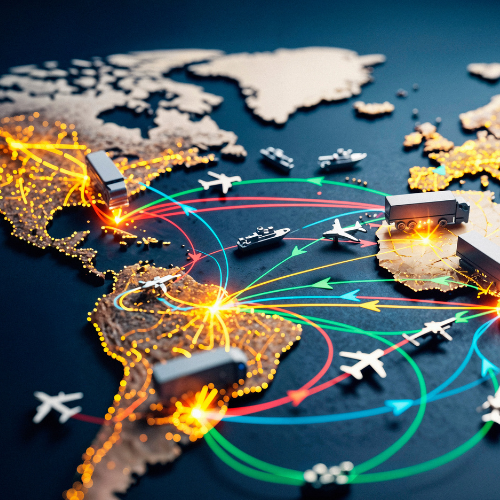
The pre-accord model of aggressive “friend-shoring” (moving all production from China to allied nations) is evolving. Companies are now adopting a “China+1 for Mature Tech, Protected Hub for Advanced Tech” model.
Example: A US electric vehicle maker will source its standard automotive chips and assemble battery packs in its Chinese joint venture (taking advantage of scale and efficiency), while manufacturing its proprietary AI self-driving computer solely in the US or a treaty ally.
2. Venture Capital’s New Map
VC firms are recalibrating their investment theses:
US/Europe Funds: Are now more willing to invest in hardware and semiconductor startups, knowing there’s a protected path to market without immediate, subsidized Chinese competition in their niche.
Asian Funds: Are redirecting capital from “national champion” plays toward true frontier innovation in areas like biomimetic AI or quantum-classical hybrid computing, where the race is completely open.
3. The Rise of the “Globally Compliant AI” Startup
The joint safety initiative creates a massive new market niche. Startups that can build auditing tools, compliance software, and bias-detection frameworks that meet the emerging GAISI standards are attracting immediate investor attention. This is the unsexy, critical plumbing of the next AI decade.
Long-Term Implications: The New Competitive Landscape
Looking beyond quarterly earnings, the accord structures a new form of great-power competition.
The Innovation Race Intensifies, But Shifts Arena: With certain boundaries set, the competition moves from raw, unfettered model scaling to breakthroughs in AI efficiency, novel algorithms (beyond transformers), and specialized hardware. It’s a race of quality over pure computational quantity.
The “Third Pole” Gains Leverage: The EU, with its first-mover advantage via the AI Act, and nations like India, South Korea, and Singapore now have increased negotiating power. They can demand that US and Chinese firms comply with their standards to access their markets, shaping global norms from the middle.
A New Class of Diplomatic-Tech Roles Emerges: Corporations are now creating Chief Geopolitical Strategy Officer roles. These executives navigate the new accord’s technical working groups, ensuring their company’s interests are embedded in the standards being formed.
Risks and What Could Still Go Wrong
The framework is fragile, and its success is not guaranteed.
Domestic Political Backlash: In both the US and China, hardliners criticize the deal as capitulation. A change in leadership could unravel the carefully built structure.
The “Gray Zone” Problem: The accord doesn’t cover emerging technologies like quantum sensing, neurotech, or next-gen synthetic biology. These could become new, unregulated arenas for conflict.
Verification and Espionage Fears: The “Transparent Frontier” notifications require trust. Accusations of lying about model capabilities or using shared safety research for offensive purposes could collapse cooperation overnight.
Conclusion: From Wild West to Walled Garden—The New Era of Tech Statecraft
The 2026 US-China AI Accord marks the end of the tech “Wild West.” For business leaders, entrepreneurs, and investors in TheGlobalTitans community, the message is clear: Geopolitical strategy is now as important as technological innovation.
The agreement replaces existential uncertainty with managed, structured competition. It rewards companies that can innovate within frameworks, navigate complex compliance, and build resilient, multi-polar operations. The winners in this new era won’t just be the best coders or the best fundraisers; they will be the best corporate statespeople—those who understand that technology is now inseparable from statecraft.
This historic handshake has not ended the race for technological supremacy. Instead, it has paved the track and installed the rules. The race is now, more than ever, one for the true Titans—those with the vision to build a future that is both innovative and stable, competitive yet safe. The next decade of global tech leadership will be defined not by who breaks the most rules, but by who masters the new ones.