
Introduction: From Resilience to Anti-Fragility
In boardrooms from Stuttgart to Singapore, a strategic revolution is quietly unfolding. The corporate mantra of 2026 has evolved beyond mere “supply chain resilience”—a concept that proved insufficient against the cascading disruptions of the 2020s. Today’s forward-thinking leaders, the true global titans of industry, are implementing what Nassim Taleb foresaw: anti-fragile systems. These aren’t just systems that withstand shocks; they are architectures designed to thrive on volatility, uncertainty, and disorder.
The shift is driven by hard data. A 2025 McKinsey analysis revealed that companies with truly anti-fragile characteristics outperformed sector averages by 28% in EBITDA margin during periods of geopolitical or climatic stress. For TheGlobalTitans network, this represents more than operational excellence—it’s the new core of strategic competitive advantage. This article deconstructs the three-pillar framework turning vulnerability into opportunity.
Pillar 1: The Multi-Polar Manufacturing Ecosystem
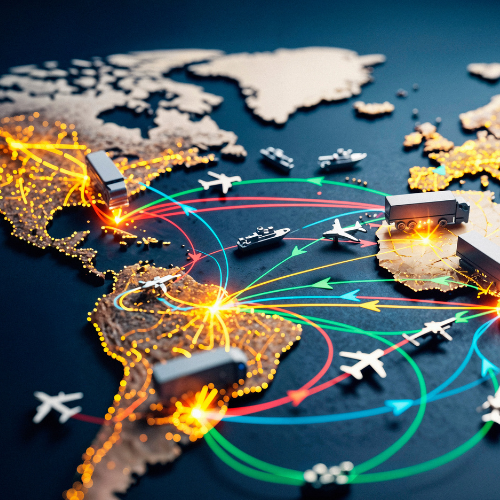
The era of cost-optimized, single-region sourcing is conclusively over. The 2026 model is purposefully redundant, geographically distributed, and politically diversified.
The “3+2” Location Strategy: Leading firms now maintain at least three primary manufacturing hubs across different geopolitical spheres (e.g., North America, EU-aligned Eastern Europe, and ASEAN), supplemented by two “hot standby” contract manufacturers in secondary regions like Mexico or India. This isn’t duplication; it’s strategic dispersion.
The “Digital Twin” Enabler: Before a single bolt is turned in a new facility, its entire operational flow is modeled in a living digital twin. Companies like Siemens and Tesla use these twins to simulate disruptions—a port closure in Vietnam, a labor strike in Poland—and pre-emptively reroute production and logistics in minutes, not months.
Case in Point: The Automotive Titan’s Pivot: A major German automaker, stung by the chip shortage, now produces its core infotainment system in three identical, parallel micro-factories (US, Czech Republic, Malaysia). AI dynamically allocates orders based on real-time cost, capacity, and risk factors, creating a system where a shutdown in one region automatically increases efficiency in the other two.
Pillar 2: AI-Driven Predictive Logistics & Procurement
Resilience is reactive; anti-fragility is predictive. The second pillar involves embedding AI as a central nervous system for the supply network.
Beyond Predictive Analytics to Prescriptive Intelligence: Modern platforms don’t just flag a potential delay at the Port of Los Angeles; they automatically re-route shipments via Vancouver, renegotiate spot freight rates using algorithmic agents, and adjust production schedules at the destination factory—all without human intervention.
The “Synthetic Supplier” Model: Companies are using generative AI to create digital proxies of their key suppliers. These models ingest thousands of data points (financial health, regional weather, political sentiment, energy costs) to predict supplier failure risk quarters in advance, allowing for proactive support or alternative sourcing.
Transparency as a Weapon: Blockchain-enabled material tracing, from mine to finished product, is no longer a CSR gimmick. It’s a critical tool for avoiding bottlenecks. A US electronics firm recently avoided a rare earth metal shortage by using its traceability platform to identify and qualify an alternative Australian supplier in 72 hours, a process that previously took six months.
Pillar 3: Financial Engineering for Volatility
The final pillar recognizes that operational agility must be matched by financial flexibility. Anti-fragility is funded.
Dynamic Hedging Portfolios: Instead of static annual hedges for currencies and commodities, treasuries now use machine learning-powered, continuous hedging programs. These algorithms execute micro-hedges thousands of times a day, turning market volatility from a cost center into a slight profit center.
Supply Chain Finance as Strategic Leverage: Programs that offer early payment to healthy suppliers are being weaponized. A company can use its balance sheet to stabilize a critical but financially shaky supplier during a downturn, ensuring their own survival and gaining immense loyalty and preferential pricing for the recovery.
The “Insurance-Linked Security” (ILS) Innovation: Pioneered by global logistics firms, these capital market instruments allow companies to securitize their supply chain risk. By issuing bonds where payouts are triggered by specific, measurable disruptions (e.g., “Strait of Hormus closure > 14 days”), they transfer tail risk to institutional investors and free up capital for innovation.
The Implementation Challenge: Culture Over Code
The greatest barrier to anti-fragility isn’t technological; it’s cultural and organizational.
Breaking the Cost-Center Mentality: CFOs must be re-educated to view redundancy and technology spend not as inefficiencies, but as strategic insurance premiums with measurable ROI in continuity and market capture.
The Rise of the Chief Continuity Officer (CCO): A new C-suite role is emerging, combining traditional risk management with real-time operations and data science. The CCO owns the anti-fragility KPI: Mean Time To Recovery (MTTR), driving it relentlessly toward zero.
Partner Ecosystem Integration: Anti-fragility cannot stop at your company’s firewall. It requires deep, data-sharing partnerships with tier-1, tier-2, and even tier-3 suppliers. This demands a new level of trust and collaborative technology integration.
Conclusion: The Ultimate Competitive Moat
In 2026, a company’s supply chain is its most visible competitive moat. An anti-fragile network does more than protect revenue; it creates opportunities to capture market share when competitors are paralyzed, to negotiate from strength during global crises, and to build unshakable customer trust through flawless delivery in flawed times.
For the Titans aiming to lead their industries for decades, the question is no longer if they can afford to build this capability, but if they can afford not to. The next disruption is not a matter of “if” but “when.” The businesses that will define the coming era are those building systems today that don’t just survive the storm, but learn to sail faster because of it.