Introduction: The Tariff That Changed the Rules of Global Trade
On January 1, 2026, the European Union’s Carbon Border Adjustment Mechanism (CBAM) transitioned from a looming threat to a daily financial reality for thousands of importers. The full-phase implementation of the world’s first carbon tariff is not merely a policy shift; it’s the starter’s pistol for the greatest industrial transformation since the Industrial Revolution. At its epicenter is steel—the backbone of modern economies—now being reforged in the fires of global competition and climate necessity.
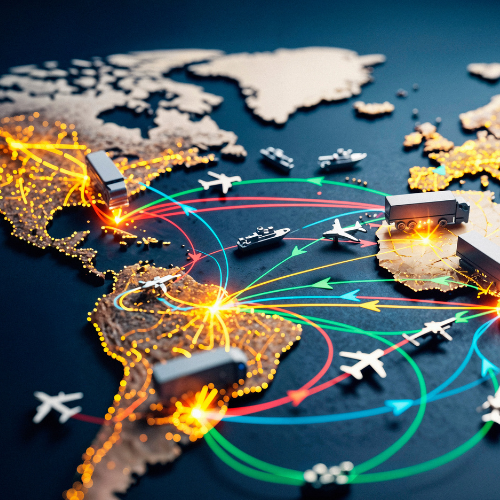
For executives and investors tracked by TheGlobalTitans, this is the defining business news story of the year. The CBAM effectively erases the competitive advantage held by carbon-intensive producers in regions with lax climate policies. Early 2026 data shows the cost of importing conventional Chinese steel into the EU has surged by 25-40% once CBAM certificates are purchased. The result? A frantic, capital-intensive global race to produce “green steel” and a fundamental re-mapping of industrial supply chains. This isn’t just about compliance; it’s a battle for future market sovereignty.
The Contenders: Mapping the New Global Steel Landscape
The race is creating clear clusters of winners, challengers, and vulnerable incumbents.
1. The European First-Movers (Betting on Hydrogen)
European giants like ArcelorMittal and Thyssenkrupp are staking their futures on green hydrogen-based direct reduction iron (DRI) technology.
The Strategy: Replace coking coal with hydrogen (made from renewable energy) to reduce iron ore. The only emission is water vapor.
The Hurdle: Colossal capital expenditure. The green premium for this steel is currently €250-€400 per tonne. Their bet is that CBAM will make conventional steel so expensive that their product becomes the default for the EU’s automotive and construction sectors by 2030.
The News Flash: In February 2026, ArcelorMittal secured a landmark €850 million joint funding package from the EU Innovation Fund and a consortium of German automakers to scale its Gijón (Spain) plant, signaling deep strategic alignment between industry and policy.
2. The North American Pragmatists (Hybrid Tech & IRA Boosts)
US firms like Nucor and Cleveland-Cliffs are pursuing a more flexible path, leveraging the US Inflation Reduction Act’s rich tax credits (still powerful in 2026).
The Strategy: A mix of electric arc furnace (EAF) recycling (already low-carbon) and incremental DRI projects using a blend of natural gas and eventually hydrogen (“blue” then “green”).
The Advantage: Lower immediate costs and a massive, protected domestic market in the US, which is now considering its own version of CBAM. They are poised to become the low-carbon supplier of choice for North American EV and infrastructure projects.
3. The Asian Giants Under Pressure (Strategic Pivots)
China and India, the world’s largest steel producers, face the starkest challenge.
China’s Dual Response: State-owned Baowu Steel is launching mega green steel complexes (like the Zhanjiang plant) powered by dedicated offshore wind farms. Simultaneously, Beijing is fiercely lobbying at the WTO, calling CBAM a “protectionist trade barrier.” The news cycle is dominated by this tension between adaptation and accusation.
India’s Opportunity: With abundant solar potential, companies like Tata Steel are betting they can produce green steel cheaper than Europe. Their play is to become the green supplier to Southeast Asia and the Middle East, regions yet to enact their own carbon tariffs.
The Ripple Effects: Reshaping Industries Beyond Steel
The green steel race is not happening in a vacuum. It’s sending shockwaves through interconnected sectors, creating both crisis and opportunity—a hallmark story for Titans who see the full board, not just a single piece.
Automotive (The End-Customer Driver): BMW, Mercedes, and Volvo have already signed multi-billion euro, multi-year offtake agreements for green steel starting in 2027-2028. This guaranteed demand is what’s de-risking the steelmakers’ investments. For automakers, it’s the only way to decarbonize their Scope 3 emissions and maintain market access.
Mining (The Raw Material Shift): The shift to DRI requires higher-grade iron ore (>67% Fe). This is triggering a massive capital reallocation in mining, with giants like Rio Tinto and BHP diverting investment from Pilbara (Australia) lower-grade mines to high-grade projects in West Africa and Canada.
Renewable Energy & Hydrogen (The Enablers): The equation is simple: no cheap, abundant green hydrogen = no affordable green steel. This is creating an unprecedented demand anchor for the entire green hydrogen industry, accelerating its scale-up by a predicted 5-7 years. Projects in North Africa (for export to Europe) and Australia are now being fast-tracked.
The Financial Markets Are Betting Billions
The news is being translated directly into capital flows and valuations.
Green Premiums in Equity Markets: Public companies with credible green steel transition plans are trading at a 15-20% EBITDA multiple premium over laggards. Analysts have created new valuation metrics: “Cost per Tonne of Abated Carbon” and “Green Capacity Timeline.”
The Rise of Transition-Focused Funds: New ETFs and private equity funds are specifically targeting “industrial decarbonization.” They provide the patient capital for the 5-7 year build cycles of these mega-projects.
Commodity Trading Transformed: Trading houses like Trafigura and Cargill are building entirely new desks focused on trading carbon credits, CBAM certificates, and guarantees of origin for green steel, creating a complex new financial ecosystem around physical goods.
Geopolitical Tensions and the Risk of Fracture
The path is fraught with peril. The dominant business news narrative beyond the technology is one of geopolitical friction.
The “Carbon Club” vs. The Rest: The EU, UK, and possibly the US (if it acts) could form a climate-aligned trade bloc. Goods from outside this bloc face steep tariffs, effectively creating a new form of economic alliance based on emissions standards.
WTO Challenges: The legal battles have begun. Cases brought by China, India, and Russia allege CBAM violates international trade law. The outcome could either legitimize carbon tariffs globally or trigger a wave of retaliatory measures.
The Developing Nation Dilemma: Countries like Ukraine and Morocco with steel industries hope to use their renewable potential to become green steel hubs for Europe. However, they risk a “green colonialism” backlash if the profits and high-value jobs are perceived to flow back to European corporate headquarters.
Conclusion: The Forge of a New Industrial Age
The full activation of the EU’s CBAM in 2026 is more than a policy; it’s a market signal of unimaginable power. It has taken the abstract cost of carbon and made it a concrete line item on every invoice for trade-exposed goods. In doing so, it has made decarbonization the single most important driver of industrial competitiveness.
For the companies that will emerge as the Titans of this new age, the strategy is clear: integrate energy, mining, and manufacturing; form unprecedented partnerships with customers and policymakers; and deploy capital with a courage that matches the scale of the challenge. The race for green steel is the first, most visible battle in a war to redefine how the world builds itself. The winners won’t just sell a product; they will sell a license to operate in the economy of the future.