

Will AI Replace Managers? The Future of Human Leadership in an AI World
The managers who will shape the decade to come aren’t the most technical—they are the most human.
Introduction: The real question behind the AI fear
Let’s be real. If you are a manager, you’ve noticed the headlines and felt that quiet thrill of fear. “Is a robot going to do my job?” It is a natural concern, but it is the wrong question. The emergence of AI in business is not about replacement; it is about redefinition.
The actual, more urgent question we should all be asking is: what type of manager will you be when the AI takes care of busywork?
This is not a future scenario far off. AI can now schedule meetings, write emails, summarize reports, and monitor projects. This necessitates a long-overdue conversation on the actual value of a leader. If your value as a manager exists primarily in tasks, AI will make you redundant. But if your value resides in coaching others, making clarity, and establishing trust, then AI is your strongest partner—a tool that provides you with the one commodity you can never have too much of: time.
- This article will take you from being a task-focused manager to being an irreplaceable human leader. We will examine the managerial approaches AI will reveal, the resilient competencies it can't copy, and offer a practical step-by-step plan to flourish in the future world of work.
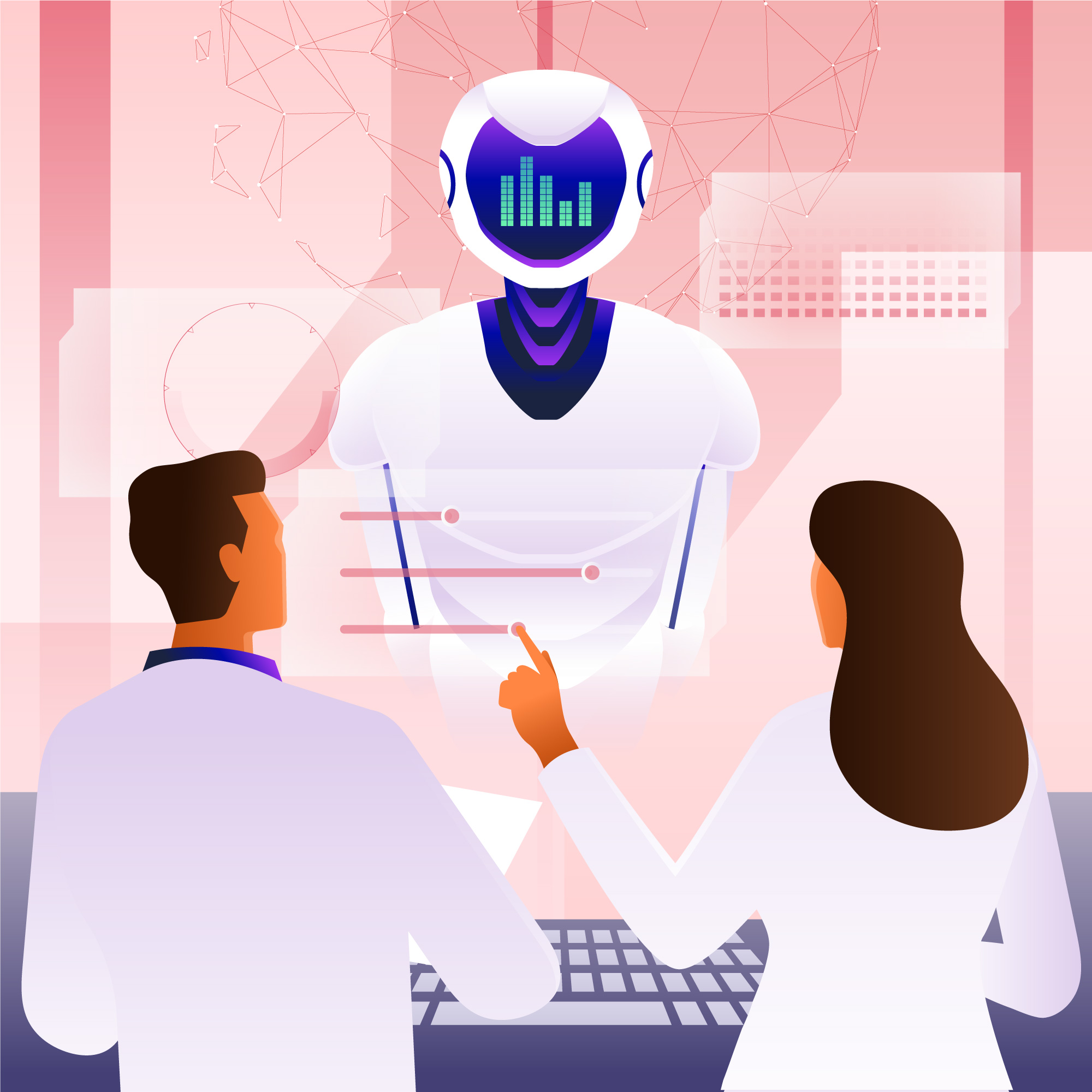
The exposure effect: What AI reveals about management
AI does not just automate tasks; it holds up a mirror to our management styles. When the administrative underbrush is cleared away, what is left exposed? For many teams, this has led to a revealing of managerial foundations.
Broadly speaking, three types of managers are emerging in the face of AI adoption :
The Task Tracker: This manager resides in status reports and spreadsheets. Their worth is based on having a file of who did what when. AI unmasks this approach since it can monitor tasks, deadlines, and progress at superhuman speeds and precision. The micromanagement by the Task Tracker becomes apparent—and intensely resented by teams.
You Might Be Interested In
No Posts Found!
The Process Police: This manager prizes compliance and control first, habitually adding non-value-added steps and approvals “for safety.” AI uncovers this by cutting processes down to size and making them leaner. The bureaucratic gates that were once deemed necessary are exposed as what they are: friction that slows everyone down.

AI is transforming management—not by replacing leaders, but by revealing which ones matter most. Task-focused managers are exposed; human-centered leaders are amplified.
The irreplaceable skills? Empathy, ethical judgment, inspiring vision, and conflict resolution. These are the dimensions AI cannot touch.
The playbook is simple: delegate administrative work to AI, reclaim time for coaching, mentorship, and culture-building.
Leadership of the future isn’t about doing more—it’s about amplifying humanity through AI.
- The Global Titians
The Coach/Connector: This manager is dedicated to generating clarity, building people’s capability, and linking work to an important mission. This is the manager boosted by AI. With administrative burden removed, they can spend more time on strategic commentary, professional development, and relationship-building that creates an unshakably strong team.
As one leadership writer succinctly stated, “AI won’t replace managers, but managers who act like it’s not here? They’re replacing themselves with irrelevance”.
The unbeatable human advantage: Skills that AI cannot replicate
The better news for managers is that the most important leadership abilities are exactly the ones that AI can’t possibly imitate. They are not “soft skills”—they’re tough skills that will determine leadership worth for generations to come.

Empathy and Trust-Building: Can an AI program tell that an employee is fighting a battle with a personal concern based just on the tone in which they speak during a meeting? Can it provide real comfort or establish a relationship of respect and trust? Not at all. Being able to connect on a human emotional level, to demonstrate you truly care, is the cornerstone of a dedicated and engaged workforce.
Ethical Decision and Moral Fortitude: AI works based on information and patterns; it lacks a moral sense. Taking a hard decision involving fairness, privacy, or an area-of-gravity ethical issue takes human judgment. A manager needs to decide what needs to be done by the company, and not what can be done by it, and protect against the risk of biased results from AI.
Inspiring Vision and Sense-Making: AI may be able to look at data and propose a strategic path, but it cannot create an inspiring vision that makes individuals feel they are part of something bigger than themselves. It falls to the leader to describe the “why” to link together a quarterly objective and the company’s purpose, giving context and significance no machine can.
Conflict Resolution and Candor: AI may flag a conflict in a project schedule, but only a human can facilitate a respectful, direct conversation to fix the underlying tension. Maintaining space for challenging conversations, giving tough feedback with empathy, and mediating conflict are deeply human jobs .
The managers who will succeed are those who double down on these indispensable human skills.
Your hands-on playbook: From tasks to leadership
One understands the theory; it is another thing to apply it. Here is a simple playbook to begin moving your role from taskmaster to coach.
The “AI does X, I do Y” teaming
A strong mental adjustment is to make an intentional pairing between the work you delegate to AI and the human work you take on. This leaves no question in your mind or anyone else’s about what gets done and who does it.
AI writes the meeting summary and determines action items → You take 15 minutes to translate the most important discussion points into individualized coaching notes for two team members.
AI books all your team meetings and one-on-ones → You extend every 1:1 by five minutes to query, “What is one thing you want to learn this quarter, and how can I assist you?”
AI rolls up KPIs and highlights potential project risks → You have a 20-minute “decision huddle” to consider the trade-offs as a group and make a collective judgment call.
AI monitors task fulfillment and progress → You hold a monthly “review of learning” based not on what you accomplished, but on what was learned and how processes can be enhanced.
A 30-day plan to take back your time
If you are prepared for a more formal process, this one-month plan can assist you in moving at least 20% of your time away from tasks and toward people.
Week 1 — Audit and Select: Keep a record of your tasks for one week. Label each as “automatable,” “delegable,” or “uniquely human.” Select two automations to execute (e.g., meeting notes and scheduling) and make an announcement to your team as to what you intend to accomplish with the saved time.
Week 2 — Create a Coaching Cadence: Turn one status meeting into a development huddle. Make it a point to provide one specific piece of constructive feedback to every team member.
Week 3 — Enhance Quality, Not Speed Alone: Utilize AI to create two alternate versions of a project deliverable. Look at both with your team to consider the advantages and disadvantages, and make trade-offs creatively, making a decision a learning experience.
Week 4 — Make It Stick: Share the findings with your team: numbers on time saved, meetings reduced, or decisions accelerated. Most significantly, ask them: “What should we automate next, and where would you like more of my time for your growth?”
The human-centered AI mindset: What to avoid
As you embed AI, how is just as important as what. Mistakes here can undermine the very trust you are establishing. Watch out for these particular pitfalls:
Surveillance Creep: Employing AI to track every employee keystroke or conversation rate is a recipe for disaster. It eliminates psychological safety and trust. Use AI to minimize admin burden, not maximize Big Brother-style monitoring.
Chasing Speed for Speed’s Sake: Faster output is useless if it leads to burnout or poorer quality. The goal is not just to do things faster, but to create space for doing better, more thoughtful work.
Overlooking Ethical Blind Spots: AI models have the potential to inherit biases from their training data. It is your responsibility to protect against this, with AI-supported decisions regarding hiring, promotions, and project assignment being equitable and transparent.
Conclusion: The future is human
The debate over AI taking over managers is a diversion. What is truly changing is management being redefined. The managers who hold onto command-and-control and spreadsheets will be on the wrong side of history.
The leaders who will thrive are those who see AI for what it is: the most powerful tool ever created to amplify our humanity. It clears away the tedious work that fills our days, allowing us to reinvest our energy in the parts of the job that truly matter—developing potential, creating a culture of trust, and inspiring teams to achieve what they did not think was possible.
Your path begins with one step. Audit your week. Identify one task to automate. Take back one hour. And spend that hour not on another report, but in a discussion with a team member about what’s next for them. That is the leadership of the future.