Navigating the Squeeze: How RBI’s Policy Pivot is Reshaping the Credit Landscape for India’s MSMEs
For India’s vast Micro, Small, and Medium Enterprises (MSME) sector—the backbone of the economy contributing nearly 30% of GDP and employing over 110 million—the Reserve Bank of India’s (RBI) monetary policy is not an abstract economic indicator; it is a daily reality that dictates access to capital, cost of operations, and ultimately, survival. In the post-pandemic era, the RBI has embarked on a delicate balancing act: taming persistent inflation through conventional rate hikes while simultaneously trying to engineer a “soft landing” and foster a digitized, inclusive financial system. For MSMEs, this has created a dual reality—a short-term credit squeeze posing significant challenges, juxtaposed with a long-term infrastructure dividend promising transformative efficiency. Understanding this dichotomy is crucial for any MSME owner strategizing for resilience and growth in 2024 and beyond.
The Policy Toolkit: Repo Rate, Risk Weights, and the Digital Push
The RBI’s approach has been multi-pronged, using both traditional and innovative levers.
The Repo Rate Hammer: To combat inflation, the RBI has maintained a “higher-for-longer” interest rate stance. While rates have been held steady in recent policy reviews, the cumulative increase of 250 basis points since May 2022 has significantly raised the cost of borrowing for all businesses. For MSMEs operating on thin margins, even a slight increase in loan EMIs can erode profitability and deter new investment in capacity.
Risk Weight Adjustments: In a more targeted move, the RBI increased risk weights on unsecured personal loans and credit card debt for banks and NBFCs in late 2023. While aimed at curbing systemic risk from rampant unsecured lending, this had an unintended consequence. It made these consumer loan segments more capital-intensive for lenders, leading many to reallocate their capital away from what they now perceive as riskier portfolios, which can include smaller-ticket MSME loans without strong collateral.
The Constructive Counterweight: Digital Public Infrastructure (DPI): Concurrently, the RBI and the government have aggressively championed India’s DPI stack—UPI, Aadhaar, and Account Aggregators (AA). Initiatives like the ‘TreDS’ (Trade Receivables Discounting System) platform for invoice financing and the integration of MSMEs into the Open Credit Enablement Network (OCEN) are designed to use data, not just collateral, to assess creditworthiness. This is a fundamental shift from relationship-based to data-driven lending.
The Immediate Challenge: The Credit Squeeze and Its Impact
The combined effect of higher rates and cautious lenders has created palpable pressure on the ground.
Tightened Credit Flow: Traditional bank lending to MSMEs, while growing in absolute terms, has become more conservative. Banks are scrutinizing balance sheets, cash flow statements, and credit histories more rigorously than during the pandemic-era stimulus. New-to-credit and smaller micro-enterprises face the highest hurdles.
The NBFC Chill: Non-Banking Financial Companies (NBFCs), which had stepped in as crucial lenders to the MSME sector, are also facing higher borrowing costs themselves and are being more selective. The risk weight adjustments have exacerbated this caution.
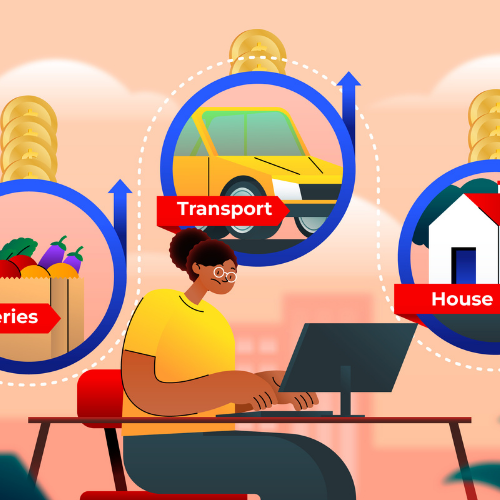
Working Capital Woes: The rising cost and tightening availability of working capital loans force MSMEs to dip into their own reserves, delay payments to their own suppliers (creating a chain reaction), or forgo new orders—stifling growth at a time when the economy is showing resilience.
The Silver Lining: The Digital Infrastructure Dividend
Amidst the short-term pain, a powerful, long-term trend is offering a lifeline and a future promise: the formalization and datafication of MSME operations.
Account Aggregators (AA) as Game-Changers: The AA framework allows MSMEs to securely share their digital financial data (GST returns, bank statements, UPI transaction logs) with lenders of their choice. This creates a “digital trail” that can be used to build a credit score. A small artisan or a transporter with strong digital transaction history can now prove creditworthiness without physical collateral.
Embedded Finance and API-based Lending: Platforms like e-commerce marketplaces, logistics providers, and procurement networks are beginning to offer embedded credit. An MSME seller on Udaan or Amazon can receive an instant loan offer based on their sales history on that very platform. This is the promise of OCEN—making credit a seamless feature within the workflow.
Efficiency Gains from Digitization: The widespread adoption of UPI for business payments, GST compliance software, and digital accounting tools is making MSMEs more transparent, efficient, and audit-ready. This operational clean-up, while sometimes burdensome, inherently makes them more bankable in the eyes of formal institutions.
Case Study: “Mohan Engineering Works” – A Tale of Two Cycles
Consider “Mohan Engineering Works,” a small auto components manufacturer in Pune.
2021-22 (Easy Money Era): With rates low and liquidity high, Mohan easily secured a term loan to buy two new CNC machines, betting on a post-pandemic demand surge. Growth was the sole focus.
2024 (The New Reality): His loan EMI has increased by 18%. Seeking additional working capital for a large new order, his bank asks for additional collateral he doesn’t have. Stuck, Mohan turns to his CA, who helps him register on an AA-enabled lending platform. By consenting to share his 3 years of GST returns and bank statements, the platform’s algorithm recognizes his consistent revenue and tax compliance. Within 72 hours, he receives a sanctioned working capital loan based on his digital footprint, not his physical assets. The cost is higher than a traditional bank loan, but the access is transformative.
Strategic Outlook: Navigating the New Normal
The RBI’s policy mix is forcing a necessary, if painful, evolution. The strategic imperative for MSMEs is twofold:
Embrace Formalization and Digitization Completely: This is no longer optional. Maintaining immaculate digital records—GST, bank transactions, formal invoices—is the new currency for accessing credit. Adopting digital tools for operations and compliance is an investment in future creditworthiness.
Diversify Credit Sources: Relying solely on the relationship with the local bank manager is a risky strategy. MSMEs must explore the new landscape of FinTech lenders, invoice discounting platforms like TreDS, and supply chain finance options offered by their large corporate buyers.
For the RBI and policymakers, the challenge remains to ensure that the cooling measures meant for the broader economy do not frost over the green shoots of growth in the vital MSME sector. The success of India’s DPI will be judged not by its technological brilliance, but by its ability to deliver timely, affordable credit to the millions of Mohan Engineering Works across the country.
In conclusion, the current policy environment is a test of resilience. MSMEs that view digitization as a strategic priority and navigate the new, diversified lending ecosystem will not only survive the squeeze but emerge stronger, more transparent, and fundamentally more competitive. The era of informal, opaque operations is ending; the era of the data-empowered, formally financed MSME is dawning.