From Disruption to Co-Creation: How E-commerce is Forging the “Phygital” Future of Local Retail in India
The initial narrative of e-commerce in India was one of stark disruption—a tidal wave of discount-driven online marketplaces threatening to wash away the foundations of Main Street and the neighborhood kirana. A decade into this revolution, a more complex and collaborative story is unfolding. E-commerce is no longer a distant competitor; it has become an enabler, a partner, and a catalyst for transformation. The result is not the demise of local retail, but its dramatic evolution into a new hybrid model: the “phygital” (physical + digital) store. This convergence is leveraging the unique strengths of both worlds—the trust, immediacy, and sensory experience of physical stores with the reach, data, and convenience of digital platforms—creating a more resilient, customer-centric, and community-embedded retail ecosystem than ever before.
The Survival Phase: Weathering the Initial Storm
The first wave of e-commerce, led by giants like Flipkart and Amazon, did create undeniable pressure. It exposed the limitations of traditional retail: limited assortment, opaque pricing, geographical constraints, and a lack of formal customer data. Local retailers, from clothing boutiques to electronics shops, faced a painful period of reckoning. Customers, armed with smartphones, became “showroomers”—examining products in-store only to buy them online for a lower price. This period forced a fundamental question upon local businesses: adapt or perish.
The Adaptation Toolkit: Digital Weapons for Local Warriors
In response, a powerful counter-movement emerged, fueled by the very digital tools that once seemed like a threat. Local retailers began a piecemeal but profound digital adoption.
Social Commerce as the Launchpad: For millions of small retailers, especially in tier 2 and 3 cities, the journey didn’t start with an e-commerce website but with WhatsApp and Instagram. These platforms became digital storefronts, catalogs, customer service channels, and payment facilitators. A jeweler in Surat or a tailor in Ludhiana could now showcase designs, share videos, and transact with customers across the country, breaking geographical barriers at near-zero cost.
Hyperlocal Delivery Partnerships: The rise of Swiggy Instamart, Blinkit, and Dunzo provided a ready-made solution for the “last-mile” delivery challenge. A local bakery, pharmacy, or grocery store could now offer 30-minute delivery without investing in its own fleet, instantly matching a core convenience promise of large e-tailers.
SaaS to the Rescue: A boom in affordable, India-focused Software-as-a-Service (SaaS) products democratized enterprise technology. Platforms like Gofrugal, EasyEcom, and Khatabook offered local retailers cloud-based solutions for inventory management, omnichannel sales, accounting, and customer loyalty programs, putting them on a level technological playing field with larger players.
The “Phygital” Revolution: Where Clicks Meet Bricks
The most significant trend is the deliberate blurring of lines between online and offline, giving birth to new, hybrid business models.
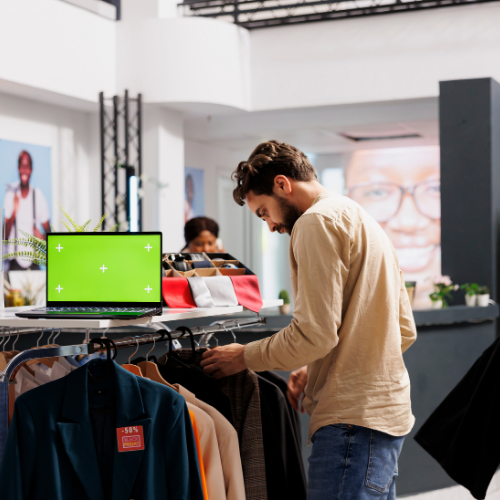
Discovery Online, Fulfillment Offline (BOPIS): Customers, particularly for high-consideration categories like furniture, appliances, and cosmetics, now routinely research online—reading reviews, comparing specs—but prefer to buy in-store for touch-and-feel assurance, instant gratification, and personal service. Smart retailers ensure their inventory is visible online and offer services like “Buy Online, Pick Up In-Store (BOPIS),” driving footfall and potential for additional sales.
Endless Aisle and In-Store Kiosks: A local electronics store can now have a digital kiosk where customers can browse and order from a vast online catalog that far exceeds the store’s physical stock. The store fulfills from a central warehouse or via drop-shipping, turning its limited floor space into an infinite showroom.
Data-Driven Personalization: When a customer shops both online and in-store and is part of a retailer’s loyalty program, the business gains a 360-degree view of their preferences. This allows for hyper-personalized marketing: an SMS alert when a favorite brand of shoes arrives in their local branch, or an online coupon for a product they examined in-store but didn’t purchase.
The Ecosystem Play: ONDC and the Democratization of Commerce
The government-backed Open Network for Digital Commerce (ONDC) promises to be the next great leveler. It aims to create a protocol-based open network, breaking down the walled gardens of large platforms.
A Small Seller’s Dream? In theory, a local toy store could list its products on the ONDC network and be discovered by buyers using any participating consumer app (like Paytm, Magicpin, etc.), not just one dominant marketplace. This reduces platform dependency and commission fees.
Logistics and Credit as Plug-ins: ONDC also seeks to democratize logistics and credit by allowing specialized providers to plug into the network. A local retailer could access multiple delivery partners and instant loan offers for inventory directly through the protocol, further empowering their operations.
Case Study: “Bookworm’s Nook” – A Community Hub Reborn
“Bookworm’s Nook” is a 20-year-old independent bookstore in Bangalore that was on the verge of closing by 2020, decimated by Amazon’s convenience and discounts.
Its revival strategy was a masterclass in phygital adaptation:
Digital Presence: It built a simple website with its full inventory, integrated with a local delivery partner.
Community Building: It used Instagram and WhatsApp groups to host virtual author sessions, book club discussions, and announce new arrivals, creating a passionate digital community.
Experiential Edge: The physical store was redesigned to host in-person author events, coffee corners, and curated reading nooks—experiences no online player could replicate.
Data & Personalization: It started a simple loyalty program, recording purchases. Regular customers now get personalized reading recommendations via email, blending online data with offline insight.
Today, Bookworm’s Nook is more profitable than ever. Its online sales complement its footfall. It is no longer just a bookstore; it is a cultural community hub with a digital heartbeat.
Strategic Outlook: Collaboration Over Competition
The future of Indian retail is not a zero-sum game between e-commerce and local stores. It is a collaborative, interconnected ecosystem. The large e-commerce platforms themselves recognize this and are actively building partnerships: Amazon’s “Local Shops” program and Flipkart’s “SmartPack” for kiranas are testaments to this trend.
For the local retailer, the strategic imperative is clear: Embrace technology not as an enemy, but as the most powerful tool in your arsenal. Use digital channels for discovery, marketing, and reach. Use your physical space for experience, trust-building, and instant fulfillment. Leverage platforms and networks like ONDC to maintain independence.
The ultimate winner in this new era is the Indian consumer, who enjoys an unprecedented spectrum of choice: the infinite aisle of online, the instant gratification of quick commerce, and the curated, experiential trust of a revitalized local store. E-commerce didn’t kill local retail; it forced it to evolve, resulting in a richer, more dynamic, and profoundly more resilient commercial landscape for all.