
Christian Idiodi
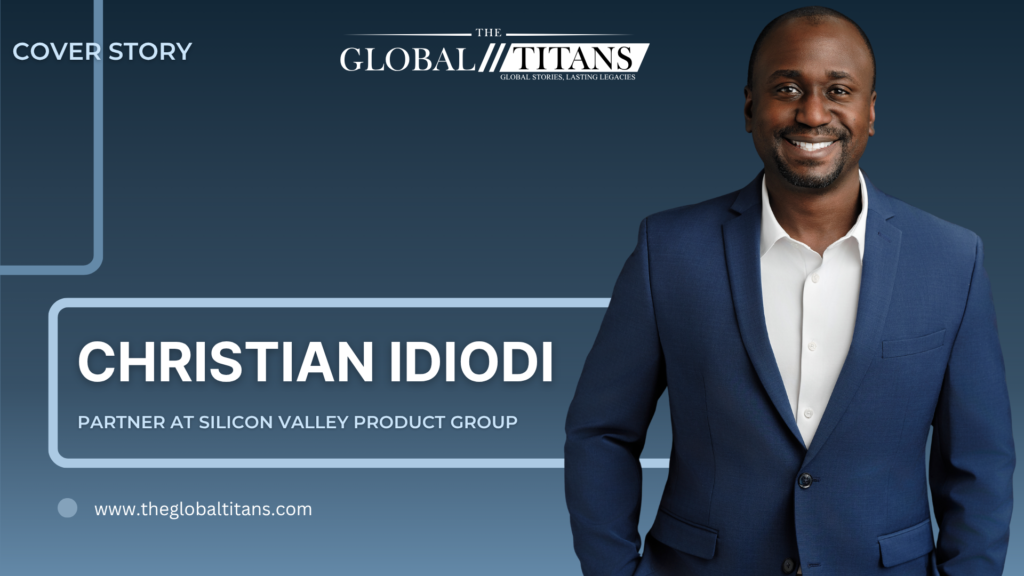
Building Leaders Who Build the Future
Why one of the world’s most respected strategic advisors believes every business problem is ultimately a leadership problem.
Christian Idiodi does not fit neatly into the category of management consultant.
He has built more than 200 products across industries and markets. He has led teams through failure and scale. He has coached founders, chief product officers, and CEOs inside some of the world’s most complex enterprises. What he does today is not advisory theater. It is leadership architecture. Across industries, organizations invest heavily in transformation. They hire firms, restructure teams, adopt frameworks, and deploy new tools. And yet performance
stalls.
Idiodi has seen the pattern too many times to ignore.
It is rarely a strategy problem.
It is rarely a talent problem.
It is almost never a tooling problem.
It is a leadership problem.
Not because leaders lack intelligence, but because the systems they design quietly
undermine the very behaviors they claim to value.
“All business problems,” he says, “eventually reduce to leadership and culture. If
incentives don’t change, nothing changes.”
From Product Builder to System Designer
Before he advised executives, Idiodi built products. Over two decades, he has contributed to or led the creation of more than 200 products. Some succeeded. Some failed. The pattern was consistent. Products fail when leaders reward output over outcomes. When roadmaps become promises instead of hypotheses. When certainty is valued more than evidence. He began to see that the same forces that derail products also weaken organizations.
Teams are capable. Leaders are committed. Resources are available. But the system punishes curiosity. It rewards speed without learning. It tolerates misaligned incentives. The issue is not execution. It is architecture. Rather than continuing to build inside broken systems, Idiodi turned his focus toward redesigning the systems themselves.
Decision Quality as Competitive Advantage
Many advisors speak about strategy. Others focus on culture or operating models. Idiodi focuses on decision quality. He works with leadership teams to surface the invisible forces shaping behavior:
- What gets funded
- What gets promoted
- What gets tolerated
- What gets ignored
His work is deliberate and hands-on. Executive reviews are redesigned. Assumptions are documented. Trade-offs are made explicit. Incentives are examined with precision. The goal is not incremental improvement. It is durable capability.
“Culture is not what you say,” he tells executives. “It’s what your system rewards when
no one is watching.”
When Certainty Becomes Fragility
At one global financial institution, delivery was slowing and morale was deteriorating. The board demanded acceleration. Leadership believed they had an execution problem. Idiodi observed something different.
Executive meetings rewarded decisiveness. Roadmaps were approved early and rarely revisited. Changing direction was seen as weakness. Teams learned to defend plans rather than test them.
Certainty had become performance. He redesigned the leadership rhythm. Reviews shifted from status updates to evidence reviews. Roadmaps were reframed as hypotheses. Learning milestones carried equal weight with delivery milestones.
Within months, the tone changed. Teams surfaced risk earlier. Debate improved. Course corrections happened before costs compounded. The organization did not slow down. It became more intelligent.
“Speed without learning,” Idiodi says, “is waste at scale.”
Incentives: The Quiet Driver of Behavior
In another high-growth technology company, executives invested heavily in culture initiatives intended to increase collaboration. Engagement scores improved. Friction persisted. Idiodi examined promotion criteria and funding models. Individual heroics were rewarded. Output volume was celebrated. Discovery discipline was invisible. The culture initiative was fighting the compensation system.
By aligning incentives with team-based outcomes and disciplined experimentation, behavior shifted organically. Collaboration improved because the system reinforced it. He did not change the people. He changed the signals.
Scaling Without Losing the Soul
Growth introduces complexity. Layers multiply. Context erodes. Most organizations respond by increasing control. Idiodi takes the opposite approach.
He builds shared language and decision transparency. Principles are clarified. Trade-offs are documented. Evidence standards are established. When people understand why decisions are made, autonomy increases. Controlbecomes less necessary.
One multinational client struggling with regional fragmentation tightened governance and slowed innovation. Idiodi helped define a small set of non-negotiable principles while restoring local decision authority within those boundaries. Velocity increased. Trust improved. Alignment strengthened. Consistency came from clarity, not compliance.
Leadership as Responsibility
At the center of Idiodi’s philosophy is a simple conviction:
Leadership is responsibility for the system.
- When performance falters, he encourages executives to ask:
- What incentives shaped this outcome?
- What assumptions went untested?
- What fear influenced behavior?
What learning was suppressed?
This approach requires discipline and humility. It also requires courage. Clients often describe his style as rigorous, direct, and deeply human. He challenges leaders to separate ego from evidence and authority from insight.
The Heart Behind the Work
For Idiodi, leadership carries moral weight. Organizations shape careers, families, and communities. They create access to opportunity or limit it.
His commitment extends beyond enterprise transformation. Through his global work developing product and leadership capability across emerging ecosystems, he invests in building leaders who can create meaningful solutions within their own markets.
Talent is evenly distributed. Opportunity is not. Designing leadership systems that unlock human potential is, for him, both a strategic imperative and a personal mission.
“The work is not just about performance,” he says. “It’s about building environments
where people can do the best work of their lives.”
Beyond Consulting
Consultants advise.
Idiodi builds capacity. He works inside leadership teams to ensure they can design, test, and evolve their own systems long after his engagement concludes.
His focus includes:
- Shifting executives from solution advocacy to disciplined problem framing
- Making trade-offs explicit rather than political
- Designing incentives that reinforce long-term value creation
- Embedding learning velocity as a strategic advantage
In an AI-enabled world where tools are commoditized and information is abundant, Idiodi believes the decisive advantage will belong to organizations that learn faster than markets shift.
Not faster planning. Faster learning.
Leadership as Architecture
Christian Idiodi operates at the intersection of product strategy, leadership design, and human potential.
He builds leaders who build systems.
He builds systems that build enduring organizations.
In a business environment defined by volatility and acceleration, his work offers something rare: structural clarity.
In a world chasing speed, he designs learning.
In a world chasing control, he designs trust.
In a world chasing performance, he designs foundations. And foundations endure