
Mariana Cersosimo
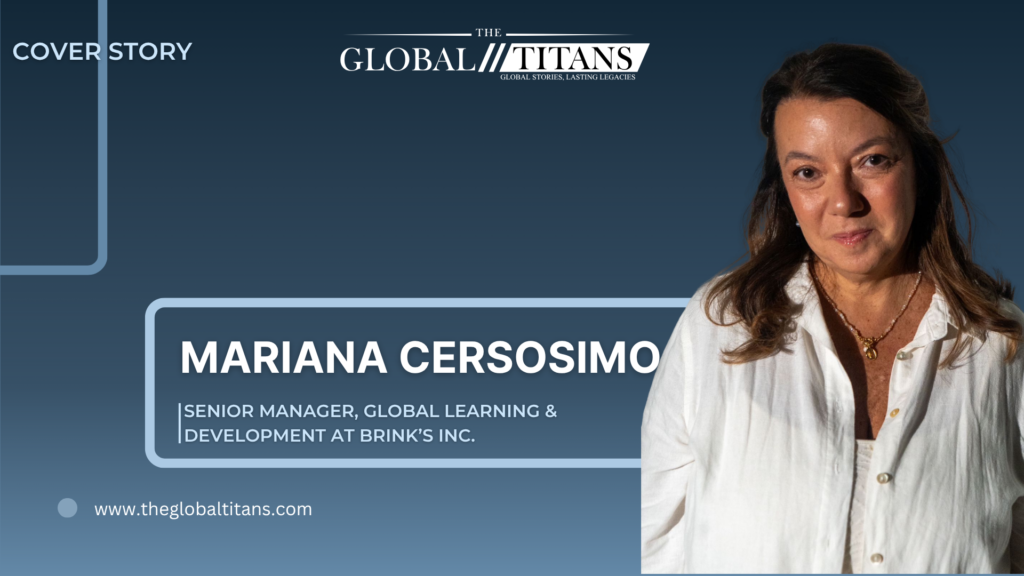
Mariana Cersosimo: Redefining Leadership Development Through Humanity, Awareness, and Transformational Growth
For Mariana Cersosimo, leadership development has never been simply about training programs, frameworks, or corporate capability models. It has always been about people. More specifically, it has been about helping people reconnect with confidence, courage, humanity, and the belief that growth is possible even in environments shaped by pressure, uncertainty, and constant change. As Senior Manager, Global Learning & Development, Mariana has spent years working at the intersection of leadership, culture, learning, and organizational transformation, helping leaders understand that real development is not about appearing perfect. It is about becoming more conscious of the impact they have on others every day.
Her perspective was not formed through theory alone. It was shaped through lived experiences, difficult realizations, emotional moments, and years spent observing how people actually behave under pressure. Over time, she learned that leadership is far more emotional and human than many organizations are willing to admit. That realization became the foundation of how she develops leaders today.
Early lessons about people, judgment, and hidden potential
Earlier in her career, Mariana believed potential revealed itself quickly. She thought strong performers would naturally stand out and that growth was mostly about capability. Experience eventually challenged that assumption.
Over time, she realized potential is often hidden behind fear, insecurity, silence, lack of confidence, or environments that never allowed people to fully use their voice. Some of the people who transformed the most under her leadership were not the loudest or most visible. They were the people who finally felt safe enough to try, contribute, fail, and grow.
One deeply personal experience stayed with her early in her leadership journey while she was pregnant. Her team once went out to lunch without inviting her and returned much later than expected. Sitting there alone, she remembers feeling hurt and disconnected. But when they walked back in, they were carrying gifts for the baby, balloons, and a sign that said “Best Mom.”
That moment became an important leadership lesson. It reminded her how quickly people create stories in the absence of communication. From then on, she became slower in judging others and far more curious about what might exist underneath behavior.
Leadership is defined by impact, not intention
One of the most uncomfortable truths Mariana had to accept was that good intentions do not automatically create good leadership. She has seen leaders genuinely care about people while still creating fear, confusion, dependency, or emotional exhaustion around them.
That realization completely changed the way she develops leaders. Today, she spends less time focusing only on what leaders know and much more time helping them understand what people actually experience around them. For her, leadership is not defined only by intention. It is defined by impact.
A powerful example of this came during a leadership session inspired by the concept of an “Empathy Museum.” Participants brought shoes that represented them personally. But instead of wearing their own shoes, they wore someone else’s while listening to that person’s story, pressures, and experiences.
What stayed with Mariana was not the activity itself, but the silence afterward. People became emotional because, for a brief moment, they truly saw one another beyond hierarchy, assumptions, or titles. That experience reinforced her belief that leadership development is deeply tied to emotional understanding and human connection.
Infographic: Mariana’s leadership philosophy
Awareness + Humanity + Emotional Safety = Transformational Leadership
Choosing who to be in uncertain moments
In uncertain situations, Mariana focuses less on appearing correct and more on remaining grounded in the kind of leader she wants to be. She understands that clarity does not always come immediately, but presence matters.
During moments of ambiguity, she asks herself difficult internal questions:
- Am I creating fear or clarity? • Am I listening defensively or openly? • Am I protecting my ego or serving the situation?
One of the biggest shifts in her leadership journey was realizing that leadership is not about always having answers. Often, it is about creating enough trust for people to move forward together even when certainty does not yet exist.
A career shaped by transformation, not just process
Mariana’s career began inside Human Resources, but what drew her deeply into leadership development was never only the process side of HR. It was the human side of transformation.
Throughout her journey, she worked across talent, learning, culture, organizational development, staffing, and leadership capability building. Over time, she realized she was most energized not by designing programs alone, but by creating experiences that genuinely changed how people saw themselves, their teams, and their role as leaders.
A defining transition came when she moved from a local role in Brazil into a global learning leadership position. That experience expanded her perspective significantly and showed her how leadership challenges are deeply human and universal, regardless of geography or culture.
Today, she sees leadership development not as training delivery, but as helping organizations create environments where people can grow with more ownership, awareness, courage, and humanity.
Why leadership development is about identity, not information
Mariana once believed that if people understood something deeply enough, they would naturally change. Experience proved otherwise.
She saw leaders leave workshops inspired and emotionally connected, only to return to old behaviors once pressure, habits, and organizational dynamics returned. That realization completely reshaped her philosophy.
Today, she believes leadership development is far less about transferring knowledge and far more about helping people confront who they become under pressure, power, uncertainty, and responsibility. Knowledge matters, but identity is what people fall back on when things become difficult.
This realization fueled her passion for creating learning experiences that feel deeply human rather than purely instructional. For Mariana, real transformation happens when something becomes personally true for someone.
Infographic: What creates real transformation
Information may inspire. Identity shapes behavior.
- Emotional awareness
- Psychological safety
- Behavioral consistency
- Human-centered leadership
- Reflection under pressure
The difference between performance and transformation
Mariana distinguishes high-performing leaders from transformational leaders in a very clear way. A leader who performs well can deliver results. A transformational leader changes what other people believe is possible in themselves.
Some leaders create execution. Others create confidence, ownership, trust, courage, and growth around them. Those are the leaders people remember years later.
One of the most meaningful moments of her career came when someone from her team told her:
“Today I like myself more because of you and how you made me feel.”
That sentence stayed with her deeply because it reminded her that leadership is not only about improving performance. Sometimes it is about helping people reconnect with their own worth, voice, and possibility.
Rethinking resistance and human behavior
One assumption Mariana had to unlearn was the idea that resistance automatically means opposition.
During a five-day leadership program with participants from different parts of the world, she encountered a particularly difficult group that challenged every framework, activity, and reflection. Early in the program, she felt emotionally exhausted and wondered whether she would be able to carry the room through the full experience.
Then something shifted. Instead of seeing the participants as resistant, she consciously chose to see them as engaged, intelligent, and capable of helping her grow as well. That shift transformed the entire dynamic. Conversations became richer, and the room became more connected.
The experience taught her that leadership is not only about managing others. It is also about managing the stories leaders create about people in their own minds.
Why many leadership programs fail
Mariana believes many leadership development efforts fail because they are designed for inspiration instead of integration.
People leave energized and emotionally connected, but then return to systems, habits, and environments that reinforce the exact opposite behaviors. Organizations cannot teach collaboration in workshops while rewarding competition every day afterward.
She also believes leadership development must exist inside the flow of work itself. It needs to appear in hiring conversations, feedback moments, recognition, team discussions, and daily leadership behaviors. Sustainable change does not happen through training rooms alone.
One of the most important ideas she emphasizes is that behavior change is deeply emotional. Leaders are often required to let go of identities that once made them successful, the expert, the controller, or the person who always has the answer. That process is much harder than simply learning a new framework.
The future of leadership in 2026 and beyond
Looking ahead, Mariana believes leadership must stop being treated as a position and start being understood as impact.
She believes organizations that thrive in the future will be the ones where leadership becomes a shared responsibility rather than something attached only to hierarchy or authority. At the same time, she sees human capability becoming even more valuable in the age of AI and rapid transformation.
Technical skills will continue evolving, but the ability to create trust, emotional safety, meaningful connection, and psychological security will become increasingly important.
In her words, the future of leadership is not about becoming more powerful. It is about becoming more conscious.
Infographic: The future leadership shift
From authority → to awareness
From hierarchy → to human impact
Advice for emerging leaders
If Mariana could leave one question for every emerging leader, it would be:
“What do people feel about themselves after interacting with you consistently?”
For her, leadership is not only about accomplishments. It is about the emotional environment leaders create around them. People may forget frameworks, presentations, or strategies, but they rarely forget how leadership made them feel about their confidence, voice, value, and potential.
Her own leadership habits reflect that philosophy.
One leadership habit that has most contributed to your growth:
Pausing before reacting. Some of the best leadership decisions I made came from choosing curiosity over immediate judgment.
One personal value that has been tested the most in your journey:
Humanity.
One challenge leaders must prepare for in the next decade:
Protecting human connection, trust, and emotional safety while everything around us accelerates.
One mindset shift that changed how you see leadership entirely:
Realizing that expertise may earn attention, but care earns trust.
Conclusion
Mariana Cersosimo’s approach to leadership development is grounded in something increasingly rare: humanity. Her work reminds organizations that leadership is not simply about capability, performance, or expertise. It is about emotional impact, self-awareness, and the environments leaders create around other people every day.
Through years of working across learning, culture, talent, and transformation, she has developed a philosophy centered not on perfect leadership, but conscious leadership. Leadership that helps people feel safe enough to grow, trusted enough to contribute, and valued enough to believe in their own potential again.