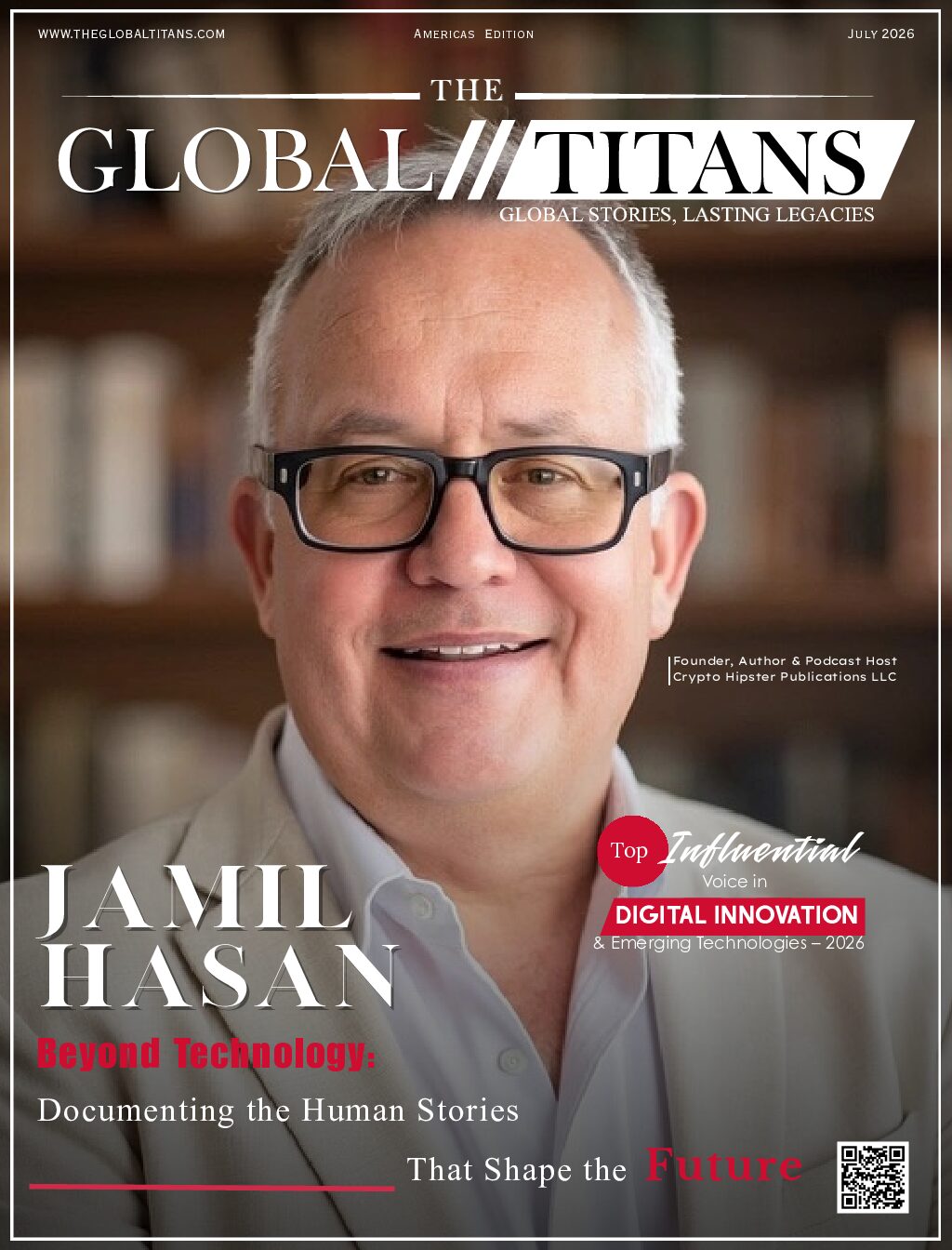
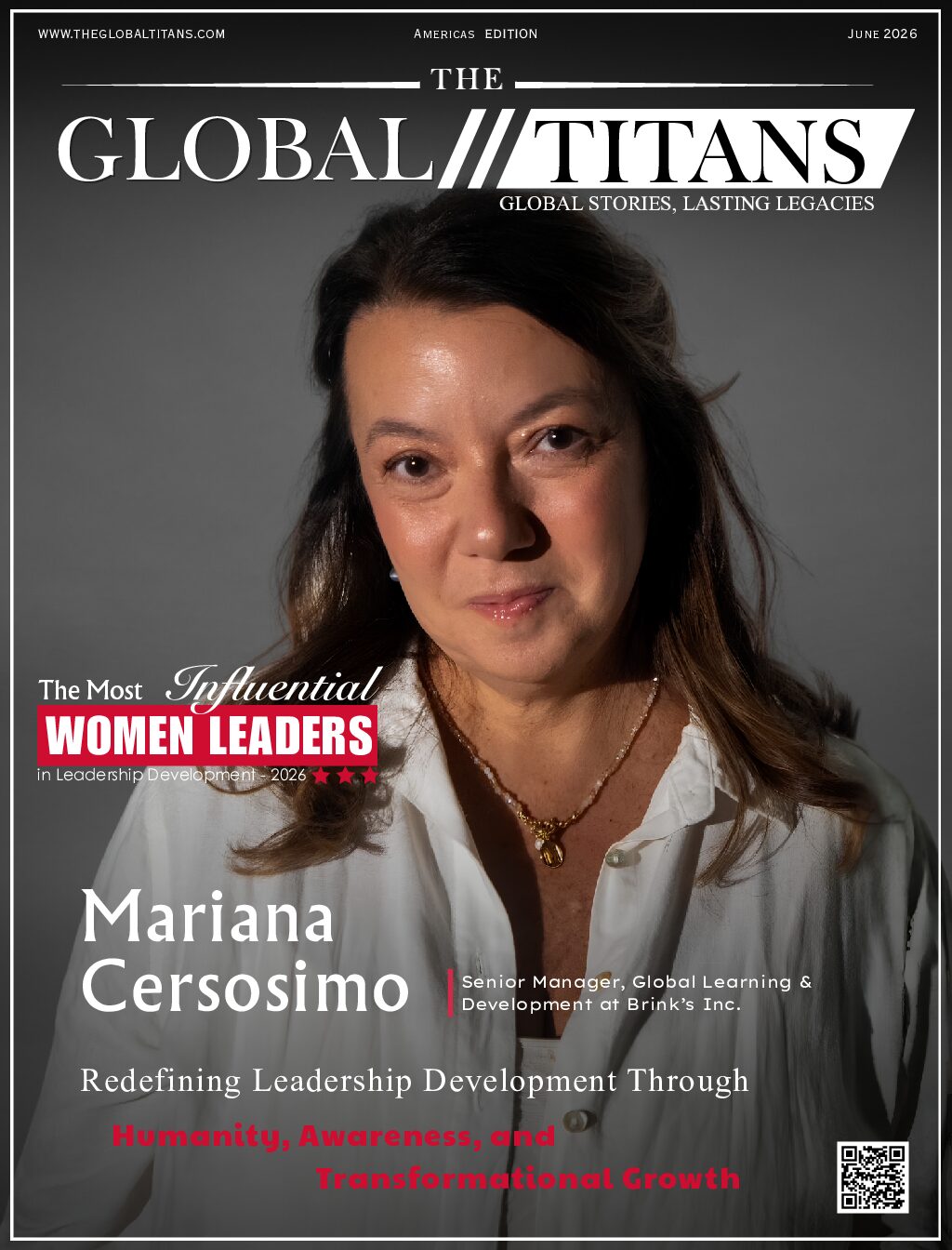
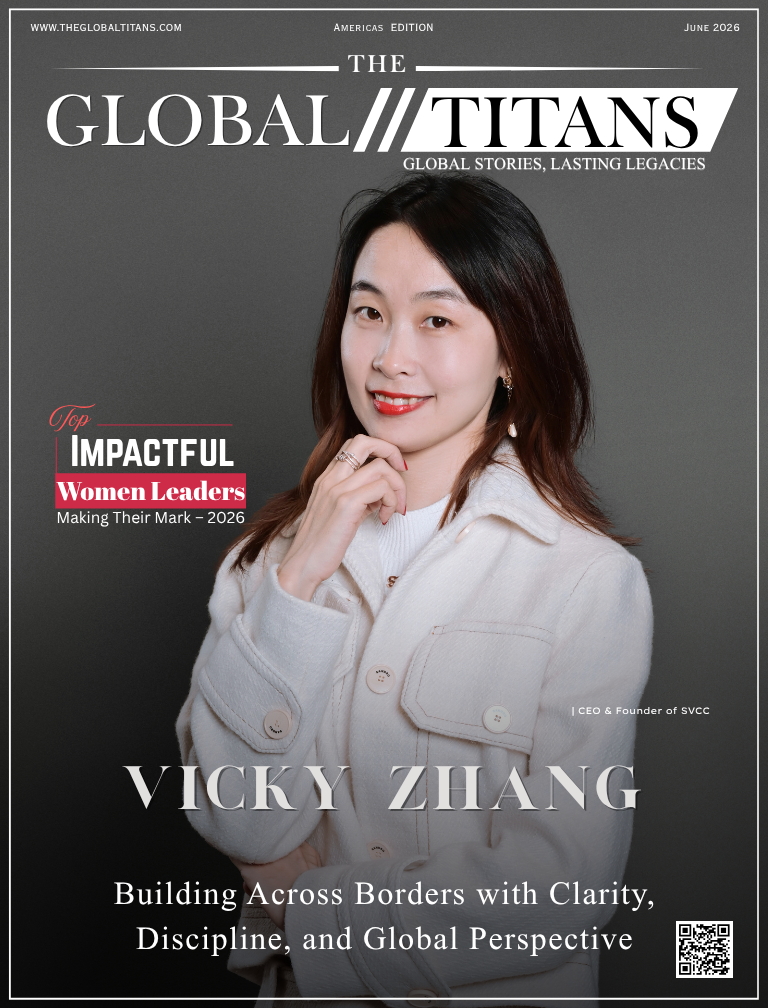
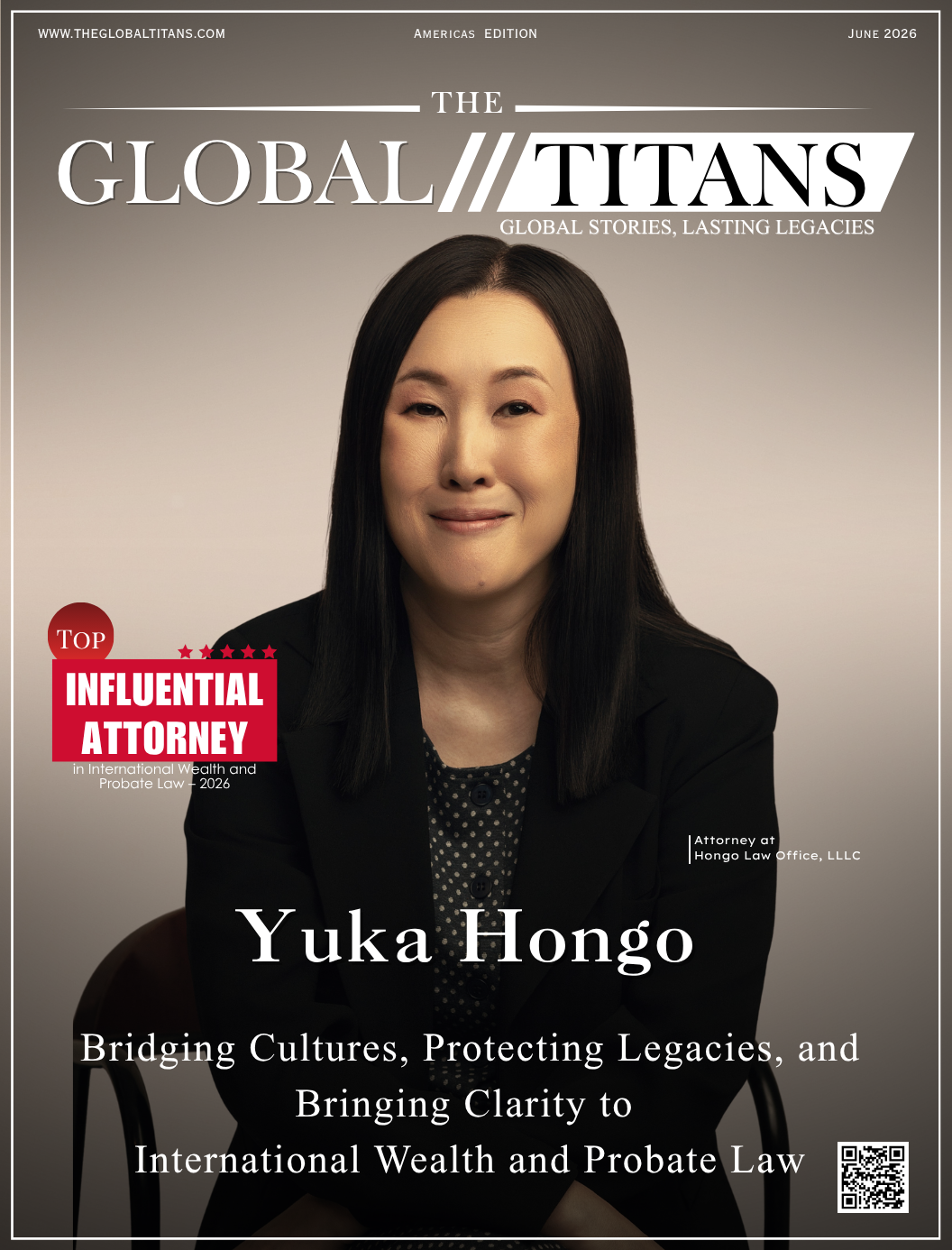
One of the Most Empowering Women Leaders to Watch in 2026
Most Transformative Leader In Management Consulting To Follow
Most Impactful Women CEO Shaping the Future in Business – 2026
One of the Most Influential Lawyer to Watch Out in 2026
The Most Dynamic Women Leader To Watch In 2026
The Most Visionary Women CEOs Making Waves in Industry – 2026
The Quiet Death of the Five-Year Plan: How Continuous Scenario Warfare Is Reshaping Corporate Strategy in 2026
Introduction: The Plan That Couldn’t Survive Contact with Reality In a locked conference room, a senior leadership team unveils a beautifully formatted, 150-page strategic plan. It projects market conditions, competitive moves, and financial results for the next five years. Before the PDF is even shared with the board, its core assumptions about energy prices, supply chain stability, and consumer sentiment have been invalidated by world events. This scene, repeated in corporations worldwide, marks the ceremonial death of the five-year strategic plan. In its place, a new, dynamic discipline is emerging from the world’s most adaptive firms: Continuous Scenario Warfare. For TheGlobalTitans committed to lasting impact, this is a fundamental shift from planning as a periodic event to strategy as a continuous, organization-wide capability. It treats the competitive landscape not as a chessboard to be mastered, but as a complex adaptive system to be constantly sensed, probed, and influenced. This is not an academic exercise; it is the new core operating system for survival and dominance in 2026. From Static Scenarios to Living “Strategy Engines” Traditional scenario planning asked: “What if X or Y happens?” It produced 3-4 static narratives (e.g., “Green Growth,” “Stagnant Protectionism”) that gathered dust on shelves. Continuous Scenario Warfare is different in three key dimensions: 1. It’s Algorithmically Augmented, Not Just Brainstormed. The Tool: The Corporate Strategy Engine (CSE)—a proprietary AI platform that ingests real-time data feeds (global shipping rates, social sentiment, patent filings, commodity futures, weather patterns, geopolitical risk indices). The Output: Not a report, but a constantly updating probability-weighted map of futures. It identifies not just major scenarios, but thousands of micro-scenarios and their interdependencies. It might flag: “There is a 73% probability that a drought in Chile will constrain lithium supply in 8 months, which, combined with new Indonesian export rules (42% probability), will increase battery costs for Competitor A by 18%, creating a pricing window for us in the European micro-EV segment.” 2. It’s Embedded in Operations, Not Confined to the Strategy Department. The insights from the CSE feed directly into live operational systems: Procurement: Auto-adjusts hedging strategies and supplier diversification. R&D: Re-weights project portfolios based on emerging technological or regulatory threats/opportunities. Marketing: Dynamically allocates campaign budgets to regions or products showing higher resilience scores in the scenario map. 3. It’s Validated Through “War Gaming,” Not Just Approval. Quarterly, cross-functional teams are not reviewing a plan. They are injecting shock events (simulated cyber-attacks, competitor mergers, sudden tariffs) into the CSE and the organization’s live dashboards in a controlled environment. The goal is not to “win” the game, but to stress-test the organization’s reflexes, break decision-making bottlenecks, and train leaders to act decisively under simulated pressure. Companies like JPMorgan Chase and Shell have institutionalized this. The Three Layers of Continuous Scenario Warfare This new approach operates on three interconnected time horizons: Layer 1: The Perpetual Now (0-6 Months) – Tactical Adaptation Focus: Managing volatility. The CSE monitors for trigger events that signal a high-probability scenario is activating. Example: The system detects a cluster of canceled container shipments from a key Asian port, a 30% spike in local covid cases, and negative social media sentiment from factory workers there. It automatically triggers a pre-defined playbook: notify the crisis team, shift 30% of orders to a secondary port, and activate a pre-negotiated air freight agreement—all before the mainstream news reports a “factory disruption.” Layer 2: The Probable Next (6-24 Months) – Strategic Maneuver Focus: Shaping outcomes. Here, the company uses its scenario intelligence to make pre-emptive moves. Example: The CSE shows a 65% probability that the EU will extend its carbon tariffs to plastics within 18 months. The firm doesn’t wait. It immediately launches a green polymer partnership with a chemical startup, secures offtake agreements from eco-conscious customers, and begins lobbying for its technology to be the benchmark. When the regulation hits, it’s not a threat; it’s a market-entry event. Layer 3: The Plausible Future (2-5 Years) – Structural Investment Focus: Building optionality. This is where major capital allocation decisions are made, not based on a single forecast, but on a portfolio of bets across multiple plausible futures. Example: Faced with divergent futures for autonomous vehicles (slow regulatory adoption vs. rapid tech breakthrough), an auto supplier invests in a dual-path R&D structure. One team works on incremental sensor improvements for today’s cars. A separate, ring-fenced “moonshot” team develops a full drive-by-wire chassis architecture ready for a software-driven future. The CSE helps determine the funding ratio between the two paths, adjusting it quarterly as probability weights shift. The Cultural Transformation: From Executors to Strategists The hardest part isn’t the technology; it’s the mindset. Continuous Scenario Warfare requires: Psychological Safety to Be Wrong: Leaders must openly discuss low-probability, high-impact scenarios without fear of looking foolish. Distributed Strategic Authority: Decision rights must be pushed down to where the data is sensed. A regional manager must have the authority (and the mandate) to execute a tactical playbook without waiting for HQ approval. New KPIs: Success is measured by agility metrics: Mean Time to Strategic Insight (MTTSI), Decision Velocity, and Portfolio Optionality Value, alongside traditional financials. The Competitive Edge: Seeing the Field Before the Play Is Called In 2026, competitive advantage accrues to those who can shorten their OODA Loop (Observe, Orient, Decide, Act) the fastest. The company practicing Continuous Scenario Warfare has: Already Observed the weak signals its rivals are ignoring. Already Oriented itself by war-gaming the response. Pre-Decided on a set of potential actions. Can Act the moment a scenario threshold is crossed. It is not predicting the future perfectly. It is becoming inherently more adaptable to any future. Conclusion: Strategy is a Verb The era of the strategic plan as a monumental output is over. In its place is strategy as a continuous process—a living dialogue between the organization and an increasingly volatile world, mediated by data, augmented by AI, and hardened by simulation. For the aspiring Titan, the implication is profound. You are no longer a steward of a plan. You are a commander of a live system, a cultivator of strategic agility, and a designer of organizations that thrive on uncertainty. The quiet death of the five-year plan is not a loss of rigor, but the birth
The “De-Globalization” Myth: Why 2026’s Winning Companies Are Mastering Regional Super-Nodes, Not Retreating
Introduction: The Map is Being Redrawn, Not Folded Headlines scream of “de-globalization” and “retreat from world markets,” but this narrative dangerously misreads the seismic shift in global business strategy. Companies aren’t abandoning globalization; they are re-architecting it. The winning model for 2026 is not a wholesale retreat to national borders, but the deliberate construction of Regional Super-Nodes—integrated, semi-autonomous hubs that combine R&D, advanced manufacturing, and local leadership within key geopolitical and economic blocs. For TheGlobalTitans navigating this transition, the distinction is everything. Retreat is a defensive, scarcity-driven move. Regionalization is an offensive, resilience-driven strategy that accepts geopolitical fragmentation as a new operating parameter and builds competitive advantage within it. This article moves beyond the simplistic “onshoring” versus “offshoring” debate to reveal how leaders are building these powerful nodes and why this approach is defining the next era of corporate growth. From Global Supply Chains to Regional Value Ecosystems The old model was a globally optimized, linear chain: design in California, source rare earths from China, process in Malaysia, assemble in Mexico, sell globally. Its weakness was its length and interdependence. A break anywhere collapsed the whole. The 2026 model is a network of regional value ecosystems. Each super-node must contain, within its region, most of the capabilities needed to design, source, make, and sell for its primary market. The North American Node: Focused on USMCA integration, combining US/Canadian R&D and capital with Mexican manufacturing labor and nearshored Asian component suppliers (e.g., Taiwanese semiconductor plants in Arizona feeding Mexican EV factories). The European Node: Built around EU regulatory coherence and Eastern European manufacturing bases, increasingly powered by North African green energy and hydrogen. The ASEAN+ Node: Centered on ASEAN’s trade pacts, combining Vietnamese/Indonesian manufacturing with Singaporean finance/logistics and Australian critical minerals. The super-node isn’t just a factory. It’s a self-reinforcing cluster of suppliers, talent pools, logistics corridors, and energy grids designed for regional sufficiency. The Blueprint: Four Pillars of a Super-Node Building a true super-node requires investment in four interconnected pillars: 1. Sovereign Technology StacksIn critical industries (chips, pharma, energy), each node must develop a minimum viable technological sovereignty. This doesn’t mean replicating the entire global tech tree, but ensuring no single region outside the node controls an irreplaceable choke point. Example: The European Chips Act isn’t trying to out-produce Taiwan in advanced 2nm chips by 2026. It’s ensuring capability in mature-node semiconductors (for autos, industry) and cutting-edge chip design software, so its node isn’t paralyzed by an overseas disruption. 2. Circular Material FlowsThe linear “take-make-dispose” model is geopolitically risky and environmentally untenable. Super-nodes are built on regional circularity. The Practice: A European battery plant is co-located with a lithium recycling facility that recovers spent materials from European EVs. The recycled lithium re-enters the production line, reducing dependence on raw material imports from outside the bloc. This is both an ESG win and a strategic security win. 3. Node-Led Innovation (Glocal R&D)R&D is no longer centralized in a global HQ. Instead, “glocal” R&D centers in each node solve for that region’s unique constraints and opportunities. Case in Point: A global agri-tech firm’s R&D in the EU node focuses on vertical farming and water efficiency tech for dense urban markets. Its ASEAN node R&D focuses on flood-resistant crop strains and smallholder farmer fintech. Both feed a global knowledge base, but each is paramount for winning its region. 4. Regional Talent FortressesTalent is the ultimate bottleneck. Super-nodes require deep, local talent cultivation through node-specific partnerships with universities, technical colleges, and even competitor companies to build a shared skilled labor pool (e.g., German-style apprenticeship models adapted in Tennessee or Gujarat). The Financial Logic: Resilience Has a ROI Skeptics see this as a costly duplication of assets. Leaders see the new math: The True Cost of Interruption: Boards now run “geopolitical stress tests” that model the 30-day EBITDA impact of a Taiwan Strait closure or a Suez blockage. The results, often showing losses in the hundreds of millions, justify the capex for regional redundancy. The Premium for Regional Compliance: Products “Made in EU for the EU” or “Built in Americas for the Americas” can avoid CBAM tariffs, qualify for Inflation Reduction Act subsidies, and earn consumer trust, commanding a price premium or guaranteed market access. Faster Innovation Cycles: When engineering, sourcing, and manufacturing are in the same time zone, the iteration cycle for complex products (like EVs or medical devices) shrinks from years to months, a decisive advantage. The Execution Challenge: Managing a “Federated” Corporation This model forces a radical reorganization. The command-and-control global HQ becomes a strategic coordinator of empowered regional nodes. New Metrics: HQ stops measuring each region purely on profit margin and starts measuring node resilience score, regional market share, and innovation spillover to other nodes. The Leadership Profile: Node CEOs are not glorified country managers. They are mini-CEOs with P&L, technology, and geopolitical authority for their region—exactly the “Architect of Resilience” profile discussed in our succession article. Cultural Tension: The core challenge is fostering collaboration without centralization. Tools like common digital platforms for knowledge sharing and inter-node innovation tournaments are critical to prevent siloes. The Competitors Who Get It Right (and Wrong) The Leader: The Industrial TransformerA major German automotive supplier is now organized into three legally distinct, operationally integrated entities: “Americas Mobility,” “Eurasia Auto,” and “APAC Electro.” Each has its own balance sheet, R&D center, and CEO. They share IP through licensing but compete internally to develop the best solutions for their region, creating a powerful internal market for ideas. The Laggard: The Centralized Tech GiantA US consumer electronics firm, still operating its famed “global factory” model, faced a 14-month delay launching its latest device in Europe. Why? Its centralized AI, trained on US data, failed EU regulatory audits, requiring a complete rework. Its lack of a true EU node with local regulatory expertise became a critical failure point. Conclusion: The New Geography of Power The age of frictionless globalization is over, but the age of global business is not. The next chapter belongs to the regional integrators—the companies that can build and operate these sophisticated, resilient super-nodes. They will be the true Titans of their industries, insulated from shocks that cripple rivals, and uniquely positioned to capture growth in the world’s major economic blocs. For leaders, the mandate
The Silent CEO Succession Crisis: Why Legacy Leadership Models Are Failing the 2026 Corporation
Introduction: The Empty Corner Office In the hushed boardrooms of Fortune 500 companies and high-growth unicorns alike, a troubling consensus is forming: the traditional leadership pipeline is broken. As a wave of long-tenured Baby Boomer CEOs prepares to retire by decade’s end, boards are staring into a talent abyss. The protégé who flawlessly executed a 20th-century playbook—optimizing margins, managing vertical integration, and communicating through polished press releases—is dangerously unprepared for the fragmented, AI-driven, geopolitically charged world of 2026. This isn’t a shortage of candidates; it’s a crisis of relevance. For TheGlobalTitans community—comprising board members, investors, and ascendant leaders—this represents a fundamental risk to corporate longevity and a seismic opportunity for those who understand the new mandate. The companies that navigate this transition successfully won’t just replace a CEO; they will redesign leadership itself around a new set of capabilities that prioritize systemic perception over operational control, and existential agility over incremental improvement. The Four Disruptors Breaking the Legacy Model The failure of the traditional “heir apparent” model isn’t accidental. Four convergent forces have rendered it obsolete. 1. The Velocity of Context CollapseThe CEO’s role has historically assumed a relatively stable external environment. In 2026, context collapses weekly. A geopolitical flashpoint (Taiwan Strait), a regulatory earthquake (like the full CBAM implementation), a viral social movement, and a breakthrough AI paper can all hit in the same 7-day period, each demanding a nuanced, real-time response. The classic “strategic planning cycle” is dead. Legacy pipelines train leaders to manage the known; they fail to prepare them to sense and respond to the unknown at digital speed. 2. The Rise of the “Multi-Sovereign” CorporationAs analyzed in our “Trapped Capital” article, the modern firm operates across conflicting regulatory, cultural, and ethical domains. The next CEO must be a corporate statesperson, negotiating directly with EU technocrats on data privacy, UAE officials on virtual asset rules, and US legislators on subsidy clawbacks—all while maintaining a coherent global brand. Traditional pipelines, often siloed in one region or business unit, do not cultivate this diplomatic fluency. 3. The AI Co-Pilot ImperativeEvery function will soon report to an AI-augmented leader. The 2026 CEO doesn’t need to code the AI, but they must intuitively partner with it. They must ask the right questions of predictive models, interpret algorithmic risk assessments, and manage a workforce where AI is a peer for some tasks and a tool for others. Legacy pipelines promote leaders based on human-team management prowess, leaving a critical “human-machine collaboration” skills gap. 4. The Shareholder-Stakeholder SynthesisThe Milton Friedman era of pure shareholder primacy is over, but the stakeholder capitalism model is proving nebulous and difficult to measure. The 2026 CEO must quantify and communicate societal impact in terms the market understands, turning ESG from a reporting burden into a strategic narrative that attracts talent, secures licenses to operate, and builds customer loyalty. This requires a blend of financial acumen and societal intuition rarely found in a single CFO or COO track. The New Leadership Archetype: The “Architect of Resilience” In response, forward-thinking boards and executive search firms are no longer looking for a “super-manager.” They are searching for the Architect of Resilience, a leader defined by four core competencies: 1. Systemic Foresight (The “Sense-Maker”) The Skill: The ability to identify weak signals from disparate domains (climate science, semiconductor supply data, social media sentiment analysis) and synthesize them into a coherent picture of emerging risk and opportunity. How It’s Cultivated: Not in an MBA program, but through rotations in strategic foresight teams, geopolitical risk advisory roles, or leading “moonshot” R&D projects that operate at the edge of the possible. Companies like Siemens and Amazon are deliberately placing high-potentials in these roles. 2. Narrative Capital Management (The “Meaning-Maker”) The Skill: In an age of deepfakes and misinformation, corporate trust is the ultimate currency. This CEO can craft and steward a authentic, adaptive narrative that explains the company’s purpose to employees, customers, regulators, and algorithms alike. How It’s Cultivated: Through direct exposure to brand crises, media training under fire, and roles managing large-scale internal transformations where communicating “the why” is as important as “the what.” 3. Protean Execution (The “Pivot-Master”) The Skill: The capacity to orchestrate rapid strategic pivots without triggering organizational panic. This involves reallocating capital mid-quarter, sunsetting legacy products before they peak, and acquiring cultural readiness for change. How It’s Cultivated: By giving leaders “turnaround” or “scale-down” mandates early, not just growth assignments. Leading a division through a deliberate wind-down or a radical business model shift is becoming a prized line on the resume. 4. Ethical Algorithmics (The “Integrity Engineer”) The Skill: Making judgment calls on AI ethics—where to set the parameters of a recruiting algorithm, how to audit for bias, when to override a predictive model’s recommendation for humanistic reasons. How It’s Cultivated: Through interdisciplinary education (e.g., a tech leader taking philosophy courses) and participation in cross-company consortia (like the Partnership on AI) that debate and set industry norms. The Practical Crisis: Where Boards Are Looking Now Faced with thin internal benches, boards are being forced to innovate their search: The “Non-Traditional” Talent Pool Raid: Looking at successful startup founders (who have lived volatility), senior military commanders (trained in multi-domain operations under stress), and leaders of major NGOs or government agencies (who understand multi-stakeholder governance). The “Duo-CEO” Experiment: Acknowledging that one person may not embody all needed skills, some firms are testing a complementary duo model—e.g., a “Future-Sensing” CEO paired with an “Operational Integrity” CEO. Early 2026 examples in the tech sector show promise but also complexity in decision-making clarity. The Accelerated “Tour of Duty” Pipeline: Instead of a 25-year linear climb, high-potentials are put on a 10-year “critical experience” circuit, deliberately moving through roles in cybersecurity, sustainability, AI product management, and emerging market strategy to build a mosaic of relevant expertise. The Investor Imperative and Market Reaction The market is starting to price leadership quality in new ways. Analysts at firms like BlueAlpha now publish “Leadership Resilience Scores” based on the depth of the bench and the diversity of experience in the top 100 executives. Succession Transparency as a Metric: Companies with clear, publicly communicated succession plans that highlight the new archetype’s competencies are seeing a 3-5% premium in calm markets, as they