
Laila W. Keith
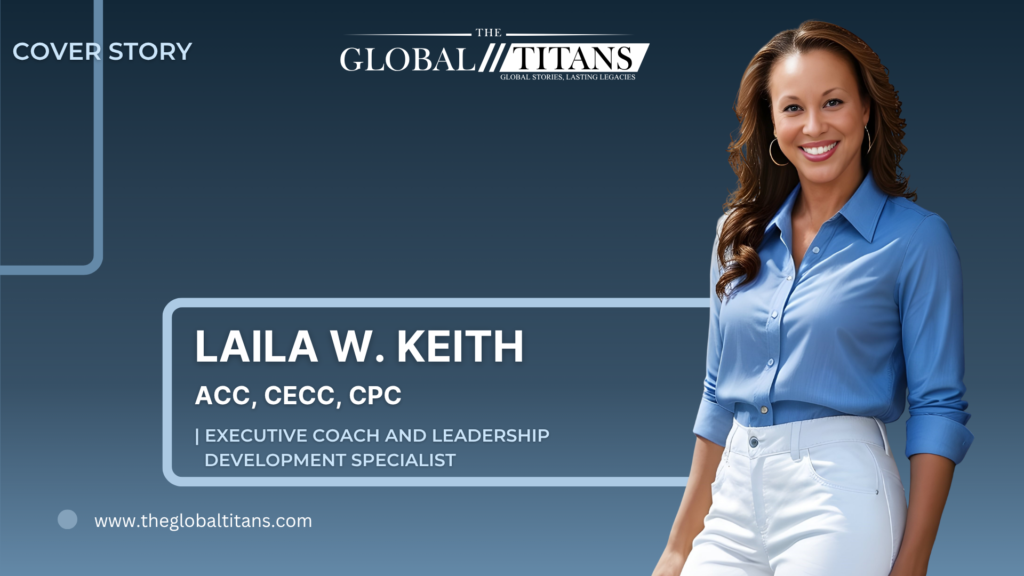
Laila W. Keith, ACC, CECC, CPC
Leading with Conscious Growth, Emotional Intelligence, and the Discipline of Self-Leadership
Some leaders are shaped by one defining moment. Laila W. Keith, Executive Coach and Leadership Development Specialist, was shaped by a lifetime of moments that taught her how to listen, how to notice what is unspoken, and how to help people move from autopilot to conscious choice. Her work through NovaQuest CoachingTM sits at the intersection of purpose, resilience, emotional intelligence, and practical leadership development. What makes her perspective stand out is not only her breadth of experience, but the way she connects personal growth to professional change with unusual clarity.
At the center of her philosophy is a belief that growth often arrives through discomfort, that resilience is built by staying curious in the face of disappointment, and that leadership begins with self-leadership. Across her story, one theme repeats with quiet conviction: people are not broken; they are often operating with outdated and limiting internal narratives, unexplored patterns, and environments that do not reflect their values. Her work is about helping them reconnect with agency, rebuild confidence, and lead in ways that are more human, more grounded, and more sustainable.
Early life, family influence, and the making of emotional intelligence
Laila grew up in Queens, New York, in a family that modeled both ambition and service. Her mother, Vivian M. Warfield, and her older brother, Jonathan Dunnemann, were early examples of what it looks like to care deeply about community, justice, and personal responsibility. They encouraged her to use her voice thoughtfully and bravely, and that foundation shaped everything about how she moves through the world.
Attending the United Nations International School exposed her to different cultures, languages, and worldviews at a very young age. She learned quickly that there is not just one way to lead, communicate, or belong. Later, earning a B.A. in English and French Studies from Trinity College and living in France twice, once in high school and again in college, expanded that worldview even further. Those experiences sharpened her cross-cultural awareness, listening, empathy, and ability to notice nuance in language, selfhood, self-identity, identity, and human behavior. She learned to pay attention not just to what people say, but how they say it and what may be unspoken underneath. That became a foundation for the emotional intelligence that continues to inform how she coaches others.
Like many people, she also faced setbacks and seasons of uncertainty. Over time, she stopped seeing those moments as proof that something was wrong with her and started understanding them as part of her education. Resilience, for her, is the ability to stay curious in the face of disappointment, to keep learning from failure instead of being defined by it. That mindset became the backbone of both her personal growth and her coaching philosophy. It also shaped her mantra of “lessons learned from failure” and her belief that we must fail fast and fail forward, using every experience as data, insight, and an invitation to grow.
The core belief that guides how she leads
One core belief continues to guide almost everything Laila does: growth often comes wrapped in experiences that feel uncomfortable, but those are the moments that shape the next, wiser version of ourselves. She believes people are not broken. They are often operating with outdated and limiting internal narratives, unexplored patterns, and environments that do not reflect their values. Her work is about helping them reconnect to their agency and move from autopilot to conscious choice. That belief shapes how she challenges leaders, with empathy, honesty, and deep respect for their lived experience.
That same belief informs her understanding of pressure. When things feel chaotic, she comes back to a simple equation that has served her for years: discipline plus consistency creates momentum. She focuses on the small, intentional actions she can take today that are aligned with her values, and she grounds herself in what is actually within her control. For Laila, the key is not trying to do everything at once. It is taking one small step at a time, because those steps become marginal gains that build over time and keep overwhelm from taking over.
She also reminds herself that the true locus of control is the inner world, the approach, mindset, behaviors, and choices that belong to her. In those moments, instead of asking why something is happening to her, she asks what lesson she can learn and how she can grow from the experience. That simple shift keeps her grounded, centered, and forward-looking.
A professional path that evolved into coaching and leadership development
Laila’s professional journey began in marketing, communications, and client-facing roles, where she learned how organizations communicate, sell, and build trust. Early experiences at places like Morgan Stanley and The Terrie Williams Agency gave her a front-row seat to brand building, stakeholder management, and high-performance expectations. Those lessons continued to deepen over nearly two decades in the pharmaceutical and medical device industries.
In senior sales and leadership roles at companies such as Sanofi-Aventis, Novartis, and Johnson & Johnson, she managed sales territories, trained new hires, supported and coached teams, and eventually moved into national training and leadership development positions. She designed and delivered leadership programs, built competency models, and launched leadership summits across North America. What she saw firsthand was that leadership behaviors shape culture, performance, and well-being. Coaching and mentoring new hires, emerging leaders, and leaders became a consistent throughline in her work.
Eventually, she felt called to do this work more intentionally and with greater freedom, especially to integrate her values around justice, equity, diversity, inclusion, and conscious leadership. She pursued formal professional coach training and earned certifications through the International Coaching Federation. In 2022, she founded NovaQuest Coaching, LLC to focus on leadership development, entrepreneurial coaching, and career coaching. Today, she partners with leaders and organizations to transform mindsets and experiences, shift behavior, and create healthier, more human-centered workplace cultures.
Why confidence and a healthier relationship with success became central
What first inspired Laila to help leaders build confidence, clarity, and a healthier relationship with success was the experience of spending years as one of the few women of color in leadership within Fortune 500 environments. She saw brilliant, capable people, especially women, doubting themselves, overworking, and internalizing systemic challenges as personal failings. She also recognized that for many high achievers, success came with a cost: burnout, self-silencing, or feeling trapped in roles that no longer fit.
Her own experiences with visibility, perfectionism, and pressure motivated her to become the mentor and coach she wished she had earlier in her career. She wanted to help leaders redefine success on their own terms, build confidence from the inside out, and create careers that were not only impressive on paper, but sustainable and aligned with their core values. That focus runs through her entire practice.
Milestones that reshaped culture, not just performance
One milestone that stands out in Laila’s journey is designing and executing the first leadership development summit at Johnson & Johnson Surgical Vision. The initiative brought together leaders from different regions and backgrounds who had never been in a shared, structured leadership development environment before. It created a new norm for how the organization invested in managers and directors.
The summit did more than accelerate skill-building. It helped reshape the culture, moving more intentionally toward a coaching culture where leadership, development, and feedback were seen as key performance indicators, not extra work. Seeing the summit continue after her departure confirmed that the impact extended beyond a single event. It influenced how leaders thought about culture, how they supported one another, and how they shaped the way work happened across the organization. For Laila, that kind of legacy is a deep source of fulfillment.
The core challenges her clients bring to her
Many of Laila’s clients come to her at an inflection point. They are stepping into bigger roles, navigating organizational change, or realizing the way they have been working is no longer sustainable. Common themes include perfectionism, over-functioning, difficulty setting boundaries, and feeling responsible for holding everything together at work and at home.
They also struggle with visibility, either being overlooked for opportunities or feeling exposed when they do step into the spotlight. Her work with them focuses on building leadership confidence that is not fragile, aligning careers with values, and designing a way of working that supports both high performance and personal well-being. To turn insight into lasting change, she breaks big shifts into specific, repeatable behaviors, practical tools, SMART goals, accountability check-ins, and small experiments that become sustainable habits over time.
Frameworks that help leaders grow with more clarity
Laila’s work integrates established coaching frameworks with her own methodologies, refined and formulated through real-world practice. One of her most impactful innovations is her signature PACT™ Leadership Framework: Perception Check + Pause → Activate Awareness → Conscious Choice → Test & Tune. She uses it in coaching sessions and workshops to create a safe container for reflection, because leaders rarely have enough space in the workday for genuine, deliberate pause.
PACT™ invites leaders to notice what is happening internally and externally, then make a conscious choice rather than reacting from habit, stress, or urgency bias. Alongside her signature leadership framework, she anchors the work in three pillars: clarity on values, direction, and impact; capacity through skills, boundaries, and support systems; and courage, the willingness to more intentionally act, speak, and decide in alignment with values. That combination helps leaders not only understand what needs to change, but also build the conditions to sustain that change.
Where leaders most often get it wrong
Many leaders try to change in isolation and in extremes. They either attempt a massive overhaul overnight or rely on willpower alone, without adjusting their environment, expectations, or supports. When the old system pulls them back, they blame themselves rather than recognizing that sustainable change requires structure, community, practice, and a realistic pathway.
People also underestimate the power of selfhood, labels, identity, self-identity, and internal narrative. If someone still sees themselves as the fixer, the overachiever, or the person who cannot say no, they will unconsciously recreate those patterns even when the calendar looks different. Real change asks not only what is being done differently, but who you are becoming, and who you need to be to experience something different. That is where Laila’s coaching becomes especially practical and powerful, because she helps clients connect awareness to action, selfhood, self-identity, and inner narratives to behavior. To help her clients navigate this shift and evolution of self as a “North Star,” Laila uses this guiding foundational principle: “Leadership isn’t about adding more to your plate; it’s about ending your quiet loyalty to an outdated version of yourself so a more conscious leader can emerge.” – Laila W. Keith, ACC
The trends that will shape the future
Looking toward 2027, Laila sees a growing demand for leaders who can combine performance with psychological safety, mindfulness, and a strengths-based focus. Organizations are beginning to recognize that sustainable results require cultures where people feel safe to speak up, experiment, rest, recalibrate, and bring their full selves to work. She believes emotional intelligence, curiosity, inclusion, diversity, equity, belonging, and mindfulness will only become more essential.
She also believes culture must be normalized as a key performance indicator. Organizations that intentionally invest in culture as a KPI will be better positioned to attract, develop, and retain talent, and to navigate change with more resilience and humanity. Coaching will increasingly be tied to systemic change, inclusive leadership, and healthier workplace environments as a strategic imperative rather than a nice-to-have.
Advice for emerging leaders
Laila’s advice is direct. Start by getting clear on your values and non-negotiables, and let those guide your decisions more than titles or external validation. Confidence grows when you move from a place of alignment and possibility rather than lack. Leading with behavioral integrity means acting in alignment with your values, showing up authentically, aligning your words and deeds, and focusing on who you need to be to level up your leadership.
She also encourages leaders to invest in their inner world as much as their outer achievements. Learn how to rest, set boundaries, ask for support, and recover from setbacks. Leadership is not about never falling. It is about how you get back up, what you learn, and how you treat people, including yourself, along the way.
Quick Takes
One daily practice that has most contributed to your clarity and growth:
I bookend my day with intentional journaling: in the morning, I practice gratitude, set intentions, and reflect on how I want to show up; in the evening, I recalibrate, capture my wins, root myself in gratitude, and journal how I want to show up the next day, so I’m grounded in positivity rather than lack.
One personal value that guides both your life and your work:
Integrity, aligning what I say and what I do. I value how I lead, decide, and show up.
One challenge leaders must prepare for in the next decade:
Balancing rapid technological change with humanity, protecting well-being, equity, cognitive diversity, inclusion, and connection while navigating increasingly complex, fast-moving environments. We need to embrace difference and cognitive diversity as strategic levers for problem-solving and innovation. As AI technology evolves, incorporating cognitive diversity into the design will be critical to enhance innovation and reduce AI model bias, broadening perspectives in data training, and fostering more ethical, inclusive technology design.
One mindset shift that transformed the way you coach others:
Seeing failure as information and evolution rather than a verdict, and embracing the idea of failing fast and failing forward. You don’t win or lose, you win and learn.
One book, influence, or resource every leader should explore:
Eckhart Tolle’s teachings on presence and consciousness to deepen self-awareness and conscious leadership, and Patrick Lencioni’s “The Five Dysfunctions of a Team” to understand what it truly takes to build a cohesive, high-performing team.