
Lisa A. Gioia
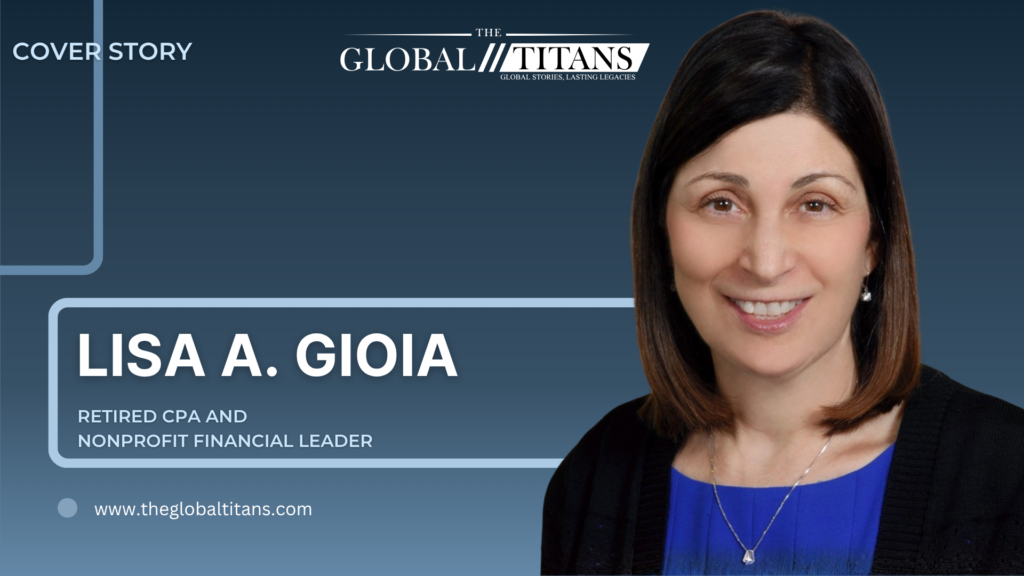
Lisa A. Gioia: Stewardship, Financial Clarity, and a Lifetime of Service to Nonprofit Organizations
For Lisa A. Gioia, leadership has always been helpful to service. Her career as a retired CPA and nonprofit financial leader was never only about accounting, audits, or tax forms. It was about helping organizations become stronger, helping people understand what they needed to know, and helping others feel uplifted through clarity, integrity, and practical support. From early childhood through retirement, her story reflects a steady commitment to kindness, trust, and responsibility.
That not-for-profit began early. Lisa describes her parents, family members, friends, and teachers as “awesome teachers” who were kind, helpful, and loving. In elementary school, she loved being respectful, kind to everyone, and intelligent. She also loved math, which later became the pathway to her accounting career after graduating from Avila College in Kansas City, Missouri. Those early experiences shaped the way she has moved through work and life for many years.
A career built on learning and service
Lisa’s professional journey began with accounting classes in high school, where teachers helped spark her interest in the field. She went on to graduate Summa Cum Laude from Avila College and joined an international accounting firm in Kansas City. There, she worked for six years as a CPA auditing both profit and nonprofit organizations. Later, she moved to Philadelphia and spent three years in the executive office of the firm as a manager, working with staff members in accounting and auditing.
Her career then expanded into nonprofit leadership in a deeper way. She became a self-employed CPA in Philadelphia, serving as an independent auditor and tax professional with more than 40 audit clients and over 120 tax clients. She also taught graduate-level nonprofit accounting and financial management, worked with The Pew Charitable Trusts, instructed at Eastern University, and led continuing education sessions for CPAs across the United States. Later, when she returned to Kansas City, she became a part-time CFO for more than 80 nonprofit clients for 26 years. She also earned a Master of Public Administration from the University of Missouri-Kansas City and served as a Senior Fellow at the Midwest Center for Nonprofit Leadership, where she worked with over 1,000 nonprofit organizations.
The core belief that guided her
Lisa’s work, relationships, and service were guided by honesty, trust, and commitment. She says she enjoys being honest, trustful, and committed to her family, friends, clients, and everyone she serves with as she volunteers. As a CPA, she enjoyed being a leader, helping clients, and teaching bookkeepers, accountants, and CPAs. That same spirit carried through every phase of her career.
Her philosophy as a steward became a financial concept over time. It gave her clients greater financial clarity and helped her lead with integrity, fairness, and prioritization. For Lisa, stewardship was not abstract. It was practical, disciplined, and deeply human. She wanted people to understand the numbers, but also to feel supported by the process.
What nonprofit organizations needed most
Through decades of work, Lisa served nonprofit organizations that relied on her for accounting, auditing, tax support, and guidance. She always acted with integrity, independence, fairness, and objectivity. She would share information, updates, work, and helpfulness, and she would help clients get the best auditor, set up more bookkeepers and accounting staff members, build relationships, and solve problems.
The organizations she served often needed someone who could bring financial structure without losing the mission. Lisa did that by staying close to her clients, helping them understand what to do, and making sure they were uplifted in the process. She was not just managing accounting. She was helping organizations function better and serve better.
Leadership through teaching
One of the most meaningful parts of Lisa’s career was her role as a teacher, trainer, and board member. She taught nonprofit members, trained clients to understand bookkeeping and accounting, and helped boards learn more about donations, budgets, taxes, and audits. She also served in numerous governance roles, including Chair, President, Treasurer, Finance Committee Chair, Committee Chair, and board member for more than 25 nonprofit organizations.
These roles shaped the way she viewed leadership and service. They reinforced the idea that teaching is a form of leadership, and that service becomes stronger when people are given knowledge they can use. In Lisa’s world, education was part of stewardship. It helped others become more financially confident and more effective in their own organizations.
A milestone that reflected real impact
Before retirement, Lisa’s work reached a point where her impact was visible across people and institutions. She taught several nonprofit members at the University of Missouri-Kansas City’s Midwest Center for Nonprofit Leadership, and she worked closely with multiple nonprofit clients. She also trained staff members, accountants, and CPAs so they could collaborate better with her clients. Before stepping back, she even taught another CPA to take over several of her clients, which allowed her work to continue smoothly.
That kind of legacy matters to Lisa. It shows that the work did not end with one person. It created systems, confidence, and continuity. That is the kind of impact she values.
Where leadership and mission stayed aligned
Lisa said there were very few leaders in the nonprofit organizations she served who struggled to balance mission and financial sustainability, because she would work with them weekly to help them understand what they needed to do. That consistent presence helped keep organizations grounded in both purpose and responsibility.
She also saw the future of nonprofit finance as something leaders should continue preparing for. Accounting, auditing, and taxes all change over time, and nonprofit leaders need to be ready for what comes next. Her own career reflected that adaptability, even in retirement, as she continued to stay connected to the organizations she served.
Retirement, gratitude, and legacy
Lisa’s legacy is not only professional. It is also relational. Many of the nonprofit organizations she served expressed gratitude, wished her well, and continued to invite her to events. She still donates to those organizations and remains a sponsor, which reflects the same spirit that guided her career: service does not stop when the job title changes.
Her retirement is therefore not an ending so much as a continuation of a life built around contribution. The gratitude she receives from organizations she once supported is a reminder that her work was both practical and personal.
Quick Takes
One leadership habit that contributed most to your success: Not just one leadership habit, but multiple leadership habits contributed to my success. I loved leading empathy to my clients to share thoughts and experiences, and to embrace their changes for them to be improved. I also was a mentor for clients, staff members, and CPAs that I taught.
One personal value that guided both your life and your work: With compassion to my family, friends, clients, staff members, accountants, and CPAs that I taught, guided both my life and my work.
One challenge nonprofit leaders must prepare for now: Many things have changed over the years for accounting, auditing, and taxes. The nonprofit leaders always need to prepare for the future.
One mindset shift that helped you move from practitioner to legacy-builder: Seeking opportunities and growth with my family, friends, clients, and everyone helped me move from a CPA practitioner to a legacy builder. I focused on nurturing with everyone and helped with wealth and values for everyone.
One book, influence, or resource every mission-driven leader should explore: As mission-driven leader, I have influenced to sacrifice my personal gain to help everyone for the greater good.