
Steven Halpern
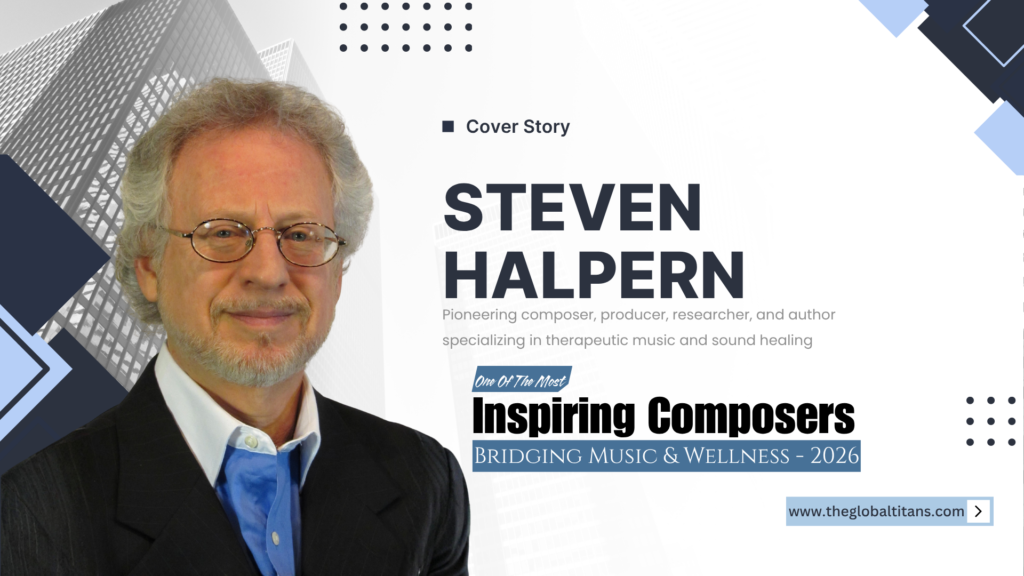
Steven Halpern: The Visionary Who Changed How the World Listens
What if music could do more than entertain us?
Long before sound healing became a widely discussed idea, Steven Halpern was asking a question that few musicians were asking at all:
What if music could help heal, restore, and transform the human experience?
In ancient Egypt, Greece, Rome, and China, music was considered one of the healing arts. Steven wondered why no one was exploring that potential in the twentieth century.
His question would become the foundation of a career spanning more than five decades, creating music, researching sound and consciousness, writing books, teaching, performing, and ultimately helping establish an entirely new genre of sound therapy, meditation, and healing music.
What began as a personal quest became what one KEYBOARD magazine reviewer later called a “Quiet Revolution” in modern instrumental music.
Steven Halpern did not set out to invent a movement.
He set out to follow the music.
The Moment Music Became More Than Music
Steven’s relationship with sound began through jazz and improvisation.
In college, he was inspired by spiritual teachers and writers including Sufi master Hazrat Inayat Khan, Edgar Cayce, and John Coltrane. But the turning point came through his own experience of spontaneous improvisation on trumpet.
Music seemed to flow without conscious direction.
He described it as a “natural high,” a state of being in the zone, or what we might now call flow.
That experience created an intense desire to understand how he could enter that state again.
He later experienced something similar on piano, describing himself as a vessel through which music seemed to move.
“I learned that I was a vessel, and that the years of intense jazz improvisation training had prepared me to be a ‘human instrument’ that could be played by Spirit.”
At first, these explorations were deeply personal.
He was not thinking about creating a new genre.
He was exploring something he had discovered within himself.
Only after beginning to share his music did Steven realize what listeners were experiencing. People from different ages, races, and backgrounds urged him to make the music available to a broader audience.
That encouragement coincided with a growing awareness of stress and the need for healthier ways to manage it.
Steven was, in many ways, his own first audience.
Through biofeedback research, he discovered how much stress he had been living with as his normal state.
The music was no longer simply something he enjoyed creating.
It had become something he felt compelled to share.
Creating a Genre That Did Not Yet Exist
In November 1969, Steven had no clear idea how his vision could manifest.
There were no recording studios readily available to independent musicians unless they were signed to a record label. Record stores had no category for the type of music he was creating.
He had no role models because no one had done what he was attempting.
Yet once he was able to record and press his first 1,000 vinyl albums, something began to happen.
He found an audience hungry for relaxing and healing music.
He began contacting media outlets and New Age bookstores, many of which had never carried this kind of music before. Eventually, his work reached conferences across the United States and London, leading to BBC coverage and introducing his music to an international audience long before the internet.
The response from traditional music critics was very different.
His graduate school faculty and record reviewers asked:
“Where’s the melody? Where’s the beat?”
They argued that he was violating the rules of Western European classical and popular composition.
Steven’s answer was simple.
Yes.
That was precisely the point.
He was pursuing a different relationship with sound, one based not on conventional musical structures but on tone, frequency, space, silence, and the listener’s internal experience.
The Music Came First
Steven’s creative philosophy has remained remarkably consistent.
He serves the music.
Ideas arrive through dreams and meditation. Sometimes he hears an entire composition as soon as he sits at the keyboard. Sometimes a particular quality in the tone of an instrument seems to trigger the music, and suddenly it feels as though the music is playing itself through him.
Artistic intuition and creativity always come first.
Research came later.
As part of his graduate degree, Steven was required to conduct biofeedback research. He had not expected that research to transform his life again.
According to Steven, the research indicated distinctive effects in how listeners responded to his music and led him deeper into emerging studies involving brainwave biofeedback, quantum physics, and related areas.
That intersection between artistic intuition and scientific exploration became a defining characteristic of his work.
He did not begin with research and then create music to fit a theory.
He created the music first.
Then he became interested in understanding what it was doing.
That approach ultimately shaped albums such as DEEP ALPHA and DEEP THETA, created specifically around brainwave-oriented listening experiences.
Steven explains that his biofeedback research showed listeners’ brainwaves synchronizing with frequencies encoded in the soundtracks.
Yet for many listeners, the science was never the reason they stayed.
They simply loved how the music made them feel.
When the Studio Became a Place of Discovery
Some of Steven’s most important discoveries happened not in laboratories, but in recording studios.
During a 1978 session for EASTERN PEACE, he was working on a solo piano track when he felt the energy in the room suddenly shift.
The atmosphere seemed to glow with luminous light.
He felt as though he had been meditating for an hour.
He told the engineer to put on a fresh reel of tape, closed his eyes, and thirty minutes later half the album had been recorded in one take, without editing.
Until that moment, he had not believed such a thing was possible, at least not for him.
Another extraordinary experience occurred while recording ANCIENT ECHOES with Georgia Kelly.
After three hours of completing their harp and piano duets, a chant suddenly came through Steven’s vocal cords.
It had never happened before.
The two began recording again, and an ancient chant based on the five sacred vowel sounds emerged and became the title track.
Two years later, Steven had the opportunity to perform that chant inside the King’s Chamber of the Great Pyramid.
Experiences like these reinforced his belief that music could emerge from places deeper than conscious intention.
“I play the music that I hear in my head, and that elevates my spirit. I follow my bliss and I serve the music.”
More Than Notes
Steven’s philosophy extends beyond composition itself.
He believes that what comes through music depends on more than the notes.
It is also about the energy behind them.
After learning that a musician’s consciousness and stress level could influence the listener’s experience, he began meditating, praying, and clearing his energy field before starting an album project.
“It’s more than the notes. It’s the energy that comes through the notes!”
For Steven, a musician’s internal state matters because the listener receives more than melody or harmony.
The experience includes tone, frequency, silence, intention, and the consciousness of the person creating the work.
That idea also led him to challenge another convention within the growing sound-healing field.
Quality matters.
Intention matters.
And practitioners should listen to their clients.
Steven believes sound healing risks losing its integrity when practitioners over-promise or under-deliver. He encourages sound healers to ask for feedback rather than assuming that what they think is best will necessarily work for everyone.
Sometimes, even something as simple as changing the key of a bowl can change the experience.
The Power of Deep Listening
One of the most profound lessons Steven ever received about sound came in 1972, when spiritual teacher and author Alan Watts spoke to his graduate class.
Watts struck a large Japanese temple bowl on stage.
By the third time, Steven was getting bored.
Then Watts looked directly at him and said:
“Listen to the furthest away sound as the reverberations fade away into silence.”
The moment changed the way Steven listened.
It marked the beginning of his becoming a connoisseur of Tibetan singing bowls, Japanese temple bowls, and quartz crystal bowls, many of which remain in his collection today.
Decades later, that lesson still influences his work.
When he listens to music in the studio through headphones, he can hear into the deep silence between the notes without enhancement or anything else.
For Steven, silence is not the absence of sound.
It is part of the music.
And his own work seeks to take listeners toward that place of inner peace and silence, at the speed of sound.
A Quiet Revolution Becomes a Global Legacy
Steven’s influence expanded far beyond the recording studio.
His music was selected by therapists, massage practitioners, meditation leaders, and bestselling authors including Marianne Williamson, James Van Praagh, John Bradshaw, and Dr. Brian Weiss as the soundtrack for guided meditations.