
Introduction: The $2 Trillion Paralysis While headlines focus on interest rates and stock buybacks, a more insidious challenge is gripping corporate boards in 2026: capital paralysis. An estimated $2 trillion+ in corporate cash and liquid assets is effectively “trapped”—geographically stranded by shifting regulatory regimes, legally frozen by sanctions and counter-sanctions, or operationally stuck in underperforming divisions that can’t be sold due to market uncertainty. This isn’t idle money; it’s a monumental drag on ROI, innovation, and shareholder returns. For the strategic minds in TheGlobalTitans network, this represents both a critical vulnerability and a massive opportunity. The companies that crack the code on capital fluidity will gain a decisive competitive edge, funding their next growth phase from within while rivals remain hamstrung. This article moves beyond diagnosing the problem to outlining the sophisticated, often novel strategies that leading global firms are deploying to liberate and weaponize their frozen funds. The Three Prisons of Capital Understanding the trap is the first step to escape. Capital is being held hostage in three distinct ways: 1. The Geopolitical Prison (Sanctions & Regulatory Balkanization) The Sanctions Snarl: Following the events of the early 2020s, complex webs of overlapping sanctions (US, EU, UN) have made moving money across certain borders a legal minefield. A European industrial conglomerate may have legitimate profits in a joint venture that now sits in a bank in a “gray-listed” country, unable to be dividended out without risking massive penalties. The CBAM & Tax Vortex: As analyzed in our previous news piece, mechanisms like the EU’s CBAM are creating new administrative and cash-flow hurdles. Pre-paying for carbon certificates ties up cash. Simultaneously, the global minimum tax (Pillar Two) has created new uncertainties around the tax efficiency of cross-border flows, causing many treasuries to simply freeze movements until clarity emerges. 2. The Operational Prison (The “Zombie Division” Dilemma) The Problem: In a fragmented market, selling a non-core division is harder than ever. Potential buyers are scarce, financing is expensive, and valuations are depressed. However, these units often tie up significant working capital and management attention. They are not bankrupt, but they are value traps. The Example: A US consumer goods giant has a profitable but slow-growth European food brand. It’s not strategic for their future in wellness and digital, but a trade sale to a private equity firm fell through in 2025 due to financing. The capital and brand value are trapped. 3. The Structural Prison (Legacy Holding Architectures) The Web of Subsidiaries: Decades of global expansion have left multinationals with byzantine networks of holding companies and inter-company loans, optimized for a world of stable tax treaties. The new, volatile regulatory environment has turned these structures from efficient to ossified, making it slow, costly, and risky to upstream cash to the parent company where it could be strategically deployed. The Vanguard Playbook: Unlocking Strategies for 2026 Leading corporations are moving beyond pleading with governments to creating their own solutions. Strategy 1: The “In-House Investment Bank” for Zombie AssetsInstead of waiting for a buyer, companies are creating internal special situations teams to monetize trapped operational assets. The Spin-Finance-Sell Model: Rather than a straight sale, they are: Spinning the division out as a legally separate entity. Financing it with a mix of vendor financing (from the parent) and external debt raised against its own assets. Using the external debt proceeds as a “synthetic dividend” to repatriate value to the parent immediately. Selling the cleaned-up, leveraged entity later when markets improve, or letting it operate independently. Titan Case Study: A German engineering firm used this method on its North American infrastructure unit, extracting 70% of the unit’s appraised value in cash within 90 days of the spin, while retaining a 49% equity stake for future upside. Strategy 2: The Digital Barter & Vostro/Nostro RevivalFor cash trapped in sanctioned or high-risk jurisdictions, moving the money is impossible, but moving the value is not. Multi-Party Digital Barter: Corporate treasury departments, facilitated by fintech platforms like CommodityStream, are engaging in complex, multi-party barter. For instance, Company A’s trapped rubles in Russia are used to pay Company B’s local energy bill. In exchange, Company B’s trapped yuan in China is used to pay for components for Company A’s factory there. No cash crosses a sensitive border. The Modern Vostro Account: Inspired by ancient trade, companies are establishing direct, bilateral “vostro” account relationships with trusted counterparties in key regions. They park local currency in each other’s accounts and draw on it for local expenses, bypassing the global banking network entirely for certain flows. Strategy 3: The “Regulatory Arbitrage” SPV (Special Purpose Vehicle)When you can’t move the capital to the opportunity, you move the opportunity to the capital. The Model: Identify a growth project (e.g., a green hydrogen pilot) that logically should be funded from headquarters. Instead, establish a project-specific SPV in the jurisdiction where the cash is trapped. Fund the SPV with the local trapped cash. The intellectual property and profits are contractually funneled to the parent via licensing fees, which are often less restricted than dividends. This turns a liability (stranded cash) into a strategic beachhead for investment in that region. The New Corporate Functions Emerging This crisis is birthing new C-suite and board-level roles: The Chief Capital Fluidity Officer (CCFO): Responsible for the end-to-end health of the balance sheet, focused on velocity and strategic deployment, not just preservation. The Treasury Strategist (not just Operator): Treasuries are now expected to design sophisticated financial engineering solutions, not just execute transactions. They are becoming internal consultants. The Board’s Capital Committee: A sub-committee dedicated solely to reviewing the efficiency of the corporation’s entire capital footprint—working capital, capex, and cash locations—as a key metric of strategic health. The Risks and Ethical Lines These innovative strategies walk a fine line. Regulatory Risk: Aggressive structures may be challenged by tax or sanctions authorities. The line between “smart” and “non-compliant” is thin and shifting. Counterparty Risk: Barter and vostro arrangements depend entirely on the financial health and trustworthiness of the other corporation. Complexity Risk: Over-engineered solutions can create operational nightmares and hidden costs that outweigh the benefit of unlocking the cash. Conclusion: From Balance Sheet Management to Capital Velocity Warfare

2026 Stealth Bull Market: Stock Picker Renaissance & Fragmented Indexes | TheGlobalTitans
Introduction: The Great Divergence Beneath the Surface A casual glance at major global indices in Q1 2026 paints a picture of stagnation. The S&P 500 and Euro Stoxx 50 have moved sideways in a tight band for months. This has led many headline-focused commentators to declare a market in wait-and-see mode. They are missing the forest for the trees—or more accurately, missing the raging bull for the placid index. Beneath the flat surface of capitalization-weighted indexes, a historic stock picker’s market is unfolding, driven by radical dispersion between sectors, regions, and business models. For the investors and strategists in TheGlobalTitans community, this environment is a return to fundamentals and a validation of deep research. The era where “a rising tide lifts all boats” is over. In 2026, the tide is complex and local—lifting supertankers in one harbor while beaching dinghies in another. This analysis breaks down the forces creating this divergence and provides a map to the hidden bull markets within a seemingly neutral overall landscape. The Engine of Divergence: Three Macro Fracture Lines Three interconnected macro developments are shattering market uniformity and rewarding selective investing. 1. The Geopolitical Re-pricing of Assets (The “Sovereignty Premium”)Capital is no longer agnostic. The post-Ukraine, post-tech-accord world assigns a new risk variable: geopolitical alignment. The Premium: Companies with secure, “friend-shored” supply chains for critical inputs (chips, minerals, pharmaceuticals) are receiving valuation premiums. A European semiconductor equipment maker serving Taiwanese and US fabs trades at a higher multiple than a peer reliant on a broader, unfocused global clientele. The Discount: Firms with significant, non-strategic exposure to geopolitically tense regions are seeing their cost of capital increase, directly impacting DCF valuations. This is particularly acute in industrial and material sectors. The Index Blind Spot: Broad indices own both, netting out the effect. Active managers are overweighting the former and underweighting or shorting the latter. 2. The Interest Rate “Dual Economy”Central banks are not moving in unison. The Fed, ECB, and BOJ are on starkly different paths in 2026, creating a fragmented rate environment. The US “Higher-for-Longer” Reality: Persistent service inflation keeps the Fed cautious. This continues to pressure long-duration, high-PE growth stocks (certain unprofitable tech) while benefiting financials and value stocks with strong near-term cash flows. The European Cautious Easing: The ECB is cutting, but slowly, to avoid currency collapse. This provides a tailwind for European exporters and cyclicals, but the benefit is uneven across the Euro Stoxx. The Index Problem: A global index blends these effects, masking the specific opportunities (and risks) in each region. 3. The Profitability Reckoning (Post-ZIRP Hangover)The decade of near-zero interest rates allowed unprofitable growth to flourish. That era is conclusively over. The New Mantra: GAAP Profitability & Positive FCF. Companies that have transitioned to genuine, scalable profit engines are being aggressively rewarded. Those still burning cash to buy growth are being starved of capital and face brutal down-rounds or takeunders. Sector-Specific Carnage & Opportunity: This is clearest in tech. Within the software sector, divergence is extreme. A profitable cybersecurity leader may be up 40% YTD while an unprofitable consumer SaaS company is down 60%. The NASDAQ index, holding both, shows minimal net movement. The Winning Thematic Baskets of Early 2026 Within this fractured landscape, clear thematic baskets are delivering exceptional returns. 1. The “Industrial Re-toolers”Companies providing the machinery, software, and engineering for the global re-industrialization (spurred by articles like our Green Steel analysis). This includes: Factory Automation & Robotics (e.g., Siemens, Fanuc): Benefiting from re-shoring and the need for productivity to offset higher labor costs in developed markets. Industrial Software & Digital Twins (e.g., Ansys, Dassault Systèmes): Critical for designing and operating the next generation of efficient, agile plants. 2. The “Energy Arbitrageurs”Firms positioned to benefit from massive regional disparities in energy costs. European Chemical Giants (e.g., BASF, Covestro): After years of pain from high EU gas prices, they are now the prime beneficiaries of new North African green hydrogen import deals signed in late 2025, creating a significant cost advantage over global peers. US Data Center REITs & Utilities: With AI-driven power demand skyrocketing, companies with access to cheap, stable power (nuclear, geothermal) in deregulated markets are seeing explosive cash flow growth. 3. The “Defensive Growth” CohortIn a uncertain macro climate, companies with non-cyclical demand and pricing power are king. Weight-Loss Drug Ecosystem: It’s moved beyond the pharma makers (Novo Nordisk, Lilly) to the specialized medical providers, diagnostic firms, and complementary health platforms enabling treatment, creating a multi-layered investment universe. Essential Tech Infrastructure: Not flashy AI apps, but the semiconductor test equipment, specialty materials, and cooling solutions required by all AI data centers. Their demand is virtually guaranteed, regardless of which AI model wins. The Metrics That Matter Now (Forget P/E Alone) The old valuation shorthand is broken. In 2026, sophisticated investors are layering new metrics on top of traditional ones: Supply Chain Vulnerability Score (SCVS): A quantitative measure of geographic concentration for key inputs. A low score commands a premium. FCF Conversion Rate (Net Income to FCF): Highlights quality of earnings. A high rate indicates a durable business model less dependent on external capital. “Re-investment Efficiency Ratio”: Measures how effectively a company’s R&D and Capex translate into incremental revenue and margin. Exposes “spray and pray” innovation strategies. The Passive Investing Dilemma and the Active Renaissance This environment is kryptonite for classic passive index funds. The Cap-Weighted Flaw: Indices are dominated by mega-caps whose fortunes may be disconnected from the vibrant growth happening in mid-caps. Money flows automatically into past winners, not future ones. Thematic and Smart-Beta ETF Rise: This is fueling growth in actively-managed ETFs and thematic indices that attempt to capture these specific fracture lines (e.g., a “Friend-shored Industrial” ETF). The Stock Picker’s Edge: Fundamental analysts who can assess management quality, supply chain resilience, and true innovation have a wider performance gap over the index than at any time since the dot-com bubble. The dispersion of returns within sectors is at a 15-year high. Conclusion: Navigating the Map, Not Following the Compass The 2026 market is a powerful reminder that the “market” is an abstraction. Real investment returns are found in individual companies navigating specific, powerful currents. The flat index is a mirage, masking a landscape of deep valleys and soaring

EU Green Steel & Carbon Tariff 2026: Global Industrial Arms Race Analysis | TheGlobalTitans
Introduction: The Tariff That Changed the Rules of Global Trade On January 1, 2026, the European Union’s Carbon Border Adjustment Mechanism (CBAM) transitioned from a looming threat to a daily financial reality for thousands of importers. The full-phase implementation of the world’s first carbon tariff is not merely a policy shift; it’s the starter’s pistol for the greatest industrial transformation since the Industrial Revolution. At its epicenter is steel—the backbone of modern economies—now being reforged in the fires of global competition and climate necessity. For executives and investors tracked by TheGlobalTitans, this is the defining business news story of the year. The CBAM effectively erases the competitive advantage held by carbon-intensive producers in regions with lax climate policies. Early 2026 data shows the cost of importing conventional Chinese steel into the EU has surged by 25-40% once CBAM certificates are purchased. The result? A frantic, capital-intensive global race to produce “green steel” and a fundamental re-mapping of industrial supply chains. This isn’t just about compliance; it’s a battle for future market sovereignty. The Contenders: Mapping the New Global Steel Landscape The race is creating clear clusters of winners, challengers, and vulnerable incumbents. 1. The European First-Movers (Betting on Hydrogen)European giants like ArcelorMittal and Thyssenkrupp are staking their futures on green hydrogen-based direct reduction iron (DRI) technology. The Strategy: Replace coking coal with hydrogen (made from renewable energy) to reduce iron ore. The only emission is water vapor. The Hurdle: Colossal capital expenditure. The green premium for this steel is currently €250-€400 per tonne. Their bet is that CBAM will make conventional steel so expensive that their product becomes the default for the EU’s automotive and construction sectors by 2030. The News Flash: In February 2026, ArcelorMittal secured a landmark €850 million joint funding package from the EU Innovation Fund and a consortium of German automakers to scale its Gijón (Spain) plant, signaling deep strategic alignment between industry and policy. 2. The North American Pragmatists (Hybrid Tech & IRA Boosts)US firms like Nucor and Cleveland-Cliffs are pursuing a more flexible path, leveraging the US Inflation Reduction Act’s rich tax credits (still powerful in 2026). The Strategy: A mix of electric arc furnace (EAF) recycling (already low-carbon) and incremental DRI projects using a blend of natural gas and eventually hydrogen (“blue” then “green”). The Advantage: Lower immediate costs and a massive, protected domestic market in the US, which is now considering its own version of CBAM. They are poised to become the low-carbon supplier of choice for North American EV and infrastructure projects. 3. The Asian Giants Under Pressure (Strategic Pivots)China and India, the world’s largest steel producers, face the starkest challenge. China’s Dual Response: State-owned Baowu Steel is launching mega green steel complexes (like the Zhanjiang plant) powered by dedicated offshore wind farms. Simultaneously, Beijing is fiercely lobbying at the WTO, calling CBAM a “protectionist trade barrier.” The news cycle is dominated by this tension between adaptation and accusation. India’s Opportunity: With abundant solar potential, companies like Tata Steel are betting they can produce green steel cheaper than Europe. Their play is to become the green supplier to Southeast Asia and the Middle East, regions yet to enact their own carbon tariffs. The Ripple Effects: Reshaping Industries Beyond Steel The green steel race is not happening in a vacuum. It’s sending shockwaves through interconnected sectors, creating both crisis and opportunity—a hallmark story for Titans who see the full board, not just a single piece. Automotive (The End-Customer Driver): BMW, Mercedes, and Volvo have already signed multi-billion euro, multi-year offtake agreements for green steel starting in 2027-2028. This guaranteed demand is what’s de-risking the steelmakers’ investments. For automakers, it’s the only way to decarbonize their Scope 3 emissions and maintain market access. Mining (The Raw Material Shift): The shift to DRI requires higher-grade iron ore (>67% Fe). This is triggering a massive capital reallocation in mining, with giants like Rio Tinto and BHP diverting investment from Pilbara (Australia) lower-grade mines to high-grade projects in West Africa and Canada. Renewable Energy & Hydrogen (The Enablers): The equation is simple: no cheap, abundant green hydrogen = no affordable green steel. This is creating an unprecedented demand anchor for the entire green hydrogen industry, accelerating its scale-up by a predicted 5-7 years. Projects in North Africa (for export to Europe) and Australia are now being fast-tracked. The Financial Markets Are Betting Billions The news is being translated directly into capital flows and valuations. Green Premiums in Equity Markets: Public companies with credible green steel transition plans are trading at a 15-20% EBITDA multiple premium over laggards. Analysts have created new valuation metrics: “Cost per Tonne of Abated Carbon” and “Green Capacity Timeline.” The Rise of Transition-Focused Funds: New ETFs and private equity funds are specifically targeting “industrial decarbonization.” They provide the patient capital for the 5-7 year build cycles of these mega-projects. Commodity Trading Transformed: Trading houses like Trafigura and Cargill are building entirely new desks focused on trading carbon credits, CBAM certificates, and guarantees of origin for green steel, creating a complex new financial ecosystem around physical goods. Geopolitical Tensions and the Risk of Fracture The path is fraught with peril. The dominant business news narrative beyond the technology is one of geopolitical friction. The “Carbon Club” vs. The Rest: The EU, UK, and possibly the US (if it acts) could form a climate-aligned trade bloc. Goods from outside this bloc face steep tariffs, effectively creating a new form of economic alliance based on emissions standards. WTO Challenges: The legal battles have begun. Cases brought by China, India, and Russia allege CBAM violates international trade law. The outcome could either legitimize carbon tariffs globally or trigger a wave of retaliatory measures. The Developing Nation Dilemma: Countries like Ukraine and Morocco with steel industries hope to use their renewable potential to become green steel hubs for Europe. However, they risk a “green colonialism” backlash if the profits and high-value jobs are perceived to flow back to European corporate headquarters. Conclusion: The Forge of a New Industrial Age The full activation of the EU’s CBAM in 2026 is more than a policy; it’s a market signal of unimaginable power. It has taken the abstract cost of carbon and made it a concrete line item on every invoice for trade-exposed goods.

Building Anti-Fragile Supply Chains: The 2026 Corporate Survival Strategy | TheGlobalTitans
Introduction: From Resilience to Anti-Fragility In boardrooms from Stuttgart to Singapore, a strategic revolution is quietly unfolding. The corporate mantra of 2026 has evolved beyond mere “supply chain resilience”—a concept that proved insufficient against the cascading disruptions of the 2020s. Today’s forward-thinking leaders, the true global titans of industry, are implementing what Nassim Taleb foresaw: anti-fragile systems. These aren’t just systems that withstand shocks; they are architectures designed to thrive on volatility, uncertainty, and disorder. The shift is driven by hard data. A 2025 McKinsey analysis revealed that companies with truly anti-fragile characteristics outperformed sector averages by 28% in EBITDA margin during periods of geopolitical or climatic stress. For TheGlobalTitans network, this represents more than operational excellence—it’s the new core of strategic competitive advantage. This article deconstructs the three-pillar framework turning vulnerability into opportunity. Pillar 1: The Multi-Polar Manufacturing Ecosystem The era of cost-optimized, single-region sourcing is conclusively over. The 2026 model is purposefully redundant, geographically distributed, and politically diversified. The “3+2” Location Strategy: Leading firms now maintain at least three primary manufacturing hubs across different geopolitical spheres (e.g., North America, EU-aligned Eastern Europe, and ASEAN), supplemented by two “hot standby” contract manufacturers in secondary regions like Mexico or India. This isn’t duplication; it’s strategic dispersion. The “Digital Twin” Enabler: Before a single bolt is turned in a new facility, its entire operational flow is modeled in a living digital twin. Companies like Siemens and Tesla use these twins to simulate disruptions—a port closure in Vietnam, a labor strike in Poland—and pre-emptively reroute production and logistics in minutes, not months. Case in Point: The Automotive Titan’s Pivot: A major German automaker, stung by the chip shortage, now produces its core infotainment system in three identical, parallel micro-factories (US, Czech Republic, Malaysia). AI dynamically allocates orders based on real-time cost, capacity, and risk factors, creating a system where a shutdown in one region automatically increases efficiency in the other two. Pillar 2: AI-Driven Predictive Logistics & Procurement Resilience is reactive; anti-fragility is predictive. The second pillar involves embedding AI as a central nervous system for the supply network. Beyond Predictive Analytics to Prescriptive Intelligence: Modern platforms don’t just flag a potential delay at the Port of Los Angeles; they automatically re-route shipments via Vancouver, renegotiate spot freight rates using algorithmic agents, and adjust production schedules at the destination factory—all without human intervention. The “Synthetic Supplier” Model: Companies are using generative AI to create digital proxies of their key suppliers. These models ingest thousands of data points (financial health, regional weather, political sentiment, energy costs) to predict supplier failure risk quarters in advance, allowing for proactive support or alternative sourcing. Transparency as a Weapon: Blockchain-enabled material tracing, from mine to finished product, is no longer a CSR gimmick. It’s a critical tool for avoiding bottlenecks. A US electronics firm recently avoided a rare earth metal shortage by using its traceability platform to identify and qualify an alternative Australian supplier in 72 hours, a process that previously took six months. Pillar 3: Financial Engineering for Volatility The final pillar recognizes that operational agility must be matched by financial flexibility. Anti-fragility is funded. Dynamic Hedging Portfolios: Instead of static annual hedges for currencies and commodities, treasuries now use machine learning-powered, continuous hedging programs. These algorithms execute micro-hedges thousands of times a day, turning market volatility from a cost center into a slight profit center. Supply Chain Finance as Strategic Leverage: Programs that offer early payment to healthy suppliers are being weaponized. A company can use its balance sheet to stabilize a critical but financially shaky supplier during a downturn, ensuring their own survival and gaining immense loyalty and preferential pricing for the recovery. The “Insurance-Linked Security” (ILS) Innovation: Pioneered by global logistics firms, these capital market instruments allow companies to securitize their supply chain risk. By issuing bonds where payouts are triggered by specific, measurable disruptions (e.g., “Strait of Hormus closure > 14 days”), they transfer tail risk to institutional investors and free up capital for innovation. The Implementation Challenge: Culture Over Code The greatest barrier to anti-fragility isn’t technological; it’s cultural and organizational. Breaking the Cost-Center Mentality: CFOs must be re-educated to view redundancy and technology spend not as inefficiencies, but as strategic insurance premiums with measurable ROI in continuity and market capture. The Rise of the Chief Continuity Officer (CCO): A new C-suite role is emerging, combining traditional risk management with real-time operations and data science. The CCO owns the anti-fragility KPI: Mean Time To Recovery (MTTR), driving it relentlessly toward zero. Partner Ecosystem Integration: Anti-fragility cannot stop at your company’s firewall. It requires deep, data-sharing partnerships with tier-1, tier-2, and even tier-3 suppliers. This demands a new level of trust and collaborative technology integration. Conclusion: The Ultimate Competitive Moat In 2026, a company’s supply chain is its most visible competitive moat. An anti-fragile network does more than protect revenue; it creates opportunities to capture market share when competitors are paralyzed, to negotiate from strength during global crises, and to build unshakable customer trust through flawless delivery in flawed times. For the Titans aiming to lead their industries for decades, the question is no longer if they can afford to build this capability, but if they can afford not to. The next disruption is not a matter of “if” but “when.” The businesses that will define the coming era are those building systems today that don’t just survive the storm, but learn to sail faster because of it.

One of The Most Influential Business Women To Watch In 2026
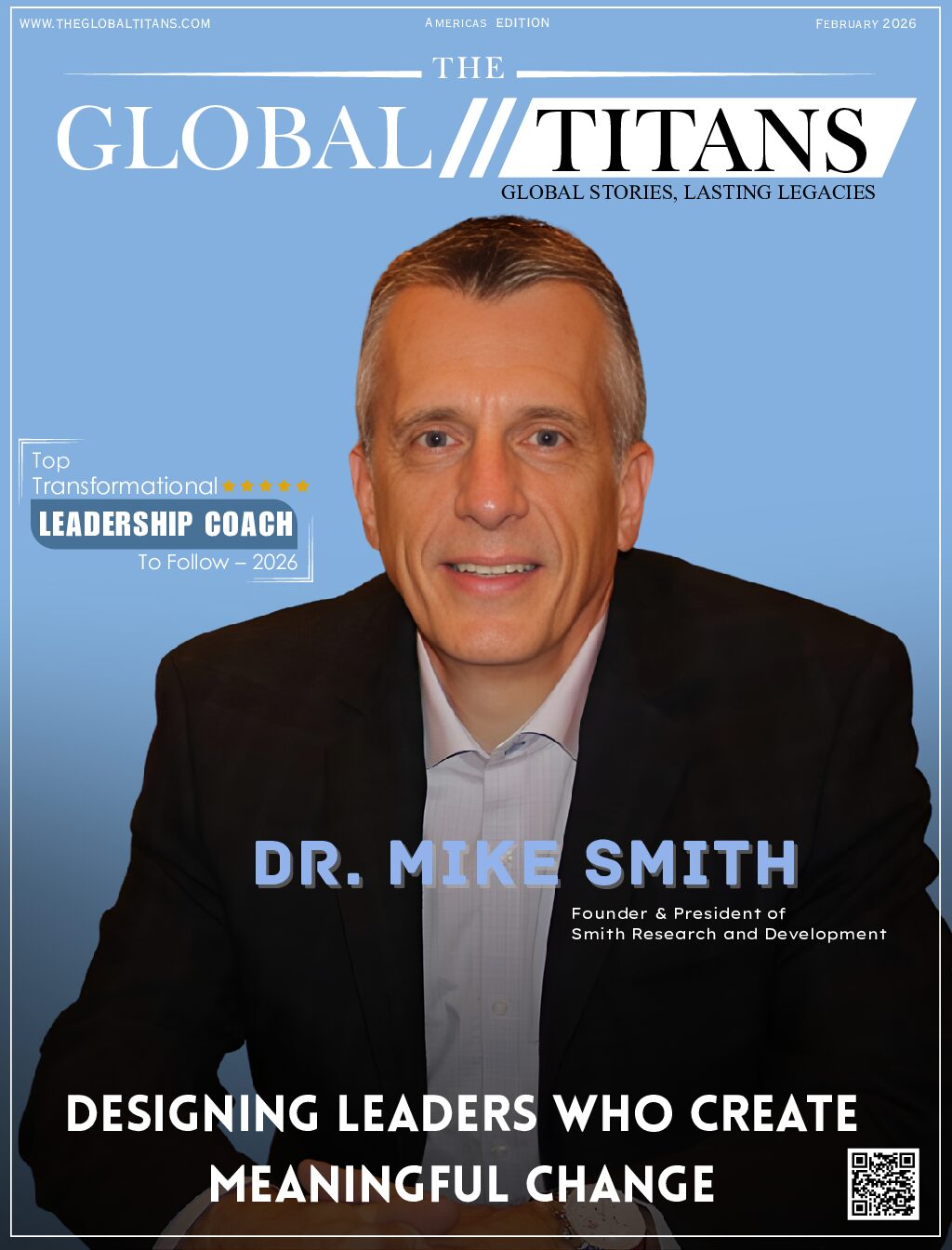
Top Transformational Leadership Coach to Follow – 2026

US-China AI Accord 2026: What the Tech Truce Means for Global Business | TheGlobalTitans
Introduction: The Handshake That Changed the Tech World In a move that stunned markets and policymakers alike, February 2026 witnessed the signing of the “US-China Framework for Managed Artificial Intelligence Competition” in Geneva. This accord, emerging after 18 months of secret backchannel negotiations, represents the most significant bilateral tech agreement since the Cold War. It doesn’t end the technological rivalry but establishes its first formal rules—creating what analysts are calling “competitive coexistence.” For global business leaders monitored by TheGlobalTitans, this isn’t just geopolitical news; it’s a fundamental recalibration of the playing field. The accord immediately removed a monumental “unknown unknown” from strategic planning, impacting everything from semiconductor investment decisions to startup funding routes and public market valuations. This analysis breaks down the agreement’s pillars and explores what this new era of structured tech competition means for innovation, markets, and the next generation of industry titans. The Accord’s Three Core Pillars: Decoding the Fine Print The framework rests on three mutually agreed-upon pillars designed to prevent catastrophic escalation while preserving national security: 1. The “Transparent Frontier” Pact on Foundational Models What It Is: Both nations have agreed to mandatory pre-deployment notification for the training of any AI model exceeding 10^26 FLOPs (a threshold marking the current cutting edge). This includes sharing basic safety testing protocols, not model weights or architecture. The Business Impact: This creates unprecedented predictability for hyperscalers like Google, Microsoft, and Alibaba. R&D roadmaps can now be planned without fear of a destabilizing, surprise “Sputnik moment” from the other side. For investors, it reduces the regulatory black swan risk that has plagued AI stock valuations. 2. The Semiconductor Supply Chain “Stability Corridor” What It Is: A tiered system allowing continued US export of mature-node (28nm and above) semiconductor manufacturing equipment to China, with enhanced tracking to prevent military diversion. In return, China agrees to discontinue direct state subsidies for legacy chip production that created global oversupply. The Business Impact: This brings strategic clarity to a $600 billion industry. US equipment makers like Applied Materials and Lam Research regain a stable, massive market for mature tech. Global automakers and industrial firms can expect an end to the volatile chip shortages and gluts of recent years. Taiwanese and Korean foundries (TSMC, Samsung) see reduced pressure in legacy nodes, allowing them to focus capital on advanced (<2nm) research. 3. The Joint Global AI Safety Initiative (GAISI) What It Is: A commitment to co-develop, with allied nations, international standards for AI risk in civilian domains: medical diagnostics, autonomous transport, and digital twins for critical infrastructure. Think of it as a “Paris Agreement for AI.” The Business Impact: For startups and tech titans alike, this promises a future of harmonized regulation. A company developing an AI radiology tool can now aim for a single global safety certification, not 50 different national standards. This drastically reduces compliance costs and accelerates time-to-market for ethical AI innovations. Immediate Market Reactions: Winners, Losers, and the Repricing of Risk The markets responded with a sectoral earthquake, repricing assets based on newfound clarity. The Clear Winners: Global Cloud & AI Infrastructure Stocks: Companies like Microsoft (Azure), Amazon (AWS), and Google Cloud saw immediate 5-8% jumps. Their massive capital expenditures in AI data centers are now backed by a more predictable competitive horizon. Specialized Semiconductor Equipment Firms: ASML (Dutch) and the US’s KLA Corporation rallied as the agreement protects their intellectual property while securing their China market access for mature technology. Multinational Manufacturers: Industrial giants with complex global supply chains, from Toyota to Siemens, welcomed the stability. Their stock gains reflected reduced fears of a tech Cold War fracturing production networks. The Sector Under Pressure: Pure-Play China Tech ETFs: Funds like KWEB experienced volatility. While reduced decoupling risk is positive, the removal of blanket state subsidies for some tech sectors forces a shift to genuine market competition. Cybersecurity “Cold War” Plays: Firms that had ridden the narrative of escalating US-China cyber conflict saw some momentum shift, as the accord includes basic protocols against AI-enabled offensive cyber operations. Certain Defense Contractors: While military AI development continues unabated, the shares of contractors solely focused on US-China tech warfare scenarios saw a slight pullback. The Strategic Recalibration: How Global Titans Are Adjusting In boardrooms worldwide, strategies formulated over the past five years are being rewritten. Key adjustments include: 1. The “Dual-Hub” Supply Chain Becomes StandardThe pre-accord model of aggressive “friend-shoring” (moving all production from China to allied nations) is evolving. Companies are now adopting a “China+1 for Mature Tech, Protected Hub for Advanced Tech” model. Example: A US electric vehicle maker will source its standard automotive chips and assemble battery packs in its Chinese joint venture (taking advantage of scale and efficiency), while manufacturing its proprietary AI self-driving computer solely in the US or a treaty ally. 2. Venture Capital’s New MapVC firms are recalibrating their investment theses: US/Europe Funds: Are now more willing to invest in hardware and semiconductor startups, knowing there’s a protected path to market without immediate, subsidized Chinese competition in their niche. Asian Funds: Are redirecting capital from “national champion” plays toward true frontier innovation in areas like biomimetic AI or quantum-classical hybrid computing, where the race is completely open. 3. The Rise of the “Globally Compliant AI” StartupThe joint safety initiative creates a massive new market niche. Startups that can build auditing tools, compliance software, and bias-detection frameworks that meet the emerging GAISI standards are attracting immediate investor attention. This is the unsexy, critical plumbing of the next AI decade. Long-Term Implications: The New Competitive Landscape Looking beyond quarterly earnings, the accord structures a new form of great-power competition. The Innovation Race Intensifies, But Shifts Arena: With certain boundaries set, the competition moves from raw, unfettered model scaling to breakthroughs in AI efficiency, novel algorithms (beyond transformers), and specialized hardware. It’s a race of quality over pure computational quantity. The “Third Pole” Gains Leverage: The EU, with its first-mover advantage via the AI Act, and nations like India, South Korea, and Singapore now have increased negotiating power. They can demand that US and Chinese firms comply with their standards to access their markets, shaping global norms from the middle. A New Class of Diplomatic-Tech Roles Emerges: Corporations are now creating Chief Geopolitical Strategy Officer roles.

2026 Crypto Market Analysis: Beyond Bitcoin & Ethereum’s Consolidation | TheGlobalTitans
Introduction: The Quiet Transformation of 2026 If you expected 2026 to begin with roaring crypto bull markets or catastrophic collapses, the reality is more nuanced—and arguably more significant. Instead of dramatic price surges, the first quarter of 2026 is characterized by a strategic consolidation. Bitcoin (BTC) has found a surprisingly stable range between $52,000 and $58,000, while Ethereum (ETH) experiences heightened volatility as it navigates its post-upgrade ecosystem. This isn’t market stagnation; it’s a foundation-laying phase. The “number go up” mentality of previous cycles is being replaced by a focus on utility, integration, and regulatory clarity. For the visionary leaders and investors in TheGlobalTitans community, this period represents a critical filtering mechanism. The speculative froth of the past has evaporated, revealing which projects are building durable infrastructure for the next decade of digital finance. The real story of early 2026 isn’t on the price charts—it’s in the quiet migration of value from purely digital speculation to tokenized real-world assets (RWA) and the meticulous rebuilding of institutional frameworks. The Current Landscape: Stability, Not Stagnation Bitcoin: The Institutional BedrockAfter the turbulence of 2024-2025, Bitcoin has emerged as a macro asset in consolidation. Its current price stability is underpinned by two opposing forces finding equilibrium: Persistent Institutional Accumulation: The spot Bitcoin ETFs approved in early 2024 (like those from BlackRock and Fidelity) continue to see steady, if unspectacular, net inflows from pension funds and long-only asset managers. These buyers view sub-$60,000 BTC as a strategic entry for portfolio diversification. Retail Apathy and Miner Pressure: Retail enthusiasm remains muted compared to previous cycles. Simultaneously, some miners, facing post-halving economics, are periodic sellers to cover operational costs, creating a consistent, predictable supply overhang. This creates a high-liquidity, low-volatility range that frustrates short-term traders but provides a stable base layer for the broader digital asset ecosystem. Ethereum: Volatility Through EvolutionEthereum’s path is more complex. Its price action is more volatile as the market digests the long-term implications of the “Scalability Completion” upgrades from 2024-2025. While transaction throughput is high and costs are low, the narrative has shifted. The “Ultrasound Money” Narrative Fades: With issuance now effectively net-zero or negative in many periods, the focus is no longer on ETH as a deflationary asset alone. The New Question: What is the primary driver of value? Is it as a consumable gas for decentralized apps (dApps), a stakeable security asset, or the settlement layer for trillion-dollar RWAs? This identity search creates price uncertainty but intense developer activity beneath the surface. The Megatrend Dominating 2026: The Real-World Asset (RWA) On-Chain Rush The most powerful trend reshaping the crypto landscape in 2026 is the accelerating tokenization of everything. This isn’t about meme coins or novel consensus mechanisms; it’s about representing ownership of tangible, income-producing assets on blockchains. 1. The New Asset Classes Leading the Charge: U.S. Treasury Bonds: Platforms like Ondo Finance and traditional giants like Franklin Templeton are leading the way. Why? A tokenized T-Bill offers a global, 24/7, transparent, and high-yield “digital dollar” alternative, particularly attractive in economies with capital controls or currency instability. Private Credit and Real Estate: Tokenization is unlocking liquidity in historically illiquid markets. Fractions of commercial real estate or private loan portfolios can be traded with reduced friction and middlemen. Commodities and Carbon Credits: Gold, lithium, and even carbon offset credits are being tokenized, creating more efficient and accessible markets. 2. Why This Is a Game-Changer for “Titans”: Institutional Adoption Catalyst: Major financial institutions (Citi, JPMorgan, BlackRock) are no longer just “exploring blockchain”; they are actively launching RWA pilots. This brings trillions in traditional capital to the edge of the on-chain world. Regulatory Clarity as a Driver: Regulators in the EU (via MiCA) and the UK are providing clearer guidelines for security tokens, giving institutional players the confidence to build. The “Yield” Narrative Returns: In a world of stable BTC and ETH prices, the attractive, stable yield from tokenized T-Bills (currently 4-5%) is drawing capital into the crypto ecosystem for fundamentally new reasons. The Institutional Rebuild: Learning from the 2022-2024 Crucible The second major trend of 2026 is the professionalization and institutional rebuilding of the crypto infrastructure, forged in the fires of the previous cycle’s failures. Custody 2.0: The collapse of FTX and others led to a stark “Not Your Keys, Not Your Coins” revival, but for institutions, the solution is more nuanced. New regulated custodians offer institutional-grade security with insurance and clear regulatory status, separating asset custody from trading execution. DeFi’s Institutional Makeover: Decentralized Finance is no longer just for retail degens. Projects are building permissioned, compliance-ready liquidity pools (often for RWAs) with KYC/AML built into the smart contract layer, attracting family offices and smaller hedge funds. The Rise of the Crypto Prime Broker: A new breed of service provider is emerging, offering institutions a unified platform for custody, trading across multiple venues (both centralized and decentralized), lending, and staking—all within a compliant framework. Challenges and Risks in the 2026 Landscape This new era is not without its perils. The key risks have evolved: Regulatory Arbitrage and Fragmentation: While the EU and UK advance, the U.S. remains a patchwork of state-level actions and federal ambiguity. This creates a complex global playing field. Technological Complexity in RWA: Bridging real-world legal contracts with immutable smart contracts presents profound challenges. Who adjudicates disputes? How are off-chain events (like a tenant defaulting on rent for a tokenized property) verified on-chain? Concentration Risk: The RWA narrative, while powerful, is currently led by a handful of large, centralized traditional institutions. This risks recreating the old financial system on a new ledger, rather than creating a decentralized alternative. The “Narrative Vacuum”: With Bitcoin stable and RWA growth slow and steady, the market lacks a simple, explosive retail narrative. This can lead to periods of low liquidity and vulnerability to sudden shocks. Forward Outlook: The Path to the Next Epoch The consolidation of 2026 is setting the stage for the next major market phase. Here’s what TheGlobalTitans network is watching: The Interest Rate Catalyst: The next major directional move for Bitcoin will likely be triggered by traditional macro: central bank interest rate decisions. A pivot to cutting cycles could send a flood of capital

Value-First Memberships: The 2025 Business Pivot Beating Subscription Fatigue | TheGlobalTitans
Introduction: The Tipping Point of the Subscription Economy The promise was simple: convenience, personalization, and ongoing value for a manageable monthly fee. This propelled the subscription economy to a staggering $1.5 trillion valuation. Yet, in 2025, a silent rebellion brews in the pockets of consumers worldwide. The average user now manages 12+ recurring subscriptions, leading to widespread “subscription fatigue”—a state of passive resentment that erupts during bank statement reviews. For global business leaders, this isn’t a niche problem; it’s an existential inflection point. The old playbook of “acquire at all costs, retain with content locks” is breaking. Churn rates are creeping up, and customer acquisition costs (CAC) are becoming unsustainable. In this climate, a new breed of business titans is not just weathering the storm but architecting its successor: the Value-First Membership Model. This is not a minor tweak but a fundamental philosophical and operational pivot from extracting recurring payments to earning recurring loyalty. At TheGlobalTitans, we analyze how market leaders transform friction into fidelity. The Diagnosis: Why Pure Subscriptions Are Hitting a Wall To understand the pivot, we must diagnose the disease. The core failure of the bloated subscription model is value misalignment. Companies often mistake customer inertia for satisfaction, leading to three critical fractures: The Value-Perception Gap: When the monthly cost becomes more tangible than the service provided (the “What am I paying for?” moment), churn is inevitable. Software, media, and box services are particularly vulnerable. The Bundle Bloat Paradox: Aggressive bundling (like streaming mega-packs) initially boosts revenue but dilutes brand identity and makes individual services feel disposable. The customer feels locked in a contract, not a community. The Innovation Stalemate: With revenue seemingly “locked in,” some companies slow innovation, further widening the value gap. The service becomes a utility, vulnerable to any competitor offering a spark of novelty or respect. Global data analytics from 2024 reveal the symptoms: voluntary churn in non-essential subscriptions increased by 31% year-over-year, while the willingness to trial new subscriptions fell by nearly 20%. The market is sending a clear signal: the era of low-effort recurring revenue is over. The Prescription: Anatomy of the “Value-First” Membership Pivot The visionary response isn’t to abandon subscriptions but to evolve them into something more resilient and human-centric. The Value-First Membership is characterized by its core promise: transparency, flexibility, and tangible, evolving worth. Here’s how global titans are implementing it: 1. The Hybrid Access & Ownership ModelPioneered by companies like Adobe and now spreading to hardware and automotive, this model blends subscription access with a path to ownership or equity. For example: Software: Pay a monthly fee that accrues as credit toward a perpetual license after 24 months. Automotive: A car subscription where 40% of payments can be applied to purchase the vehicle after two years. Impact: This directly combats the “money pit” perception, aligning the company’s success with the customer’s long-term asset building. It transforms a cost into an investment. 2. The Tiered “Experiential” PyramidMoving beyond basic “Premium vs. Pro” tiers, leaders are building pyramids where each level offers a distinct experience and community tier, not just more features. Base Tier (Access): Low-cost, core functionality. Middle Tier (Community): Includes access to exclusive forums, quarterly expert webinars, and peer networking. Top Tier (Co-Creation): Offers direct influence on product roadmaps, invitation to annual flagship events, and co-branding opportunities. Case in Point: Salesforce’s Trailblazer Community and Sephora’s Beauty Insider programs excel here, making customers feel like insider partners, not passive users. 3. Dynamic, Usage-Aligned PricingStatic monthly fees are becoming archaic. The new model incorporates micro-credits, rollover benefits, and activity-based pricing. A design platform might offer a base membership with “credit packs” for premium AI renders. A fitness app may have a core subscription but allow unused live-class credits to roll over or be gifted. This creates fairness and perception of control, eliminating the guilt of underutilization that drives cancellations. 4. The “Outcomes-Over-Features” GuaranteeThis is the boldest differentiator. Companies like Zapier and HubSpot are increasingly framing their value around guaranteed outcomes—time saved, leads generated, revenue influenced—backed by data dashboards that show the ROI. This shifts the conversation from “Here’s what you get” to “Here’s what we will help you achieve.” The Global Titans Leading the Charge Let’s examine two archetypes mastering this pivot: The Agile Software Titan: Microsoft’s EvolutionMicrosoft has subtly but powerfully reshaped its Microsoft 365 subscription. Beyond software updates, it now emphasizes: Continuous Value Injection: Regular infusion of new AI-powered Copilot features across the suite, making the product demonstrably better every quarter. Value Transparency Dashboard: A tool for business admins showing license utilization, productivity metrics, and estimated ROI. Community Integration: Tight linkage with the Microsoft Learn community and certification pathways, turning a toolset into a career-advancement platform.Their pivot is from selling office software to subscribing to future-proof productivity. The Physical-Digital Hybrid: Peloton’s ReinventionAfter facing near-collapse from the post-pandemic hangover, Peloton executed a textbook pivot. It retained its hardware-software bundle but fundamentally restructured its value proposition: Flexible Tiers: Introduced a lower-cost “App Only” tier to capture a wider market, while its premium tier now includes exclusive artist series, family plan options, and member challenges with tangible rewards. Content as a Living Benefit: Instead of a static library, it frames its content as an “always-evolving studio,” with weekly live events that create appointment-based value. Community as Core Product: It doubled down on its leaderboard social features and member groups, recognizing that the accountability and camaraderie are the primary retention drivers, not the bike itself.Their lesson for all business leaders: When your physical product saturates, your membership model must become the primary product. Implementation Framework: Your 2025 Pivot Blueprint For a global business ready to initiate this pivot, TheGlobalTitans Advisory recommends this phased approach: Phase 1: The Value Audit (Weeks 1-4) Map every feature and benefit of your current offering. Conduct deep customer interviews to identify which elements they truly value versus which they ignore. Calculate your true “Value-Per-Cost” ratio from the customer’s perspective. Phase 2: The Model Redesign (Weeks 5-10) Design 2-3 hybrid tier options based on audit insights. At least one tier must include a path to equity, ownership, or a guaranteed outcome. Engineer flexibility: build in rollover capabilities, pause functions, or credit systems. Develop the metrics dashboard that will prove value delivery to the member.

Climate-Tech Titans: The Unstoppable Rise of Green Unicorns Shaping Global Markets | TheGlobalTitans
Introduction: The New Titans of Industry In boardrooms from Silicon Valley to Singapore, a seismic shift is occurring. While tech giants once dominated unicorn status with software and platforms, a new breed of visionary companies is emerging—those tackling humanity’s greatest challenge: climate change. These climate-tech titans are not just building businesses; they’re architecting the foundation of our sustainable future while delivering staggering returns to early investors. At TheGlobalTitans, we track how these innovators transform from ambitious startups into global powerhouses reshaping entire industries. Across global markets, venture capital is flowing into climate solutions at unprecedented rates, with over $70 billion invested in 2024 alone. This isn’t merely a trend; it’s the great capital reallocation of our century—where funds once funneled into fossil fuels now accelerate decarbonization technologies. For business leaders, entrepreneurs, and investors monitoring the stock market’s evolution, understanding this landscape is no longer optional—it’s essential for future-proofing portfolios and strategic planning. The Current Landscape: Where Climate and Capital Converge The climate-tech sector has matured dramatically since its early days of solar panels and wind turbines. Today’s climate unicorns—private companies valued over $1 billion—operate across diverse domains: Carbon Capture and Utilization (CCU): Companies like Climeworks (Switzerland) and CarbonCure (Canada) are turning emissions into valuable products, from building materials to synthetic fuels. Green Hydrogen Production: With governments worldwide committing billions to hydrogen economies, startups like Electric Hydrogen (US) and Hysata (Australia) are scaling production of the zero-carbon fuel. Alternative Protein and Sustainable Agriculture: Beyond Meat’s public market journey paved the way for next-generation food tech companies like Upside Foods and Impossible Foods, now valued in the multi-billions. Grid-Scale Energy Storage: As renewable penetration grows, companies like Form Energy (developing iron-air batteries) and ESS Inc. (flow batteries) solve the intermittency challenge. Climate Risk Analytics: In an era of increasing weather volatility, platforms like ClimateAI and Jupiter Intelligence provide critical forecasting for businesses and governments. What’s particularly notable in 2025 is the geographical diversification of climate innovation. While Silicon Valley remains important, significant hubs have emerged in the European Union (especially Germany and Scandinavia), Southeast Asia (Singapore as a clean tech gateway), and Australia (a renewable energy testing ground). TheGlobalTitans network spans these regions, connecting visionaries who recognize that climate solutions must be globally applicable yet locally adaptable. Market Implications: How Climate Tech Moves Markets The rise of climate unicorns isn’t occurring in a vacuum—it’s creating ripple effects across traditional financial markets: Stock Market Sector Rotation: Energy sector composition is transforming. The S&P Global Clean Energy Index has outperformed traditional energy indices for three consecutive years, signaling investor preference shift. Traditional oil giants like Shell and BP now allocate 25-30% of capital expenditure to renewables and decarbonization projects—partly through partnerships with or acquisitions of climate-tech startups. Regulatory Catalysts: The European Union’s Carbon Border Adjustment Mechanism (CBAM), now fully implemented, creates a tangible price advantage for low-carbon products. Similarly, the US Inflation Reduction Act continues to catalyze investments through substantial tax credits for clean energy deployment and manufacturing. Savvy investors monitor which startups are best positioned to benefit from these policy tailwinds. Valuation Premiums: Public market investors now assign “green premiums” to companies with credible decarbonization pathways. Analysis by TheGlobalTitans Research indicates that companies in carbon-intensive sectors with science-based transition plans trade at 15-20% higher valuation multiples than laggards. This creates acquisition opportunities for climate-tech companies whose solutions help established corporations bridge their emissions gaps. ESG Integration Evolution: Environmental, Social, and Governance (ESG) investing has matured from exclusionary screening to active engagement and transition financing. The climate-tech unicorns providing measurable decarbonization solutions are becoming essential partners for ESG-focused funds seeking both impact and returns. Investment Strategies for the Climate-Tech Era For investors seeking to participate in this transformation, several approaches have emerged: 1. Venture Capital Allocation: Specialist climate-tech VC funds now offer diversified exposure across technologies and development stages. Top-performing funds like Lowercarbon Capital and Breakthrough Energy Ventures focus on the “hard tech” solutions with potential for gigaton-scale impact. 2. Public Market Opportunities: While most climate unicorns remain private, the IPO pipeline is robust. Investors can gain exposure through: SPAC Mergers: Several climate-tech companies have gone public via SPACs, though post-2022, due diligence has intensified. ETFs and Mutual Funds: Thematic funds like iShares Global Clean Energy ETF (ICLN) and Invesco Solar ETF (TAN) provide diversified exposure. Corporate Venture Arms: Established companies like Microsoft’s Climate Innovation Fund directly invest in and partner with climate startups, creating indirect exposure through equity holdings. 3. Geographic Considerations: Different regions offer specialized opportunities: North America: Strong in carbon tech, advanced renewables, and sustainable agriculture Europe: Leadership in green hydrogen, circular economy solutions, and climate software Asia-Pacific: Dominance in battery technology, solar manufacturing, and EV supply chains 4. Stage Diversification: A balanced portfolio might include: Early-stage (pre-seed/Series A): Higher risk but potential for outsized returns Growth-stage (Series B/C): More proven technologies scaling toward commercialization Pre-IPO/late-stage: Reduced risk profile with clearer path to liquidity events TheGlobalTitans advisory team consistently emphasizes that successful climate investing requires both technological and policy literacy. Understanding which technologies have crossed the “commercialization valley of death” and which policies create favorable economics separates trend followers from strategic investors. Challenges and Risks: Navigating the Green Frontier Despite the optimism, climate-tech investing faces distinct challenges: Technology Risk: Many solutions are still at pilot or demonstration scale. Hydrogen electrolyzers, direct air capture, and long-duration storage require further efficiency improvements and cost reductions to reach widespread adoption. Policy Dependency: The sector remains sensitive to political shifts. While climate policy has shown remarkable bipartisan support in many markets, regulatory stability cannot be taken for granted. Greenwashing Concerns: As capital floods the sector, distinguishing genuinely transformative technologies from incremental improvements marketed as breakthroughs becomes crucial. TheGlobalTitans due diligence framework emphasizes measurable emissions impact and scalability assessments when evaluating opportunities. Capital Intensity and Long Timelines: Unlike software startups, many climate solutions require significant infrastructure and face longer paths to profitability. Investors must align their expectations with these physical and temporal realities. Supply Chain Constraints: Critical minerals for batteries, rare earth elements for wind turbines, and specialized components for carbon capture systems face potential bottlenecks as demand accelerates globally.