

The average investor watching CNBC sees a market driven by earnings, Fed policy, and economic data. What they don’t see is the multi-trillion-dollar derivatives market operating behind the curtains, where a complex and often misunderstood force is increasingly dictating short-term price action: gamma. The explosive growth in zero-day-to-expiration (0DTE) options and retail trading has created a feedback loop where the options market no longer just reflects sentiment—it actively drives it. We are living in the age of the Gamma Trap, a phenomenon where the hedging activities of market makers can amplify moves, suppress volatility, and create violent, seemingly inexplicable snapbacks that have little to do with company fundamentals. The Engine of the Trap: Understanding Gamma and Market Maker Hedging To understand the modern market, one must first grasp the basic mechanics of gamma. Delta: An option’s sensitivity to the price of the underlying stock. A call option with a 0.50 delta will move $0.50 for every $1 move in the stock. Gamma: The rate of change of delta. It measures how much the delta changes as the stock price moves. This becomes market-moving because of the role of market makers. When you buy a call option from a brokerage, the broker typically sells it to a market maker. The market maker is now short that call option. To remain market-neutral and not take a directional bet, they must hedge their position. Here’s the crucial part: The hedging activity is what moves markets. When a stock RISES and there is a large volume of call options: The deltas of those call options increase (due to positive gamma). The market maker, who is short the calls, sees their position become increasingly short the stock. To re-hedge to neutral, they must BUY the underlying stock. This buying pushes the stock price HIGHER, which increases the delta of the calls further, forcing more buying. This is a gamma squeeze—a self-reinforcing feedback loop. When a stock FALLS and there is a large volume of put options: The deltas of those puts become more negative. The market maker, short the puts, sees their position become increasingly long the stock. To re-hedge, they must SELL the underlying stock. This selling pushes the stock price LOWER, triggering more delta hedging and more selling. This is a gamma meltdown. The 0DTE Fuel on the Fire The situation has been radically intensified by the explosion of 0DTE (Zero Days to Expiration) options. These are options that expire within 24 hours. They are incredibly cheap and offer massive, lottery-ticket-like leverage. Exponential Growth: 0DTE options now account for over 40% of all S&P 500 options volume. A single trade can represent billions of dollars of notional exposure. The Compressed Timeline: Because these options expire so soon, their gammas are extremely high. This means the hedging activity of market makers is more frantic, more concentrated, and has a more immediate and powerful impact on the market. The Volatility Suppression and Explosion Cycle: On a calm day, the constant hedging of 0DTE options can act as a volatility suppressant. Market maker buying on small dips and selling on small rises creates a “pin” that holds the market in a tight range. However, if the market makes a strong move that breaches a key strike price with high open interest, the opposite occurs. The hedging activity accelerates the move, leading to explosive, high-volume rallies or sell-offs that can wipe out weeks of trading range in a matter of hours. The New Market Reality: Technicals Trump Fundamentals In this environment, the traditional drivers of stock prices are being temporarily overridden by technical forces emanating from the options pit. The “Gamma Wall” and “Magnetic” Strike Prices: Analysts now track levels of high open interest in options chains. A large concentration of call options at a certain strike price (e.g., SPX 5,500) acts as a “gamma wall.” As the market approaches that level, the hedging activity of market makers (who are selling to hedge the calls they are short) creates massive resistance. Conversely, these levels can act like magnets, as a break above or below can trigger a tidal wave of forced hedging that quickly pushes the price to the next key level. The VIX is No Longer a Fear Gauge; It’s a Gamma Gauge: The CBOE Volatility Index (VIX) is increasingly being driven by the supply and demand for options, particularly 0DTE options, rather than pure investor fear. A low VIX can simply mean the market is trapped in a gamma-induced range, not that investors are complacent. The Disappearance of the Middle: This market structure creates a “binary” environment. Stocks and indices can be eerily calm, trapped between gamma walls, and then violently “gap” to the next level. This makes traditional, slow-moving trend-following strategies less effective and rewards those who can anticipate these technical breaks. The Investor’s Playbook: Navigating the Gamma Minefield The individual investor cannot fight the gamma flows, but they can learn to navigate and even exploit them. Trade the Range, Not the Breakout (For Most): In a gamma-dominated market, most breakouts fail at gamma walls. A more prudent strategy is to trade the range—buying near support levels (where put hedging may provide a bounce) and selling near resistance levels (where call hedging may cap the rally). Use Options as a Strategic Tool, Not Just a Lottery Ticket: Selling Premium: In a volatility-suppressed, range-bound market, selling options (e.g., cash-secured puts or covered calls) can be an effective way to generate income, as you are effectively acting as the “house” collecting premium from the speculators. Defensive Puts as Portfolio Insurance: The constant risk of a gamma-driven meltdown makes owning out-of-the-money put options a valuable form of portfolio insurance, even when the market seems calm. Monitor Key Gamma Levels: Sophisticated retail traders now have access to tools that show the “gamma exposure” across the market. Knowing where the large gamma walls are for indices like the SPY and QQQ and for mega-cap stocks like AAPL and TSLA is as important as reading a balance sheet for short-term trading. Respect Expiration Days (Monthly and Daily): Volatility naturally increases on monthly OpEx (options expiration) days. Now, with 0DTEs, every day is a mini-expiration day, with the potential for a “witching hour”

The Illiquidity Premium: Why Private Markets Are Starving Public Equities of Growth
For decades, the public markets were the pinnacle of corporate ambition—the place where companies like Apple and Microsoft achieved global stature and delivered generational wealth to retail investors. That era is ending. A fundamental power shift is underway: the most valuable companies, the most innovative technologies, and the highest-growth trajectories are increasingly staying private for longer, or never going public at all. We are witnessing a Great Migration of Value from the transparent, liquid public markets to the opaque, exclusive world of private capital. This is creating a two-tiered investment landscape, and the “dumb money” in public markets is being systematically starved of the best growth stories. The Unicorn Nursery: Why Companies Are Staying Private The decision to delay an IPO is no longer a failure of readiness; it is a strategic choice driven by a perfect storm of market forces. The Ocean of Private Capital: An unprecedented amount of capital is sloshing around in private equity, venture capital, and sovereign wealth funds. Assets under management in private markets have soared past $10 trillion. A company like SpaceX or Stripe can raise billions of dollars in a single private round, valuations once only achievable through a public listing. This removes the primary incentive for an IPO: access to capital. Freedom from Quarterly Myopia: Public company CEOs are increasingly vocal about the tyranny of quarterly earnings reports. The relentless pressure to meet Wall Street’s short-term expectations can force companies to sacrifice long-term R&D, bold strategic bets, and sustainable growth initiatives. In the private world, founders and VCs can execute a 10-year vision without explaining themselves to the market every 90 days. Regulatory and Scrutiny Avoidance: The compliance burden of being a public company—Sarbanes-Oxley, SEC disclosures, proxy fights—is immense and expensive. Staying private allows a company to operate with greater secrecy, avoiding the intense public and media scrutiny that can follow every misstep. The SPAC Hangover and IPO Chill: The failed promise of the SPAC (Special Purpose Acquisition Company) boom and high-profile IPO flops (like WeWork) have cast a pall over the public debut process. Many companies that went public prematurely were brutally revalued by the efficient, and often ruthless, public markets, serving as a cautionary tale for others. The Mechanics of the Drain: How Value is Siphoned Away The migration of value isn’t passive; it’s an active process engineered by the private market ecosystem. The “Last Mile” Problem for Public Investors: By the time a company like Rivian or Snowflake finally goes public, the vast majority of its explosive, venture-funded growth is already in the past. Public investors are buying the “last mile” of the growth story, often at a premium valuation, while the early, high-risk, high-reward stages were captured exclusively by private VCs and accredited investors. Secondary Markets and Tender Offers: A sophisticated secondary market has emerged, allowing early employees and investors to cash out some of their shares long before an IPO. Furthermore, funds like Altimeter and T. Rowe Price run massive tender offers, buying shares from employees of pre-IPO unicorns. This provides liquidity that further reduces the pressure to go public, all while keeping the ownership circle tightly closed. Private Equity as a Vacuum: Publicly-listed companies are increasingly being acquired and taken private by PE firms. Once private, these companies are stripped of their public reporting requirements, restructured, loaded with debt, and often later re-listed at a much higher valuation after the easy efficiencies have been captured. The public investor gets the volatile, indebted re-listing, not the steady, operational turnaround. The Consequences: A Thinning Public Market and the Illiquidity Premium This structural shift has profound implications for the health of the public markets and the prospects for the average investor. The Thinning of the S&P 500: While the index hits new highs, it is becoming a museum of established champions rather than a nursery for future ones. The number of publicly listed companies in the U.S. has been cut in half since the 1990s. This concentration risk means the entire market’s health is tied to an ever-smaller group of mega-cap companies. The “Illiquidity Premium” is Real: Historically, investors demanded a premium for holding illiquid private assets. That equation has flipped. The highest returns are now being captured in the private markets, creating a negative liquidity premium for public stocks. The best assets are so valuable that their owners don’t need the liquidity public markets provide, and they are hoarding the associated returns. The Democratization Dilemma: The narrative of “democratizing investing” is facing a harsh reality. While apps like Robinhood have made trading accessible, they haven’t made access to the best assets equitable. The most significant wealth creation of the last decade occurred in private startups, a game still largely reserved for the wealthy and well-connected. The retail public is left to trade the already-mature leftovers. The Investor’s Dilemma: How to Participate in the Private Boom For the average investor, gaining exposure to this high-growth segment of the economy is challenging but not impossible. It requires a new playbook that moves beyond traditional stock-picking. The Public Proxy Strategy: Invest in public companies that have a vested interest in the success of the private ecosystem. This includes: Private Equity Firms: Publicly traded PE firms like Blackstone, KKR, and Apollo Global Management. Their stock performance is directly tied to the fees and carried interest they earn from managing vast pools of private capital. Venture-Dependent Tech Giants: Companies like Google (Alphabet), Apple, and Microsoft are themselves massive corporate venture arms. They acquire and invest in dozens of private startups, effectively using their balance sheets as a publicly-traded VC fund. The “Feeder” Fund Route: For accredited investors, a growing number of platforms like AngelList and iCapital Network provide access to curated portfolios of late-stage private companies through feeder funds. These are still high-risk, illiquid investments, but they offer a structured path to the asset class. Special Purpose Acquisition Companies (SPACs): While the SPAC boom busted, they remain a mechanism for bringing private companies public. The key is extreme due diligence, focusing on SPACs with reputable, experienced sponsors and targeting companies that are at a genuine inflection point, not just cashing out early investors. Crowdfunding Platforms: For smaller, retail investors, regulated crowdfunding platforms (under regulations like Regulation CF) allow for direct investment in very early-stage
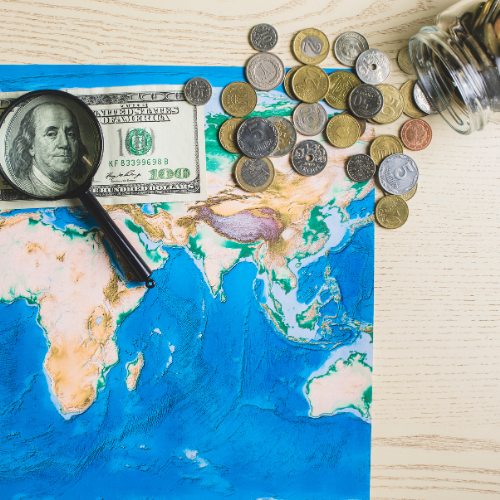
The De-Dollarization Dilemma: How Global Currency Shifts Are Reshaping Every Portfolio
Since the Bretton Woods Agreement in 1944, the U.S. dollar has reigned supreme as the world’s undisputed reserve currency. This “exorbitant privilege” has allowed America to borrow cheaply, sanction unilaterally, and export inflation. But a profound shift is underway. A coalition of geopolitical rivals, resource-rich nations, and emerging economies is mounting the most serious challenge to dollar dominance in generations. This movement, broadly termed “de-dollarization,” is not a coordinated plot but a slow-burning financial insurgency with the power to reshape global capital flows, commodity markets, and the very foundation of your investment portfolio. For market participants, ignoring this tectonic shift is no longer an option. The Three Catalysts of a Financial Rebellion The drive away from the dollar is being fueled by a powerful convergence of geopolitical, economic, and technological forces. The Weaponization of Finance: The use of the dollar-based financial system as a tool of foreign policy—most notably through sanctions against Russia—has been a wake-up call for the world. When the U.S. and EU froze approximately $300 billion of Russian central bank assets, it demonstrated that dollar holdings are not neutral. For countries like China, Saudi Arabia, and India, this was a “Sputnik moment,” proving the urgent need to build alternative financial infrastructure to insulate themselves from future geopolitical friction. The Erosion of Fiscal Confidence: America’s soaring national debt, now exceeding $34 trillion, and the political brinkmanship over the debt ceiling have raised long-term questions about the dollar’s stability. While no immediate alternative exists, the persistent trajectory of U.S. fiscal policy is leading some central banks to quietly diversify their reserves away from an asset they perceive as being slowly debased. The Rise of Digital Alternatives: The emergence of Central Bank Digital Currencies (CBDCs) and the infrastructure for cross-border digital payment systems (like China’s Cross-Border Interbank Payment System, CIPS) provides the technological rails for non-dollar trade. These systems offer the potential for faster, cheaper, and more transparent settlements that bypass the traditional SWIFT network, which is heavily influenced by U.S. policy. The Frontlines of De-Dollarization: From Gold to Gas The movement is not yet about replacing the dollar with a single other currency. Instead, it is a multi-front effort to create a more multipolar monetary world. The BRICS+ Gold Play: The expanded BRICS bloc (now including Egypt, Ethiopia, Iran, Saudi Arabia, and the UAE) is aggressively promoting the use of member currencies for trade. While a common BRICS currency remains a distant prospect, the group’s members are leading a global surge in gold purchases. Central banks, led by China, Poland, and Singapore, are buying gold at a historic pace, seeking a neutral, non-sovereign asset to back their reserves. The price of gold’s steady climb is, in part, a direct barometer of de-dollarization anxiety. The Commodity Counter-Revolution: The most immediate impact is in commodity markets. For decades, oil traded exclusively in U.S. dollars—the “petrodollar” system. This is now fracturing. China is increasingly paying for Russian oil and gas in Yuan. Saudi Arabia has formally agreed to accept Yuan in some oil transactions with China. India is paying for Russian oil in UAE Dirhams and Rupees. While the dollar still dominates, these bilateral agreements are creating cracks in the foundation, reducing global demand for dollars. The Treasury Exodus (A Slow Trickle): Contrary to alarmist headlines, there is not a mass, panicked sell-off of U.S. Treasuries. However, there is a strategic, long-term shift. China’s holdings of U.S. debt have fallen to a 14-year low. Other nations are allowing their Treasury holdings to mature without reinvesting the full proceeds, slowly reducing their exposure. This is a “boiling the frog” approach that, over time, could put upward pressure on U.S. borrowing costs. The Market Impact: A World Repriced A genuine, sustained move away from dollar dominance would have seismic implications for every asset class. Investors must prepare for a world where the “dollar smile” is replaced by a “dollar frown.” U.S. Stocks and Bonds Under Pressure: The dollar’s reserve status creates artificial demand for U.S. assets. If that demand wanes, the “exorbitant privilege” of lower yields and higher equity valuations could reverse. This would mean: Higher Long-Term Interest Rates: As foreign buyers of U.S. debt diminish, the U.S. government would have to offer higher yields to attract capital, increasing borrowing costs for the government, corporations, and homeowners. Compressed Equity Valuations: Higher discount rates (driven by higher bond yields) would pressure the present value of future earnings, particularly for the long-duration, growth-oriented tech stocks that have led the market. The Rise of Non-U.S. Markets: A multipolar currency world would be a boon for international and emerging markets (EM). As trade and capital flows diversify, companies in Europe, Asia, and Latin America would benefit from deeper local capital markets and reduced currency risk. EM assets, long suppressed by the dollar’s strength, could enter a new era of performance as local currencies stabilize and domestic investment grows. Commodities as a Strategic Hedge: Commodities are real assets whose value is intrinsic. In a period of currency uncertainty, they become a crucial store of value. Gold is the prime beneficiary, but other commodities like copper (for the green energy transition) and oil also stand to benefit. They become a hedge not just against inflation, but against the entire de-dollarization trend. Currency Volatility as an Asset Class: The era of a single, dominant currency provided a relatively stable anchor. Its decline will usher in an era of heightened volatility between major currencies (USD, EUR, CNY). This will create both risk and opportunity, making active currency hedging and targeted forex investments a more critical component of portfolio management. The Investor’s Strategic Pivot: Building a Multi-Currency Portfolio The prudent investor can no longer operate with a home-country bias. The new mandate is to build a resilient, globally-aware portfolio. Significant International Diversification: This goes beyond a token 10% allocation to an international ETF. A strategic shift toward high-quality European and Japanese equities, which are often cheaper and offer value, is warranted. A dedicated allocation to emerging market stocks and bonds (through local currency-denominated ETFs) provides direct exposure to the economies leading this shift. A Core Allocation to Gold and Commodities: Gold is no longer a “barbarous relic” but

The Algo-Wars: How Machine-Driven Trading is Creating a New Market Reality
The frantic floor of the NYSE, with traders shouting and gesturing, is a relic. The modern market is a silent, hyper-cooled data center where servers separated by miles fight for million-dollar advantages in microseconds. This is the domain of the algorithm. Over 80% of U.S. stock trading is now executed without direct human intervention, a percentage that climbs yearly. We have entered the era of the Algo-Wars, a continuous, invisible battle between competing machine intelligence systems that is fundamentally reshaping market dynamics, creating unprecedented opportunities, and lurking with systemic risks that traditional investors are only beginning to comprehend. The Evolution of the Electronic Beast To understand the present, we must trace the evolution of algorithmic trading from a simple tool to a dominant, autonomous force. First Generation: Execution Algorithms (The “How”). These were simple, rules-based programs designed to efficiently execute a large human-directed order. Strategies like VWAP (Volume-Weighted Average Price) and TWAP (Time-Weighted Average Price) broke up large orders to minimize market impact. The human was still the brain; the algorithm was the skilled pair of hands. Second Generation: High-Frequency Trading (HFT) (The “When”). This phase introduced a time dimension measured in nanoseconds. HFT firms like Citadel Securities and Virtu Financial built specialized hardware and private fiber-optic lines to co-locate their servers next to exchange servers. Their goal was arbitrage: exploiting tiny price discrepancies for the same asset across different venues, making fractions of a penny on millions of trades per day. They are the market’s lubricant and, critics argue, its potential kindling. Third Generation: AI-Driven Predictive Trading (The “Why”). This is the current frontier. Here, machine learning (ML) and artificial intelligence (AI) don’t just execute or arbitrage; they predict. These systems analyze a firehose of non-traditional data—satellite images of parking lots, sentiment analysis of news headlines, credit card transaction flows—to forecast price movements before they are reflected in financial statements. The human role shifts from decision-maker to model-builder and overseer. The New Market Structure: Fragmentation and “Liquidity Mirage” The rise of the algos has fragmented the market landscape, creating a complex ecosystem that is opaque to the average investor. The Rise of Dark Pools and ATSs: A significant portion of trading has moved off public exchanges into Alternative Trading Systems (ATSs) and dark pools like those operated by Goldman Sachs (Sigma X) and UBS. These are private venues where institutions can trade large blocks of shares without displaying their intentions to the public market. While designed to reduce market impact, they also drain liquidity and price-discovery information from the public exchanges, creating a two-tiered market. The Liquidity Mirage: HFT firms provide the illusion of deep, constant liquidity by always being ready to buy or sell. However, this liquidity can vanish in a millisecond during periods of extreme volatility. The “Flash Crash” of 2010 was a stark demonstration, where HFTs, instead of stabilizing the market, withdrew their bids en masse, accelerating the plunge. The market appears robust, but its foundation can be shockingly fragile. The Predatory Algorithms: A more sinister class of algos exists solely to detect and exploit the predictable behavior of other algorithms. Techniques like “quote stuffing” (flooding the market with orders to create latency for competitors) and “momentum ignition” (placing a series of orders to trigger other algos into starting a trend) are the weapons of this digital battlefield. It’s a digital version of front-running, where the fastest AI profits from anticipating the actions of the slower one. The Quant Resurgence: Factor Investing on Steroids The most significant impact for the average investor, even in passive funds, is the dominance of quantitative, or “quant,” strategies. These are not your grandfather’s value investors. The Factor Zoo: Quants have moved beyond the basic factors of Value, Size, and Momentum. They now mine hundreds of potential factors—from “employee satisfaction” to “linguistic analysis of earnings calls”—using AI to find persistent, if faint, signals of future returns. The resulting portfolios are hyper-diversified and rebalanced with machinic discipline. The Crowding Risk: The danger emerges when too many quant funds converge on the same factors. When a risk signal flashes, they can all try to exit the same crowded trade simultaneously. This was evident in the “Quant Quake” of August 2007 and subsequent events, where seemingly uncorrelated assets suddenly became correlated as forced, algorithmic selling created a cascade. The very intelligence designed to diversify risk can, paradoxically, become a source of systemic risk. The Death of Intuition: In this environment, the “story” behind a stock—its brand, its visionary CEO, its market potential—becomes secondary to its statistical footprint. A company can be a wonderful business but a terrible stock if its factor exposure is wrong. This disconnects price from narrative in a way that is deeply unsettling for traditional fundamental analysis. The Investor’s Playbook: Surviving and Thriving in the Algo-Era The individual or institutional investor cannot outgun a supercomputer in a speed contest. The winning strategy, therefore, is not to fight the algos, but to understand their behavior and invest around their limitations. Embrace a Long-Term, Fundamental Horizon: Algos are optimized for short-term signals. They create noise. A long-term investor, focused on a company’s discounted cash flows and durable competitive advantage, can effectively “tune out” this noise. The algorithmic war creates a day-to-day randomness that can be exploited by those with patience. Utilize VWAP and Other Execution Tools: When placing trades, especially large ones, use the algos to your advantage. By using a VWAP execution algorithm, you ensure your order is spread out to achieve an average price, minimizing the market impact that HFTs would otherwise exploit. Be Wary of Technical Analysis “Voodoo”: Many classic technical patterns are now well-known and exploited by algos. A head-and-shoulders pattern might be a self-fulfilling prophecy for a few milliseconds before a reversal algo attacks it. Relying solely on technicals is like bringing a knife to a gunfight where the other side has radar. Diversify into Less Efficient Assets: The algo-stranglehold is strongest in large-cap, liquid stocks like the S&P 500. Inefficiencies still abound in small-cap stocks, international emerging markets, and certain complex credit instruments where the data is sparse and the algos are less dominant. This is where active,

The Great Divergence: Why Stock Markets Are Decoupling From Economic Reality in 2025
A strange and unsettling phenomenon is defining the financial landscape of 2025. While headlines warn of slowing GDP growth, persistent inflation, and geopolitical turmoil, the S&P 500 and Nasdaq continue to scale unprecedented heights. This is not a typical bull market; it is The Great Divergence—a historic decoupling of financial markets from the underlying economic bedrock. For investors, this creates a perilous and confusing environment where traditional indicators are failing, and a new, more complex set of rules governs market behavior. Understanding this divergence is no longer an academic exercise; it is essential for navigating the most dislocated market in modern history. The Three Pillars of the Disconnect This market anomaly is not being driven by a single factor, but by a powerful confluence of three structural forces that have created a self-sustaining financial ecosystem, increasingly detached from Main Street. The Liquidity Supernova: Central banks, having learned the lessons of 2008 and 2020, are now permanently “leaning against the wind.” Any sign of significant market stress triggers immediate intervention. While quantitative tightening (QT) is officially on the table, the “Fed Put”—the implicit guarantee of support—is perceived as stronger than ever. This has created a moral hazard of epic proportions, where investors are conditioned to “buy the dip” with the unwavering belief that central banks will not allow a systemic crash. Furthermore, sovereign wealth funds and corporate cash reserves, sitting on trillions of dollars, act as a perpetual bid for assets, flooding the system with liquidity that must find a home, regardless of economic fundamentals. The AI and Productivity Mirage: The market’s valuation is increasingly concentrated in a handful of mega-cap technology companies driving the AI revolution. Stocks like NVIDIA, Microsoft, and Meta are being priced not on current earnings, but on the transformative potential of artificial intelligence to drive a future productivity boom. This narrative is so powerful that it is overshadowing current economic weakness. Investors are betting that AI will create such massive efficiency gains and new revenue streams that it will eventually pull the broader economy up to the market’s elevated expectations. It is a high-stakes gamble on a future that has not yet arrived. The Passive Investing Feedback Loop: Over 50% of the U.S. stock market is now owned by passive funds (ETFs and index funds). This creates a powerful, mechanistic flow of capital that is indifferent to valuation or economic data. Every dollar invested in an S&P 500 ETF automatically buys more of the largest, most expensive stocks, driving their prices higher simply by virtue of their size, not their prospects. This creates a self-reinforcing cycle: rising prices attract more passive inflows, which push prices higher still. It is a virtuous circle on the way up, but a potential trap door on the way down, as outflows could become equally self-reinforcing. The New Market Anatomy: A Tale of Two Economies The phrase “the stock market is not the economy” has never been more true. We are now witnessing the rise of two distinct, parallel economies: The Real Economy: This is the world of small businesses, manufacturing, and consumer sentiment. It is plagued by high borrowing costs, supply chain frictions, and stagnant real wages. Key indicators here include the ISM Manufacturing PMI, small business optimism indexes, and credit card delinquency rates, all of which have been flashing warning signs. The Financial Economy: This is the world of large-cap equities, corporate buybacks, and institutional capital. It is buoyed by strong balance sheets in the tech sector, massive stock repurchase programs, and global capital seeking growth in a low-growth world. Its health is measured by corporate earnings (often boosted by cost-cutting, not revenue growth) and the flow of funds into risk assets. The divergence is stark: while the real economy sputters, the financial economy soars, creating a dangerous perception gap between Wall Street and the everyday experience of most citizens. The Concentration Conundrum: Hidden Risks in Plain Sight The market’s ascent is built on an increasingly narrow foundation. The top 10 stocks in the S&P 500 now account for over 35% of the index’s total market capitalization, a level of concentration not seen since the dot-com bubble. This creates two massive, underappreciated risks: Single-Stock Systemic Risk: The market has become a game of “Jenga.” If one of these mega-cap pillars, like Apple or Amazon, were to issue a significant earnings miss or face a major regulatory setback, the ripple effects could trigger a broad market sell-off disproportionate to the actual event. The sheer weight of these stocks in the indices means their fate is the market’s fate. The Illusion of Diversification: An investor who believes they are “diversified” by owning an S&P 500 index fund is, in reality, making a concentrated bet on the performance of a few tech giants. The remaining 490 stocks have a diminishing impact on the portfolio’s return. This undermines the core principle of risk management and leaves passive investors dangerously exposed to a sector-specific downturn. The Investor’s Dilemma: Navigating the Dislocation For active investors, this environment presents a near-impossible choice: participate in an expensive, narrowly-led market driven by narrative, or stay on the sidelines and risk catastrophic underperformance. There is no easy answer, but sophisticated players are adopting several key strategies: Factor-Based Tilting: Moving beyond plain vanilla index funds to strategies that tilt toward factors like value, low volatility, and quality. This can help reduce exposure to the most overvalued, momentum-driven segments of the market. A Barbell Approach: Allocating a portion of the portfolio to the high-growth, high-valuation “story stocks” to maintain participation, while balancing it with a significant allocation to uncorrelated assets like certain commodities, managed futures, or tactical cash. This provides a hedge against a sudden narrative shift. Rigorous Bottom-Up Analysis: In a top-down driven market, there is opportunity in the forgotten corners. This involves deep, fundamental research on mid- and small-cap companies that are trading at reasonable valuations but are being ignored by the passive flows. Their day will come when the market rotation finally occurs. Increased Cash Reserves: Holding a higher-than-usual cash position is no longer a sign of fear, but of strategic patience. It provides dry powder to deploy during the inevitable, and likely violent, volatility spikes

The Cognitive Arms Race: Why Your Attention is the New Oil and How to Reclaim It
Every ping, notification, and infinite scroll is part of a carefully orchestrated war being waged not for territory, but for your most precious resource: your attention. While you navigate your daily life, a multi-trillion-dollar industry comprised of tech giants, advertisers, and media conglomerates is engaged in a relentless Cognitive Arms Race, deploying increasingly sophisticated AI to capture and monetize every waking moment of your focus. Your attention is no longer just a commodity; it is the new oil, the new currency, and the new battleground for influence in the 21st century. The outcome of this silent war will determine not just market valuations, but the future of human autonomy, democracy, and mental sovereignty. The Architecture of Attention Extraction The modern attention economy is not an accident; it is a meticulously engineered system built on the principles of behavioral psychology and powered by supercomputers. Understanding its architecture is the first step toward defense. Variable Reward Schedules: Pioneered by slot machine designers, this is the core engine of social media. The “pull-to-refresh” mechanism and the unpredictable nature of notifications (Will you get a like? A comment?) create a powerful dopamine loop that fosters compulsive checking. The brain never knows when the next “reward” is coming, so it keeps coming back for more. Algorithmic Curation and Filter Bubbles: Platforms like TikTok and YouTube use deep learning algorithms that study your every pause, rewatch, and skip to serve you content you cannot resist. This creates a hyper-personalized “rabbit hole” that is uniquely captivating to you, making disengagement feel like turning off a part of your own reality. These algorithms don’t just show you what you like; they show you what you cannot look away from. Social Validation as Currency: The “like” and “share” counters are not innocent features; they are quantified social validation meters. By tying our sense of self-worth and social standing to these metrics, the platforms create a powerful incentive system that keeps us performing, posting, and, most importantly, staying on the platform. The Illusion of Free Will: The most insidious part of this architecture is that it makes us feel like we are making conscious choices. In reality, we are often acting on triggers and cues designed by thousands of engineers working to maximize “time on site” and “daily active users.” We are the users, but we are also the product being sold. The Economic Engine: From Attention to Revenue The captured attention is then monetized with frightening efficiency, creating a financial loop that incentivizes ever-more aggressive extraction techniques. The Advertising Model: This is the most direct monetization. Your attention is sold to advertisers in a real-time auction. Every time you open an app, a split-second bidding war occurs among advertisers for the privilege of showing you an ad. The more attention you give, the more valuable you become to the platform. Your focus is the raw material that is refined into ad revenue. Data Exhaust and Predictive Modeling: Even when you’re not looking at ads, you are generating “data exhaust”—a trail of behavioral data that is used to build a shockingly accurate predictive model of your personality, your desires, your fears, and your vulnerabilities. This model is then used not only to target ads but to influence your purchasing decisions, your voting behavior, and even your emotional state. The Attention Funnel: Free, attention-capturing services (social media, search) act as a funnel that directs your focus toward premium, revenue-generating products within a company’s ecosystem. Amazon uses its vast e-commerce platform to capture intent and then directs it toward its high-margin AWS and advertising businesses. Google uses its search monopoly to feed its YouTube and cloud divisions. The Collateral Damage: The Erosion of Human Capital The societal cost of the attention economy is becoming impossible to ignore. We are witnessing a mass degradation of our collective cognitive capital. The Fragmentation of Focus: The constant context-switching demanded by modern digital life is rewiring our brains, reducing our capacity for deep, sustained concentration—the very skill required for innovation, complex problem-solving, and meaningful learning. The average office worker now switches tasks every three minutes. This cognitive fragmentation is a direct drain on productivity and creativity. The Mental Health Epidemic: A growing body of research correlates heavy social media use with increased rates of anxiety, depression, and loneliness. The constant social comparison, the fear of missing out (FOMO), and the barrage of curated perfection create a chronic state of inadequacy and stress, particularly among younger generations. The Erosion of Democratic Discourse: The attention economy’s business model thrives on outrage and controversy, as these emotions drive higher engagement. This creates a perverse incentive to promote divisive, sensational, and often misleading content. The result is a polarized public sphere where nuanced debate is drowned out by viral anger, undermining the foundational principles of deliberative democracy. The Fight Back: Strategies for Cognitive Sovereignty Reclaiming your attention is no longer a matter of simple willpower; it requires a strategic defense against a world engineered to distract you. This is the new frontier of personal and corporate high performance. For Individuals: The Personal Firewall Audit Your Attention Diet: Treat your attention with the same care as your nutrition. Use smartphone tools like “Screen Time” to conduct a ruthless audit. Which apps are your biggest time sinks? Uninstall the most predatory ones. Embrace “Deep Work” Schedules: Block out multi-hour periods of uninterrupted, focused work. Use tools like Freedom or Cold Turkey to block distracting websites and apps during these sessions. Treat this time as sacrosanct. Curate Your Information Environment: Actively unsubscribe, unfollow, and mute sources that trigger anxiety or waste your time. Be intentional about who and what you allow into your mental space. Prioritize newsletters and long-form content over reactive social feeds. Reclaim Boredom: Schedule time for doing nothing. Boredom is not the enemy; it is the fertile ground for creativity, self-reflection, and the consolidation of memory. Go for a walk without your phone. For Organizations: The Focus Dividend Create “Focus-Friendly” Cultures: Companies that win the talent war will be those that actively protect their employees’ cognitive space. This means banning internal notifications after hours, promoting “no-meeting” days, and training managers to respect deep work schedules. Measure Output, Not Activity: Shift

The Sovereignty Wars: How Digital Nations and Virtual Economies Are Redefining Global Power
For centuries, power has been defined by territory. Nations were built on land, their influence measured by borders, natural resources, and physical infrastructure. This foundation is now cracking. A new, non-geographic form of sovereignty is emerging, built not on soil, but on code, community, and capital. We are entering the era of The Sovereignty Wars, a silent but intense conflict where digital platforms, decentralized autonomous organizations (DAOs), and virtual world economies are challenging the very definition of a nation-state. The next superpower may not control a single acre of land, but it will command the loyalty of millions of global citizens and control trillions in digital assets. The Rise of the Digital Nation-State The concept of a nation is evolving from a geographic entity to a voluntary, opt-in community bound by shared values, economic interests, and digital identity. Platform States: Companies like Discord, Telegram, and X (formerly Twitter) have evolved beyond communication tools into de facto public squares and governance platforms for digital communities. These platforms host nations of people who share citizenship in a physical country but derive their primary social, economic, and cultural identity from their digital affiliations. These are “states of mind” with their own laws (community guidelines), economies (creator payouts), and diplomatic relations (platform integrations). Network States: Pioneered by figures like Balaji Srinivasan, the “network state” is a highly aligned online community with a collective capacity for action that crowdfunds territory around the world. It starts as a digital community, accumulates economic power through crypto-economics, and eventually negotiates for physical diplomatic recognition. It is a nation built in reverse: community first, land second. Projects like Praetoria and Zuzalu are early experiments in creating these long-term, pop-up communities with their own social contracts. Decentralized Autonomous Organizations (DAOs): A DAO is essentially a borderless, internet-native corporation with a built-in treasury and a constitution enforced by code. They represent a radical new model for collective action and governance. ConstitutionDAO, which nearly purchased a copy of the U.S. Constitution, and CityDAO, which is collectively purchasing and governing a parcel of land in Wyoming, are prototypes of this new form of digital-first civic and economic organization. They demonstrate that thousands of strangers from across the globe can pool resources and make collective decisions without a central government. The Virtual Economy: From Pixels to GDP The economies within these digital nations are no longer fictional. They are real, measurable, and rapidly scaling, creating a new layer of global commerce. The Creator Economy: Valued at over $250 billion, the creator economy is a sovereign nation in its own right. Platforms like YouTube, TikTok, and Substack are the infrastructure, and the creators are the citizens who generate the GDP. This economy has its own currency (platform payouts, brand deals), its own class system (mega-stars vs. micro-influencers), and its own trade routes (cross-platform collaborations). The Play-to-Earn (P2E) and Metaverse Economies: Games like Axie Infinity demonstrated that time spent in a virtual world could generate a real-world income for players in developing countries. While the P2E model has evolved, the principle remains: virtual assets have real value. In metaverse platforms like Decentraland and The Sandbox, virtual land parcels have sold for millions of dollars. Companies are establishing corporate embassies, and fashion brands are selling digital-only clothing. These are not games; they are emerging markets with their own property rights and economic cycles. The Crypto-Native Financial System: This is the central banking system of the digital world. Built on blockchains like Ethereum and Solana, it operates 24/7, is globally accessible, and is largely outside the direct control of any single government. Stablecoins like USDC act as the reserve currency for these digital nations, while decentralized exchanges (DEXs) and lending protocols form the backbone of their financial infrastructure. The Clash of Jurisdictions: Regulating the Borderless This rise of digital sovereignty creates an inevitable and escalating conflict with traditional nation-states. The core battlegrounds are regulation, taxation, and legal enforcement. The Regulatory Battlefield: How does the U.S. Securities and Exchange Commission (SEC) regulate a DAO that has contributors from 50 countries and is governed by code deployed on a decentralized server network? How does the European Union enforce its Digital Services Act on a platform built on a permissionless blockchain? These are unanswered questions that are leading to a regulatory arms race. The Tax Evasion Dilemma: As more economic activity moves into virtual worlds and is transacted in crypto-assets, physical nations face the threat of massive tax base erosion. How do you tax the income from selling a virtual sword to someone in another country when the transaction occurs on a blockchain that provides anonymity? Tax authorities worldwide are scrambling to develop new frameworks, but they are perpetually behind the innovation curve. The Legal Identity Crisis: In a physical nation, your passport is your identity. In a digital nation, your crypto wallet is your identity. This creates a fundamental clash. If a crime occurs within a DAO or a virtual world, which country’s laws apply? Who has the jurisdiction to investigate? The concept of legal personhood is being stretched to its limits. The Corporate “Diplomatic Corps” In this new landscape, multinational corporations are no longer just corporate entities; they are acting as quasi-states, engaging in their own form of digital diplomacy. Meta’s Metaverse Ambition: When Meta (formerly Facebook) announced its pivot to the metaverse, it was effectively declaring its intention to build a digital nation on a scale rivaling physical countries. It is developing its own currency (Facebook Pay, with potential for a future Diem-like stablecoin), its own legal system (Terms of Service), and its own infrastructure (VR hardware and software). Apple’s Walled Garden: The Apple App Store is a sovereign digital territory with absolute control over its economy. It levies a “tax” (the 30% commission), sets and enforces its own laws (App Store guidelines), and has the power to banish entities (removing apps). Its decisions can make or break businesses, giving it a power that rivals many regulatory bodies. Case Study: The Nation of Zuzalu – A Two-Month Sovereign Experiment In 2023, a pop-up city community called Zuzalu was established in Montenegro. Organized by Ethereum founder Vitalik Buterin and others, it brought together 200 core residents for two months to experiment with network states. Zuzalu had its own temporary visa

The Bio-Digital Convergence: When Biology Becomes the Next Computing Platform
For over half a century, progress has been defined by silicon. Moore’s Law—the prediction that computing power would double roughly every two years—has been the engine of the modern world. But we are approaching its physical limits. The next great technological revolution will not be built on a faster transistor; it will be built on a living cell. We are at the dawn of the Bio-Digital Convergence, a fundamental shift where biology is no longer just a subject of study but is becoming an engineering discipline. We are learning to read, write, and edit the code of life, and in doing so, we are turning biology into the most powerful and sustainable computing platform the world has ever seen. The Three Pillars of the Bio-Digital Revolution This convergence is not a single technology but a fusion of multiple fields, creating a new paradigm for problem-solving. It rests on three revolutionary pillars: Read: The Sequencing RevolutionThe ability to “read” DNA has transformed from a multi-billion-dollar, decade-long endeavor (the Human Genome Project) into a $100, 24-hour process. Companies like Illumina and Oxford Nanopore have democratized access to genetic information. This is not just about reading human genomes; it is about sequencing the entire biosphere—every microbe, plant, and animal—creating a vast, searchable library of biological solutions that evolution has spent billions of years refining. This library is the raw source code for the next era of innovation. Write: The Synthesis RevolutionIf sequencing is reading the code, synthesis is writing it. The field of synthetic biology allows us to design and print DNA from scratch. Companies like Ginkgo Bioworks act as “programmers for biology,” designing custom microorganisms in supercomputers and then printing the DNA to bring them to life. This enables us to engineer yeast to produce rose oil without roses, bacteria to secrete spider silk, and cells to manufacture life-saving drugs on demand. Biology is becoming a programmable manufacturing platform. Edit: The CRISPR RevolutionThe most precise tool in the kit is gene editing, pioneered by technologies like CRISPR-Cas9. This allows scientists to act as biological software developers, making precise “find-and-replace” edits to the code of life. This is moving beyond therapeutic applications (like curing sickle cell anemia) into agriculture (creating drought-resistant crops), materials science, and even data storage. The New Frontier: Biological Computing and Data Storage The most mind-bending application of this convergence is the use of biology itself as a computational substrate. Silicon is hitting a wall; biology offers a radically different path. DNA Data Storage: The world is generating data faster than we can store it. Hard drives degrade, and data centers consume immense amounts of energy. DNA offers a solution. A single gram of DNA can hold 215 petabytes (215 million gigabytes) of data. Microsoft and the University of Washington have already demonstrated the ability to store and retrieve digital files in DNA sequences. This data, stored in a sugar cube-sized vessel, could remain readable for thousands of years, solving both the density and longevity problems of digital storage. Cellular Computers: Scientists are engineering living cells to perform logical operations, turning them into tiny, self-replicating computers. These cellular computers can be deployed inside the human body to diagnose disease. Imagine a probiotic yeast that, upon detecting a specific tumor biomarker in your gut, switches on a metabolic pathway to produce and release a therapeutic molecule. The diagnosis and treatment happen autonomously, inside the body, with zero external energy input. This is the promise of biological computing: distributed, self-assembling, and energy-efficient. The Economic Disruption: From Factories to Fermentation The bio-digital convergence is poised to reshape the foundation of global manufacturing. The traditional model of extracting resources and assembling them in noisy, polluting factories is being challenged by fermentation-based production. The Supply Chain of the Future: Instead of shipping rare materials across the globe, we will ship genetic sequences over the internet. A local “bio-foundry” can download the code for a new material and program a vat of microbes to brew it. This de-risks geopolitical supply chains for everything from rare earth elements for electronics to palm oil for consumer goods. Sustainable Everything: Companies like LanzaTech are capturing carbon emissions from industrial plants and using engineered bacteria to convert them into useful chemicals and fuels. Bolt Threads created a lab-grown leather from mycelium (mushroom roots). This is a shift from a linear, extractive economy to a circular, bio-based one, addressing the twin crises of resource depletion and climate change simultaneously. The Geopolitical and Ethical Firestorm As with any transformative technology, the bio-digital convergence brings profound risks and ethical dilemmas that will define the coming decades. The Biosecurity Dilemma: The same tools used to engineer a cancer-killing virus could, in the wrong hands, be used to engineer a pathogen. The democratization of DNA synthesis makes “bio-hacking” a real and terrifying possibility. This creates a new arms race in biosecurity and surveillance, where nations must develop the ability to detect and respond to engineered biological threats. The Genetic Divide: A new form of inequality could emerge: the genetic divide. Will gene therapies and enhancements be available only to the wealthy, creating a literal genetic upper class? The ethical questions surrounding human germline editing (changes that can be inherited) are among the most profound humanity has ever faced. Intellectual Property and “Bio-Piracy”: Who owns the code of life? The patent battles over CRISPR technology were just the beginning. As companies sequence and patent genes from rainforests and oceans, we face a new wave of “bio-piracy,” where indigenous knowledge and natural biological capital are exploited for corporate profit. Case Study: Moderna – The Blueprint of a Bio-Digital Company The COVID-19 pandemic provided the world’s first real-time case study of the bio-digital convergence in action. Moderna is not a traditional pharmaceutical company; it is a digital biology company. Their “product” is not a chemical compound, but information—mRNA sequences. When the genetic code of the SARS-CoV-2 virus was published online, Moderna’s team designed their vaccine in silico (on a computer) in just two days. The rest of the time was spent in clinical trials and manufacturing. Their manufacturing process is akin to programming: the digital mRNA sequence is fed into a

The Polycrisis Paradox: Navigating the Age of Overlapping Emergencies
We are no longer living in an era of isolated problems. The comforting notion that we can tackle a pandemic, then a supply chain collapse, then a regional war, then an energy shock as discrete events is a dangerous illusion. Welcome to the Age of Polycrisis—a period defined by tightly interconnected, mutually reinforcing global shocks that create impacts far greater than the sum of their parts. A climate event in Southeast Asia no longer just causes local flooding; it disrupts microchip manufacturing, which cripples auto production in Europe, which exacerbates inflation, which fuels political instability. For leaders in business and government, the old playbooks of crisis management are obsolete. The central challenge of the 2020s is no longer solving one problem at a time, but navigating a world where the crises never stop coming, and they are all talking to each other. Deconstructing the Polycrisis – The Anatomy of Interconnection The term “polycrisis” was popularized by historian Adam Tooze to describe a situation where “multiple crises interact such that the overall impact exceeds the sum of each part.” It is not merely a list of concurrent bad news. It is a cascade, a domino effect of systemic failures. The anatomy of our current polycrisis can be mapped across several key, interlocking domains: The Geopolitical-Economic Knot: The war in Ukraine was not just a regional conflict. It triggered a global energy crisis, which spiked inflation, which forced central banks to aggressively raise interest rates, which increased the cost of capital for developing nations, pushing many to the brink of sovereign debt default. This economic pain, in turn, fuels public discontent and creates a fertile ground for populist movements, further destabilizing the international order. The Climate-Supply Chain Feedback Loop: Climate change is no longer a future environmental threat; it is a present-day operational disruptor. A historic drought in Panama reduces traffic through the Panama Canal, forcing shipping giants to take longer, more expensive routes. This increases shipping costs and delays, contributing to inflation. Simultaneously, extreme heatwaves in agricultural regions devastate harvests, leading to food price volatility and threatening food security in import-dependent nations, which can spark social unrest and migration crises. The Technological-Social Fracture: The rapid, unchecked ascent of generative AI is creating simultaneous economic and social shocks. It threatens to automate knowledge work at an unprecedented scale, potentially creating widespread white-collar unemployment. This occurs alongside an epidemic of misinformation and eroding trust in institutions, fragmenting the shared reality necessary for democratic societies to function. The AI revolution is not happening in a vacuum; it is amplifying the stresses of the geopolitical and economic landscape. The Failure of the Siloed Mindset The fundamental problem for most established institutions is that they are architected for a simpler world. Governments have a Ministry of Finance, a Ministry of Energy, and a Ministry of Health, but no “Ministry of Interconnected Crises.” Corporations have risk matrices that treat “cyber-attack,” “raw material shortage,” and “regulatory change” as separate line items, failing to model how one can trigger the others. This siloed thinking leads to catastrophic blind spots. A classic example is the 2021 Suez Canal obstruction. A single ship, the Ever Given, blocked a critical global trade artery. The immediate crisis was logistical. But its knock-on effects were economic (billions in trade delayed), financial (insurance claims, contract disputes), and social (shortages of goods, price hikes). A company that had only prepared for shipping delays was caught entirely off-guard by the compounded financial and reputational damage. The New Leadership Mandate: Building Antifragile Systems In a polycrisis world, resilience—the ability to bounce back—is no longer sufficient. The goal must be antifragility—a concept coined by Nassim Nicholas Taleb describing systems that gain from volatility, shocks, and uncertainty. The mandate for leaders is to stop just firefighting and start architecting organizations that are not merely robust, but that actually improve through disruption. This requires a fundamental shift in strategy: From Efficiency to Redundancy: The just-in-time supply chain was the pinnacle of efficiency. The polycrisis world demands just-in-case. This means building in strategic redundancies—dual-sourcing critical components, maintaining higher inventory buffers for essential goods, and cultivating a diverse portfolio of logistics options. This was once seen as wasteful; it is now a critical insurance policy. From Centralized to Distributed Power: Centralized systems are single points of failure. The polycrisis favors distributed, modular models. In energy, this means microgrids and distributed renewables that can operate if the national grid fails. In IT, it means cloud-native architectures that can reroute traffic around outages. In organizations, it means empowering frontline teams with the autonomy to make rapid decisions without waiting for a chain of command that may be overwhelmed. From Predicting to Sensing and Adapting: Traditional strategic planning, based on long-term forecasts, is broken. In a polycrisis, the future is fundamentally unpredictable. The new core competency is dynamic adaptation. This involves building sophisticated sensing capabilities—using AI to monitor global news, weather patterns, and geopolitical developments—and creating agile response teams that can pivot strategy in real-time based on incoming data. Case Study: The Corporate Chameleon – How a Global Retailer Learned to Adapt Consider “Aether Global Retail” (a composite of real-world examples), a company with a vast, centralized supply chain. In 2021-2022, they were hammered by port closures, raw material inflation, and shifting consumer demand all at once. Their old, centralized procurement and logistics system broke down. Their transformation, “Project Chameleon,” was built on three antifragile pillars: Regional Micro-Hubs: They moved away from a single, massive distribution center model. They established smaller, automated regional hubs that could source products locally and serve their regions autonomously. If one hub was disrupted, the others could compensate. AI-Powered Demand Sensing: They replaced their quarterly forecasting models with a live AI platform that integrated data from social media trends, local weather events, and real-time sales. This allowed them to adjust inventory and promotions on a weekly, sometimes daily, basis. Cross-Functional “Situation Rooms”: They created permanent, cross-departmental teams (logistics, finance, marketing, HR) tasked with monitoring a dashboard of polycrisis indicators. This team had the authority to enact pre-approved contingency plans instantly, without waiting for

The Quantum Countdown: How Nations and Corporations Are Racing to Secure the Next Digital Epoch
Imagine a key that could open every lock on the planet—every bank vault, every government database, every private message. This is not the plot of a science-fiction thriller; it is the tangible, looming reality of the quantum computing era. While the world marvels at the potential for quantum machines to solve problems in medicine and materials science, a silent, high-stakes race is underway in the shadows: the race for Quantum Supremacy and the simultaneous, desperate scramble to build defenses against it. We are in a countdown phase, and the clock is ticking toward a moment cryptographers call “Q-Day”—the day a quantum computer successfully breaks the foundations of our modern digital security. For governments and global enterprises, this is not a future problem; it is the defining strategic challenge of the present. The Quantum Threat: Decoding the Unbreakable To understand the urgency, one must first grasp the seismic shift quantum computing represents. Our current digital world rests on the bedrock of public-key cryptography, specifically algorithms like RSA and ECC (Elliptic-Curve Cryptography). These systems are secure because it would take a classical supercomputer thousands, if not millions, of years to factor the impossibly large numbers that form their digital “locks.” Enter the quantum computer. Leveraging the bizarre principles of quantum mechanics—superposition (existing in multiple states at once) and entanglement (particles linked over distance)—a sufficiently powerful quantum machine could run specific algorithms, like Shor’s Algorithm, that would crack these “unbreakable” codes in a matter of hours or days. The implications are staggering: Financial Collapse: Every digital transaction, from stock trades to credit card payments, would be vulnerable. National Security Breach: All classified government communications, past and present, could be decrypted. Infrastructure Sabotage: Power grids, transportation networks, and financial systems could be held hostage. Identity Theft on a Global Scale: Digital signatures and personal data would be rendered meaningless. This is a “harvest now, decrypt later” threat. Adversaries are already intercepting and storing encrypted data today, waiting for the day they have a quantum computer powerful enough to unlock it. The Global Arms Race: Nation-States at the Starting Gate The pursuit of quantum advantage has escalated into a new kind of cold war, with billions of dollars in state funding fueling the competition. The United States: With the National Quantum Initiative Act, the U.S. has poured over $1.2 billion into quantum research. Agencies like DARPA and the NSA are leading the charge, partnering with tech giants and academia. The goal is clear: achieve quantum superiority while hardening America’s critical infrastructure. China: Beijing has made quantum technology a cornerstone of its “Made in China 2025” plan. With massive state investment and a suspected “Quantum Manhattan Project,” China has already demonstrated alarming capabilities, including quantum communication satellites that are theoretically unhackable. Their progress is shrouded in secrecy, driving anxiety in Western intelligence circles. The European Union: Not to be left behind, the EU has launched its Quantum Flagship initiative, a €1 billion project aimed at consolidating European research and developing a homegrown quantum ecosystem. Other Players: Nations like Canada, the UK, and Australia are also making significant strides, often through public-private partnerships, recognizing that quantum is too critical to ignore. This is a race with a unique characteristic: unlike the nuclear arms race, the ultimate goal is not just to possess the weapon, but to be the first to build the ultimate shield. The Corporate Battlefield: Tech Titans and the Quantum Stack While nations focus on security, the corporate world sees both unprecedented risk and generational opportunity. The battle to build and commercialize quantum computing is among the most intense in tech history. The Incumbents: Google: Achieved a landmark “quantum supremacy” demonstration in 2019 and continues to push the boundaries of its Sycamore processor. IBM: Is betting on a roadmap toward increasingly powerful processors, making quantum computing accessible via its cloud platform to researchers and companies worldwide. Microsoft: Is pursuing a unique approach with topological qubits, which could be more stable and error-resistant. The Specialists: Companies like D-Wave (focusing on quantum annealing) and IonQ (trapping ions in electromagnetic fields) are exploring alternative paths to practical quantum machines. The Ecosystem:A whole “quantum stack” is emerging, with startups focusing not just on hardware, but on software, algorithms, and specific applications in drug discovery, logistics, and finance. Venture capital is flooding into this space, betting on the companies that will build the tools for the quantum age. The Silent Savior: The Race for Post-Quantum Cryptography (PQC) Concurrently, a monumental defensive effort is underway. The field of Post-Quantum Cryptography (PQC) aims to develop new encryption algorithms that are secure against both classical and quantum attacks. These are mathematical puzzles so complex that even a quantum computer would struggle to solve them. The U.S. National Institute of Standards and Technology (NIST) has been leading a global, multi-year competition to standardize these new PQC algorithms. After several rounds of elimination, a handful of finalists have emerged. The impending finalization of these standards is triggering a corporate and governmental migration of historic proportions. The Migration Challenge: Transitioning the entire digital world to PQC is a logistical nightmare. It requires updating everything from web browsers and mobile operating systems to the embedded systems that control critical infrastructure. This is a multi-year, multi-trillion-dollar undertaking that must be completed before a cryptographically relevant quantum computer is built. The cost of failure is the collapse of digital trust itself. The Geopolitical and Ethical Quagmire The quantum revolution is not happening in a vacuum. It raises profound questions that we are only beginning to grapple with. The Quantum Divide: There is a very real risk of a “quantum divide” emerging between nations that possess the technology and those that do not, creating new axes of global power and inequality. The Surveillance State: Quantum sensors could lead to unimaginably powerful surveillance capabilities, threatening personal privacy on an unprecedented scale. Ethical Use: The world lacks a framework for the ethical development and deployment of quantum technology. The power to break global encryption or simulate new biological agents demands international oversight and treaties, similar to those for chemical and nuclear weapons. Case Study: JPMorgan Chase’s Quantum Hedge The financial sector, which relies entirely on secure transactions, is on the front lines. JPMorgan Chase has established a dedicated quantum computing team,